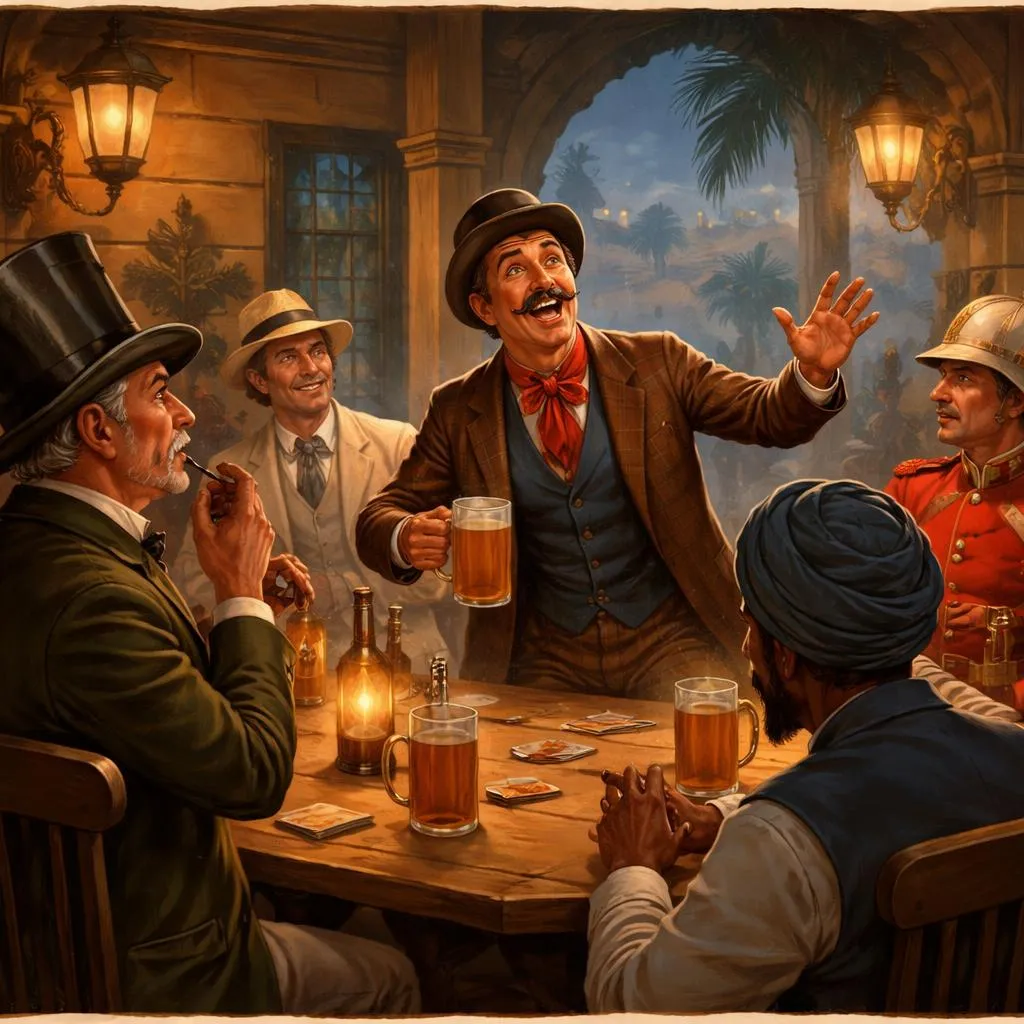

Fix soon rejoined Passepartout, who was lounging and looking about on the quay, as if he did not feel that he, at least, was obliged not to see anything.
"Well, my friend," said the detective, coming up with him, "is your passport visaed?"
"Ah, it's you, is it, monsieur?" responded Passepartout. "Thanks, yes, the passport is all right."
"And you are looking about you?"
"Yes; but we travel so fast that I seem to be journeying in a dream. So this is Suez?"
"Yes."
"In Egypt?"
"Certainly, in Egypt."
"And in Africa?"
"In Africa."
"In Africa!" repeated Passepartout. "Just think, monsieur, I had no idea that we should go farther than Paris; and all that I saw of Paris was between twenty minutes past seven and twenty minutes before nine in the morning, between the Northern and the Lyons stations, through the windows of a car, and in a driving rain! How I regret not having seen once more Pere la Chaise and the circus in the Champs Elysees!"
"You are in a great hurry, then?"
"I am not, but my master is. By the way, I must buy some shoes and shirts. We came away without trunks, only with a carpet–bag."
"I will show you an excellent shop for getting what you want."
"Really, monsieur, you are very kind."
And they walked off together, Passepartout chatting volubly as they went along.
"Above all," said he; "don't let me lose the steamer."
"You have plenty of time; it's only twelve o'clock."
Passepartout pulled out his big watch. "Twelve!" he exclaimed; "why, it's only eight minutes before ten."
"Your watch is slow."
"My watch? A family watch, monsieur, which has come down from my great–grandfather! It doesn't vary five minutes in the year. It's a perfect chronometer, look you."
"I see how it is," said Fix. "You have kept London time, which is two hours behind that of Suez. You ought to regulate your watch at noon in each country."
"I regulate my watch? Never!"
"Well, then, it will not agree with the sun."
"So much the worse for the sun, monsieur. The sun will be wrong, then!"
And the worthy fellow returned the watch to its fob with a defiant gesture. After a few minutes silence, Fix resumed: "You left London hastily, then?"
"I rather think so! Last Friday at eight o'clock in the evening, Monsieur Fogg came home from his club, and three–quarters of an hour afterwards we were off."
"But where is your master going?"
"Always straight ahead. He is going round the world."
"Round the world?" cried Fix.
"Yes, and in eighty days! He says it is on a wager; but, between us, I don't believe a word of it. That wouldn't be common sense. There's something else in the wind."
"Ah! Mr. Fogg is a character, is he?"
"I should say he was."
"Is he rich?"
"No doubt, for he is carrying an enormous sum in brand new banknotes with him. And he doesn't spare the money on the way, either: he has offered a large reward to the engineer of the Mongolia if he gets us to Bombay well in advance of time."
"And you have known your master a long time?"
"Why, no; I entered his service the very day we left London."
The effect of these replies upon the already suspicious and excited detective may be imagined. The hasty departure from London soon after the robbery; the large sum carried by Mr. Fogg; his eagerness to reach distant countries; the pretext of an eccentric and foolhardy bet—all confirmed Fix in his theory. He continued to pump poor Passepartout, and learned that he really knew little or nothing of his master, who lived a solitary existence in London, was said to be rich, though no one knew whence came his riches, and was mysterious and impenetrable in his affairs and habits. Fix felt sure that Phileas Fogg would not land at Suez, but was really going on to Bombay.
"Is Bombay far from here?" asked Passepartout.
"Pretty far. It is a ten days' voyage by sea."
"And in what country is Bombay?"
"India."
"In Asia?"
"Certainly."
"The deuce! I was going to tell you there's one thing that worries me—my burner!"
"What burner?"
"My gas–burner, which I forgot to turn off, and which is at this moment burning at my expense. I have calculated, monsieur, that I lose two shillings every four and twenty hours, exactly sixpence more than I earn; and you will understand that the longer our journey—"
Did Fix pay any attention to Passepartout's trouble about the gas? It is not probable. He was not listening, but was cogitating a project. Passepartout and he had now reached the shop, where Fix left his companion to make his purchases, after recommending him not to miss the steamer, and hurried back to the consulate. Now that he was fully convinced, Fix had quite recovered his equanimity.
"Consul," said he, "I have no longer any doubt. I have spotted my man. He passes himself off as an odd stick who is going round the world in eighty days."
"Then he's a sharp fellow," returned the consul, "and counts on returning to London after putting the police of the two countries off his track."
"We'll see about that," replied Fix.
"But are you not mistaken?"
"I am not mistaken."
"Why was this robber so anxious to prove, by the visa, that he had passed through Suez?"
"Why? I have no idea; but listen to me."
He reported in a few words the most important parts of his conversation with Passepartout.
"In short," said the consul, "appearances are wholly against this man. And what are you going to do?"
"Send a dispatch to London for a warrant of arrest to be dispatched instantly to Bombay, take passage on board the Mongolia, follow my rogue to India, and there, on English ground, arrest him politely, with my warrant in my hand, and my hand on his shoulder."
Having uttered these words with a cool, careless air, the detective took leave of the consul, and repaired to the telegraph office, whence he sent the dispatch which we have seen to the London police office. A quarter of an hour later found Fix, with a small bag in his hand, proceeding on board the Mongolia; and, ere many moments longer, the noble steamer rode out at full steam upon the waters of the Red Sea.
خلفية ومقدمة عن المؤلف
هذا المقتطف مأخوذ من الرواية الكلاسيكية حول العالم في ثمانين يومًا لجول فيرن، وهو مؤلف فرنسي مشهور بقصص المغامرات والخيال العلمي. كُتبت هذه الرواية عام 1872، وتجسد روح الاستكشاف وروائع التطورات التكنولوجية في القرن التاسع عشر، مثل السفن البخارية والسكك الحديدية، والتي جعلت السفر العالمي في متناول اليد أكثر من أي وقت مضى. غالبًا ما يطلق على فيرن لقب "أبو الخيال العلمي" لأعماله الخيالية والرؤيوية.
التفسير التفصيلي والأهمية
تتبع القصة فيلياس فوج، وهو رجل إنجليزي دقيق وغني، يراهن على أنه يستطيع أن يدور حول العالم في ثمانين يومًا فقط. يرافقه خادمه الفرنسي المخلص، باسبارتو. تقدم لنا هذه الفقرة هذه الشخصيات، بالإضافة إلى فيكس، وهو محقق يشتبه في أن فوج لص بنك هارب. يسلط التوتر بين الشخصيات والوتيرة السريعة للسفر الضوء على موضوعات الوقت والثقة والصدام بين المظاهر والواقع.
تؤكد هذه الجزئية من القصة أيضًا على الإثارة والتحديات التي تواجه السفر خلال تلك الحقبة. إن دهشة باسبارتو عند رؤية أماكن مثل السويس ومصر لأول مرة تتناقض مع توقعاته الضيقة الأولية للرحلة. يضيف اشتباه المحقق طبقة من الغموض والتشويق، موضحًا كيف يمكن أن تؤدي سوء الفهم والافتراضات إلى الصراع.
الدروس والرؤى للطلاب
-
الفضول والانفتاح: إن دهشة باسبارتو بالأماكن الجديدة التي يزورها تشجع القراء على تبني الفضول وتقدير تنوع العالم. يمكن للطلاب أن يتعلموا الانفتاح على التجارب والثقافات الجديدة، مما يوسع فهمهم وتعاطفهم.
-
التفكير النقدي والحكم: يذكرنا اشتباه فيكس في فوج بالتساؤل عن المظاهر والبحث عن الأدلة قبل إصدار الأحكام. إنه يعلم أهمية التفكير النقدي وعدم القفز إلى الاستنتاجات بناءً على معلومات غير كاملة.
-
إدارة الوقت والتخطيط: رحلة فوج درس في قيمة التخطيط الدقيق وإدارة الوقت. يمكن للطلاب التفكير في كيفية مساعدة تحديد الأهداف وإدارة الوقت بكفاءة في تحقيق المهام الصعبة.
-
الولاء والخدمة: يوضح تفاني باسبارتو لسيده أهمية الولاء والمسؤولية. إنه يسلط الضوء على كيف يمكن أن يكون دعم الآخرين واجبًا ومصدرًا للنمو الشخصي.
-
القدرة على التكيف: توضح القصة الحاجة إلى التكيف مع الظروف غير المتوقعة، مثل السفر بسرعة والتعامل مع البيئات الجديدة. يمكن للطلاب أن يتعلموا أن يكونوا مرنين وقادرين على الصمود في مواجهة التغيير.
تطبيق هذه الدروس في الحياة اليومية
- في التعلم: تمامًا كما يخطط فوج لطريقه بعناية، يمكن للطلاب التخطيط لجداول دراستهم وتحديد أهداف واضحة لإدارة عبء عملهم بشكل فعال.
- في المواقف الاجتماعية: يساعد الانفتاح مثل باسبارتو على بناء صداقات عبر الثقافات والخلفيات.
- في حل المشكلات: يمكن أن يساعد استخدام التفكير النقدي مثل فيكس الطلاب على تحليل المواقف بدقة قبل التصرف.
- في النمو الشخصي: إن إظهار الولاء والمسؤولية في العمل الجماعي أو الحياة الأسرية يعزز العلاقات والثقة.
- في مواجهة التحديات: يساعد تبني القدرة على التكيف الطلاب على التغلب على العقبات والبقاء إيجابيين خلال الأوقات الصعبة.
تنمية الصفات الإيجابية من القصة
لتطوير الفضائل الموضحة في القصة، يمكن للطلاب:
- ممارسة الفضول من خلال استكشاف موضوعات أو هوايات جديدة.
- التفكير قبل الحكم على الآخرين، والسعي لفهم وجهات نظرهم.
- تحديد الأهداف الشخصية وإنشاء خطط لتحقيقها.
- دعم الأصدقاء والعائلة باللطف والموثوقية.
- احتضان التغيير كفرصة للتعلم والنمو.
من خلال قراءة حول العالم في ثمانين يومًا، لا يستمتع الطلاب بمغامرة مثيرة فحسب، بل يكتسبون أيضًا مهارات حياتية قيمة تعدهم لرحلاتهم الخاصة - سواء في التعلم أو الصداقة أو التحديات الشخصية.
