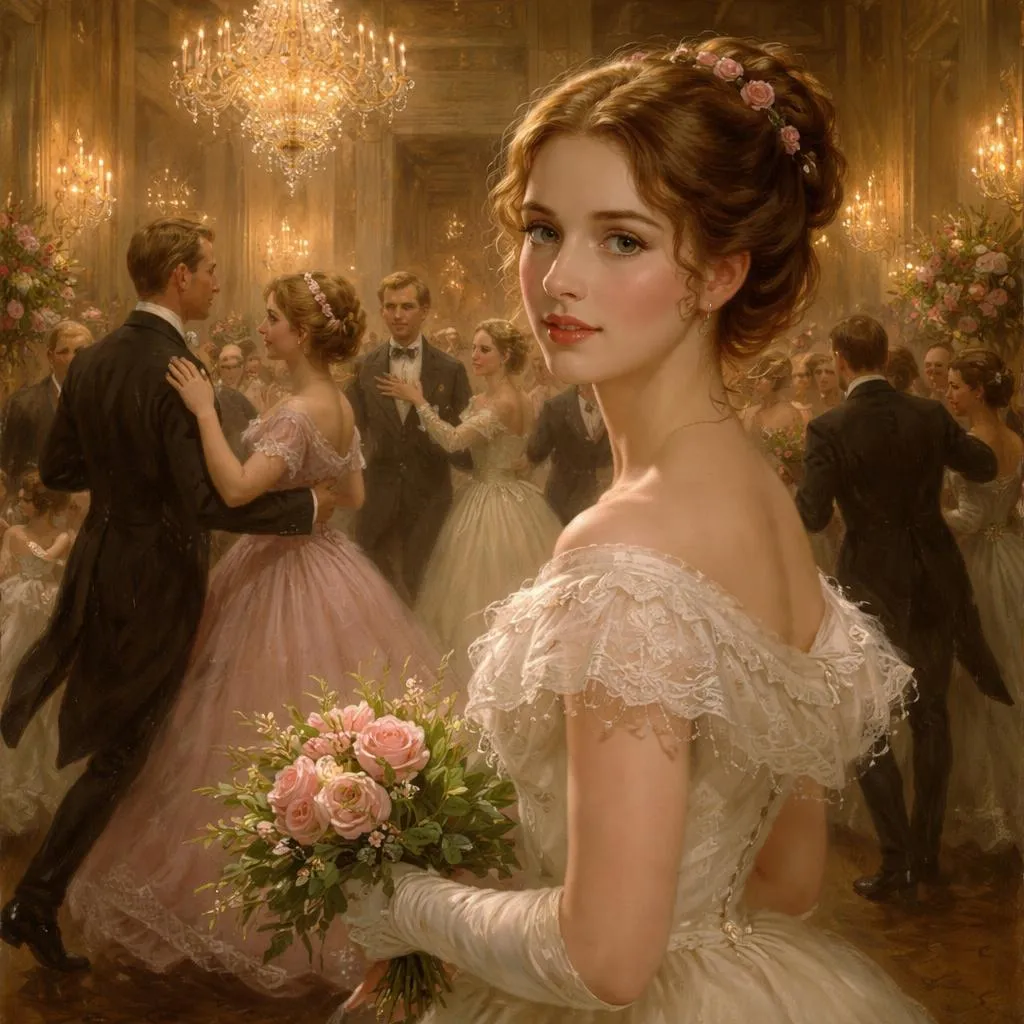

At eighteen, Miss Murray was to emerge from the quiet obscurity of the schoolroom into the full blaze of the fashionable world—as much of it, at least, as could be had out of London; for her papa could not be persuaded to leave his rural pleasures and pursuits, even for a few weeks’ residence in town. She was to make her debut on the third of January, at a magnificent ball, which her mamma proposed to give to all the nobility and choice gentry of O—– and its neighbourhood for twenty miles round. Of course, she looked forward to it with the wildest impatience, and the most extravagant anticipations of delight.
‘Miss Grey,’ said she, one evening, a month before the all–important day, as I was perusing a long and extremely interesting letter of my sister’s—which I had just glanced at in the morning to see that it contained no very bad news, and kept till now, unable before to find a quiet moment for reading it,—’Miss Grey, do put away that dull, stupid letter, and listen to me! I’m sure my talk must be far more amusing than that.’
She seated herself on the low stool at my feet; and I, suppressing a sigh of vexation, began to fold up the epistle.
‘You should tell the good people at home not to bore you with such long letters,’ said she; ‘and, above all, do bid them write on proper note–paper, and not on those great vulgar sheets. You should see the charming little lady–like notes mamma writes to her friends.’
‘The good people at home,’ replied I, ‘know very well that the longer their letters are, the better I like them. I should be very sorry to receive a charming little lady–like note from any of them; and I thought you were too much of a lady yourself, Miss Murray, to talk about the “vulgarity” of writing on a large sheet of paper.’
‘Well, I only said it to tease you. But now I want to talk about the ball; and to tell you that you positively must put off your holidays till it is over.’
‘Why so?—I shall not be present at the ball.’
‘No, but you will see the rooms decked out before it begins, and hear the music, and, above all, see me in my splendid new dress. I shall be so charming, you’ll be ready to worship me—you really must stay.’
‘I should like to see you very much; but I shall have many opportunities of seeing you equally charming, on the occasion of some of the numberless balls and parties that are to be, and I cannot disappoint my friends by postponing my return so long.’
‘Oh, never mind your friends! Tell them we won’t let you go.’
‘But, to say the truth, it would be a disappointment to myself: I long to see them as much as they to see me—perhaps more.’
‘Well, but it is such a short time.’
‘Nearly a fortnight by my computation; and, besides, I cannot bear the thoughts of a Christmas spent from home: and, moreover, my sister is going to be married.’
‘Is she—when?’
‘Not till next month; but I want to be there to assist her in making preparations, and to make the best of her company while we have her.’
‘Why didn’t you tell me before?’
‘I’ve only got the news in this letter, which you stigmatize as dull and stupid, and won’t let me read.’
‘To whom is she to be married?’
‘To Mr. Richardson, the vicar of a neighbouring parish.’
‘Is he rich?’
‘No; only comfortable.’
‘Is he handsome?’
‘No; only decent.’
‘Young?’
‘No; only middling.’
‘Oh, mercy! what a wretch! What sort of a house is it?’
‘A quiet little vicarage, with an ivy–clad porch, an old–fashioned garden, and—’
‘Oh, stop!—you’ll make me sick. How CAN she bear it?’
‘I expect she’ll not only be able to bear it, but to be very happy. You did not ask me if Mr. Richardson were a good, wise, or amiable man; I could have answered Yes, to all these questions—at least so Mary thinks, and I hope she will not find herself mistaken.’
‘But—miserable creature! how can she think of spending her life there, cooped up with that nasty old man; and no hope of change?’
‘He is not old: he’s only six or seven and thirty; and she herself is twenty–eight, and as sober as if she were fifty.’
‘Oh! that’s better then—they’re well matched; but do they call him the “worthy vicar”?’
‘I don’t know; but if they do, I believe he merits the epithet.’
‘Mercy, how shocking! and will she wear a white apron and make pies and puddings?’
‘I don’t know about the white apron, but I dare say she will make pies and puddings now and then; but that will be no great hardship, as she has done it before.’
‘And will she go about in a plain shawl, and a large straw bonnet, carrying tracts and bone soup to her husband’s poor parishioners?’
‘I’m not clear about that; but I dare say she will do her best to make them comfortable in body and mind, in accordance with our mother’s example.’
خلفية ومقدمة عن المؤلف
هذا المقتطف مأخوذ من رواية كلاسيكية من القرن التاسع عشر تستكشف موضوعات التوقعات الاجتماعية، وواجبات الأسرة، والنمو الشخصي. تدور القصة حول الآنسة موري، وهي شابة تستعد لدخول المجتمع من خلال حفل ظهور - وهو حدث مهم يمثل تقديم شابة إلى النخبة الاجتماعية. تصور الرواية التناقض بين إثارة الحياة الاجتماعية والواقع الأكثر هدوءًا والأكثر رسوخًا للعائلة والمسؤولية الشخصية.
غالبًا ما كتبت المؤلفة، وهي شخصية بارزة في الأدب الفيكتوري، عن حياة النساء اللاتي يتنقلن في القواعد الاجتماعية الصارمة في عصرهن. تشتهر أعمالهن بملاحظاتهن الدقيقة للشخصية والمجتمع، حيث يمزجن الفكاهة مع التأملات الجادة حول الطبيعة البشرية والقيود الاجتماعية.
التفسير التفصيلي والأهمية
تسلط هذه الفقرة الضوء على التوتر بين الترقب الشبابي والمسؤولية الناضجة. تنتظر الآنسة موري بفارغ الصبر حفل ظهورها، الذي يرمز إلى دخولها إلى العالم العصري. ومع ذلك، من خلال الحوار مع الآنسة غراي، نلقي نظرة خاطفة على الحقائق العملية وراء مثل هذه الأحداث - الروابط الأسرية، والتضحيات الشخصية، والتوقعات المفروضة على النساء.
يقدم الحديث عن زواج أخت الآنسة موري الوشيك من قس متواضع موضوعات الطبقة الاجتماعية والسعادة الشخصية. يتناقض اختيار الأخت بشكل حاد مع حفل الظهور البراق، مما يشير إلى مسارات مختلفة قد تسلكها النساء في ذلك العصر. تتحدى المناقشة حول شخصية القس وأسلوب حياته الأحكام السطحية، مع التركيز على فضائل مثل اللطف والحكمة والرضا بدلاً من الثروة أو المظهر.
الدروس والأفكار للطلاب
-
فهم التوقعات الاجتماعية: تقدم القصة نافذة على العادات الاجتماعية التاريخية، مما يساعد الطلاب على تقدير كيف تشكل الأدوار والتوقعات المجتمعية الخيارات الفردية. إن إدراك هذه التأثيرات يشجع على التعاطف والتفكير النقدي حول الأعراف الاجتماعية اليوم.
-
الموازنة بين الطموح والواجب: تتناقض إثارة الآنسة موري بشأن الحفل مع حياة أختها الأكثر هدوءًا ومسؤولية. يمكن للطلاب التعرف على الموازنة بين الأحلام الشخصية والالتزامات العائلية وأهمية دعم أحبائهم.
-
الحكم على الشخصية بما يتجاوز المظاهر: يعلم الحوار حول السيد ريتشاردسون قيمة النظر إلى ما وراء السمات السطحية مثل الثروة أو المظهر لتقييم شخصية المرء الحقيقية - وهو درس أساسي في تطوير علاقات ذات مغزى.
-
تقدير مسارات الحياة المختلفة: تظهر القصة أن السعادة والوفاء يأتيان بأشكال عديدة، سواء من خلال النجاح الاجتماعي أو الحياة البسيطة والفضيلة. هذا يوسع وجهات نظر الطلاب حول النجاح والرضا.
تطبيق روح القصة في الحياة اليومية
-
في المدرسة: يمكن للطلاب أن يتعلموا احترام الخلفيات والخيارات المتنوعة بين الزملاء، وتعزيز بيئة شاملة. قد يفكرون أيضًا في الموازنة بين الأهداف الأكاديمية والعائلة والحياة الاجتماعية.
-
في الأماكن الاجتماعية: تشجع القصة على اللطف والانفتاح، وتذكّر الطلاب بعدم الحكم على الآخرين على عجل بناءً على المظاهر أو المكانة الاجتماعية.
-
في النمو الشخصي: يمكن أن يساعد احتضان الطموح والمسؤولية الطلاب على تطوير النضج. يمكنهم أن يطمحوا إلى تحقيق إنجازات شخصية مع البقاء راسخين ومراعيين للآخرين.
تنمية القيم الإيجابية من القصة
-
التعاطف والتفاهم: من خلال رؤية وجهات نظر مختلفة داخل القصة، يمكن للطلاب ممارسة التعاطف، وفهم التحديات والفرح التي يواجهها الآخرون.
-
احترام التقاليد والتغيير: تظهر الرواية احترامًا للعائلة والتقاليد، ولكنها تلمح أيضًا إلى إمكانية الاختيار الشخصي والسعادة بما يتجاوز التوقعات المجتمعية.
-
الحكمة في الحكم: إن تشجيع الطلاب على النظر إلى أعمق من الانطباعات السطحية يعزز الحكمة واتخاذ قرارات أفضل في الصداقات والعلاقات المستقبلية.
-
الامتنان والرضا: تدعو قبول الأخت لحياة متواضعة ولكن سعيدة إلى التفكير في الامتنان لما يمتلكه المرء وإيجاد الفرح في الأشياء البسيطة.
الخاتمة
هذه القصة هي أكثر من مجرد حكاية عن حفل ظهور؛ إنها استكشاف غني للحياة الاجتماعية والروابط الأسرية والقيم الشخصية. للقراء الشباب، تقدم دروسًا خالدة حول الشخصية والتعاطف والطرق المتنوعة التي يجد بها الناس السعادة. من خلال الانخراط في هذه الموضوعات، يمكن للطلاب تطوير فهم أعمق لأنفسهم والعالم من حولهم، وإعدادهم لحياة مدروسة ورحيمة.
