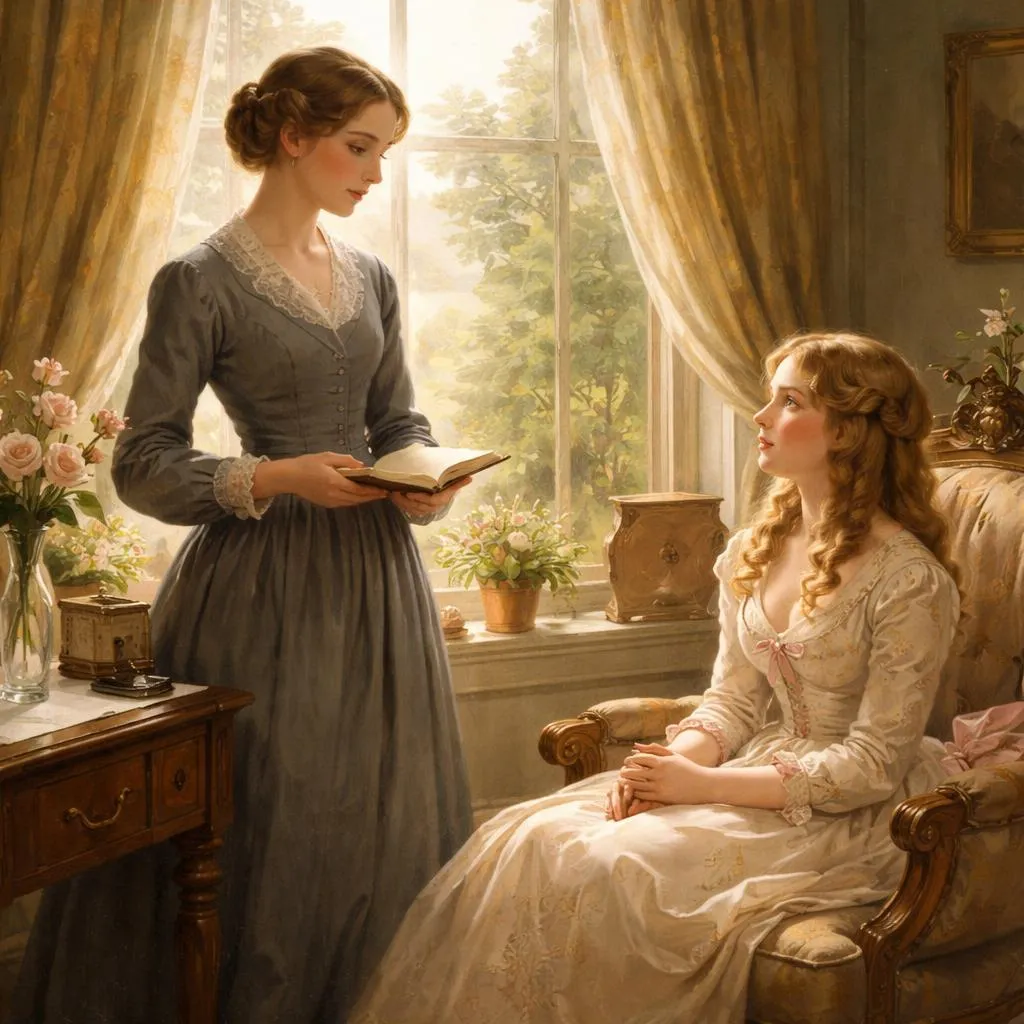

Next Sunday was one of the gloomiest of April days—a day of thick, dark clouds, and heavy showers. None of the Murrays were disposed to attend church in the afternoon, excepting Rosalie: she was bent upon going as usual; so she ordered the carriage, and I went with her: nothing loth, of course, for at church I might look without fear of scorn or censure upon a form and face more pleasing to me than the most beautiful of God’s creations; I might listen without disturbance to a voice more charming than the sweetest music to my ears; I might seem to hold communion with that soul in which I felt so deeply interested, and imbibe its purest thoughts and holiest aspirations, with no alloy to such felicity except the secret reproaches of my conscience, which would too often whisper that I was deceiving my own self, and mocking God with the service of a heart more bent upon the creature than the Creator.
Sometimes, such thoughts would give me trouble enough; but sometimes I could quiet them with thinking—it is not the man, it is his goodness that I love. ‘Whatsoever things are pure, whatsoever things are lovely, whatsoever things are honest and of good report, think on these things.’ We do well to worship God in His works; and I know none of them in which so many of His attributes—so much of His own spirit shines, as in this His faithful servant; whom to know and not to appreciate, were obtuse insensibility in me, who have so little else to occupy my heart.
Almost immediately after the conclusion of the service, Miss Murray left the church. We had to stand in the porch, for it was raining, and the carriage was not yet come. I wondered at her coming forth so hastily, for neither young Meltham nor Squire Green was there; but I soon found it was to secure an interview with Mr. Weston as he came out, which he presently did. Having saluted us both, he would have passed on, but she detained him; first with observations upon the disagreeable weather, and then with asking if he would be so kind as to come some time to–morrow to see the granddaughter of the old woman who kept the porter’s lodge, for the girl was ill of a fever, and wished to see him. He promised to do so.
‘And at what time will you be most likely to come, Mr. Weston? The old woman will like to know when to expect you—you know such people think more about having their cottages in order when decent people come to see them than we are apt to suppose.’
Here was a wonderful instance of consideration from the thoughtless Miss Murray. Mr. Weston named an hour in the morning at which he would endeavour, to be there. By this time the carriage was ready, and the footman was waiting, with an open umbrella, to escort Miss Murray through the churchyard. I was about to follow; but Mr. Weston had an umbrella too, and offered me the benefit of its shelter, for it was raining heavily.
‘No, thank you, I don’t mind the rain,’ I said. I always lacked common sense when taken by surprise.
‘But you don’t LIKE it, I suppose?—an umbrella will do you no harm at any rate,’ he replied, with a smile that showed he was not offended; as a man of worse temper or less penetration would have been at such a refusal of his aid. I could not deny the truth of his assertion, and so went with him to the carriage; he even offered me his hand on getting in: an unnecessary piece of civility, but I accepted that too, for fear of giving offence. One glance he gave, one little smile at parting—it was but for a moment; but therein I read, or thought I read, a meaning that kindled in my heart a brighter flame of hope than had ever yet arisen.
‘I would have sent the footman back for you, Miss Grey, if you’d waited a moment—you needn’t have taken Mr. Weston’s umbrella,’ observed Rosalie, with a very unamiable cloud upon her pretty face.
‘I would have come without an umbrella, but Mr. Weston offered me the benefit of his, and I could not have refused it more than I did without offending him,’ replied I, smiling placidly; for my inward happiness made that amusing, which would have wounded me at another time.
The carriage was now in motion. Miss Murray bent forwards, and looked out of the window as we were passing Mr. Weston. He was pacing homewards along the causeway, and did not turn his head.
‘Stupid ass!’ cried she, throwing herself back again in the seat. ‘You don’t know what you’ve lost by not looking this way!’
‘What has he lost?’
‘A bow from me, that would have raised him to the seventh heaven!’
I made no answer. I saw she was out of humour, and I derived a secret gratification from the fact, not that she was vexed, but that she thought she had reason to be so. It made me think my hopes were not entirely the offspring of my wishes and imagination.
‘I mean to take up Mr. Weston instead of Mr. Hatfield,’ said my companion, after a short pause, resuming something of her usual cheerfulness. ‘The ball at Ashby Park takes place on Tuesday, you know; and mamma thinks it very likely that Sir Thomas will propose to me then: such things are often done in the privacy of the ball–room, when gentlemen are most easily ensnared, and ladies most enchanting. But if I am to be married so soon, I must make the best of the present time: I am determined Hatfield shall not be the only man who shall lay his heart at my feet, and implore me to accept the worthless gift in vain.’
‘If you mean Mr. Weston to be one of your victims,’ said I, with affected indifference, ‘you will have to make such overtures yourself that you will find it difficult to draw back when he asks you to fulfil the expectations you have raised.’
‘I don’t suppose he will ask me to marry him, nor should I desire it: that would be rather too much presumption! but I intend him to feel my power. He has felt it already, indeed: but he shall ACKNOWLEDGE it too; and what visionary hopes he may have, he must keep to himself, and only amuse me with the result of them—for a time.’
‘Oh! that some kind spirit would whisper those words in his ear,’ I inwardly exclaimed. I was far too indignant to hazard a reply to her observation aloud; and nothing more was said about Mr. Weston that day, by me or in my hearing. But next morning, soon after breakfast, Miss Murray came into the schoolroom, where her sister was employed at her studies, or rather her lessons, for studies they were not, and said, ‘Matilda, I want you to take a walk with me about eleven o’clock.’
‘Oh, I can’t, Rosalie! I have to give orders about my new bridle and saddle–cloth, and speak to the rat–catcher about his dogs: Miss Grey must go with you.’
‘No, I want you,’ said Rosalie; and calling her sister to the window, she whispered an explanation in her ear; upon which the latter consented to go.
I remembered that eleven was the hour at which Mr. Weston proposed to come to the porter’s lodge; and remembering that, I beheld the whole contrivance. Accordingly, at dinner, I was entertained with a long account of how Mr. Weston had overtaken them as they were walking along the road; and how they had had a long walk and talk with him, and really found him quite an agreeable companion; and how he must have been, and evidently was, delighted with them and their amazing condescension, &c. &c.
الخلفية ومقدمة المؤلف
هذه الفقرة مأخوذة من رواية كلاسيكية من القرن التاسع عشر، تعكس الأعراف الاجتماعية والعلاقات والأفكار الداخلية لشخصياتها خلال تلك الحقبة. تدور أحداث القصة في وقت لعبت فيه المكانة الاجتماعية والمغازلة والمظاهر دورًا مهمًا في الحياة اليومية، خاصة بين النبلاء. المؤلف، الذي لم يُذكر اسمه صراحة هنا، هو على الأرجح كاتب يستكشف موضوعات الحب والأخلاق والتوقعات الاجتماعية، وغالبًا ما يركز على الصراعات الداخلية للشابات اللاتي يتنقلن في المجتمع.
التفسير التفصيلي والأهمية
يصف المشهد بعد ظهر يوم أحد ممطر حيث تصر روزالي، وهي شخصية حازمة، على حضور الكنيسة على الرغم من الطقس الكئيب. يعاني الراوي، الذي يتأثر بشدة بوجود وصوت السيد ويستون، من مزيج من الإعجاب والصراع الداخلي. إنها تتصارع مع مشاعر المودة والذنب، ممزقة بين التفاني الروحي والرغبات الدنيوية.
يتناقض سلوك الآنسة موراي بشكل حاد مع إخلاص الراوي. يتم تصوير روزالي على أنها متغطرسة ومتلاعبة إلى حد ما، وتهدف إلى جذب انتباه السيد ويستون لتحقيق مصلحتها الاجتماعية. هذا التوتر بين الشعور الحقيقي والطموح السطحي هو موضوع مركزي، يوضح الطرق المختلفة التي يتعامل بها الناس مع العلاقات والقيمة الذاتية.
تسلط القصة الضوء أيضًا على العادات الاجتماعية في ذلك الوقت، مثل أهمية المظاهر، ودور الكنيسة كمكان للتجمع الاجتماعي، واللعب الخفي للقوة في المغازلة. تشير تأملات الراوي حول الخير والنقاء إلى درس أخلاقي حول تقدير الصفات الداخلية على السحر الخارجي.
الدروس والأفكار للطلاب
-
فهم الصراع الداخلي: يعلم صراع الراوي الطلاب عن مدى تعقيد المشاعر الإنسانية، خاصة عند الموازنة بين الرغبات الشخصية والمعتقدات الأخلاقية أو الروحية. يساعد التعرف على مثل هذه الصراعات على تطوير الذكاء العاطفي.
-
مراقبة الديناميكيات الاجتماعية: يوضح التباين بين الشخصيات كيف تؤثر المكانة الاجتماعية والطموحات الشخصية على السلوك. يمكن للطلاب تعلم تحديد الدوافع وراء الأفعال وفهم تأثير التوقعات المجتمعية.
-
تقدير الصفات الحقيقية: يشجع إعجاب الراوي بخير السيد ويستون على مظهره على تقدير شخصية الآخرين ولطفهم، وهو درس خالد لبناء علاقات ذات مغزى.
-
التفكير النقدي حول المظاهر: تعمل تكتيكات روزالي المتلاعبة كمثال تحذيري حول مخاطر السطحية والخداع. يمكن للطلاب التفكير في أهمية الأصالة في الصداقات والتفاعلات الاجتماعية.
تطبيق هذه الدروس في الحياة والتعلم
-
في المدرسة: يمكن للطلاب ممارسة التعاطف من خلال النظر في مشاعر ودوافع الآخرين قبل الحكم عليهم. يمكنهم أيضًا التفكير في قيمهم الخاصة والسعي إلى التصرف بنزاهة.
-
في الأوساط الاجتماعية: يساعد فهم أن الناس قد يكون لديهم أسباب خفية لسلوكهم في إدارة الصداقات والصراعات بحكمة أكبر. يمكن أن يؤدي التعرف على اللطف الحقيقي مقابل السحر السطحي إلى توجيه خيارات أفضل في العلاقات.
-
في النمو الشخصي: يشجع الاستبطان الخاص بالراوي على الوعي الذاتي. يمكن للطلاب أن يتعلموا الاستماع إلى ضميرهم والموازنة بين عواطفهم والعقل والأخلاق.
تنمية الصفات الإيجابية من القصة
-
الصدق والإخلاص: حاكِ انعكاسات الراوي الصادقة ومشاعره الحقيقية بدلاً من تبني سلوكيات متلاعبة.
-
احترام الآخرين: مثل احترام الراوي لخير السيد ويستون، يجب على الطلاب تقدير الصفات الداخلية للآخرين بغض النظر عن المظاهر.
-
التأمل الذاتي: فكر بانتظام في دوافعك ومشاعرك لتنمو عاطفياً وأخلاقياً.
-
اللطف والاعتبار: لاحظ كيف تظهر لحظة تفكير الآنسة موراي في كوخ المرأة العجوز أن حتى الأشخاص الذين يبدون غير مراعين يمكنهم أن يتعلموا أن يكونوا مراعين. أعمال اللطف الصغيرة مهمة.
الخاتمة
تقدم هذه الفقرة مادة غنية للقراء الشباب لاستكشاف موضوعات الحب والأخلاق والتوقعات الاجتماعية والوعي الذاتي. من خلال تحليل أفعال الشخصيات وأفكارها الداخلية، يمكن للطلاب اكتساب رؤى قيمة حول الطبيعة البشرية وتطوير المهارات التي تساعدهم على التنقل في عوالمهم الاجتماعية بالتعاطف والنزاهة والحكمة.
