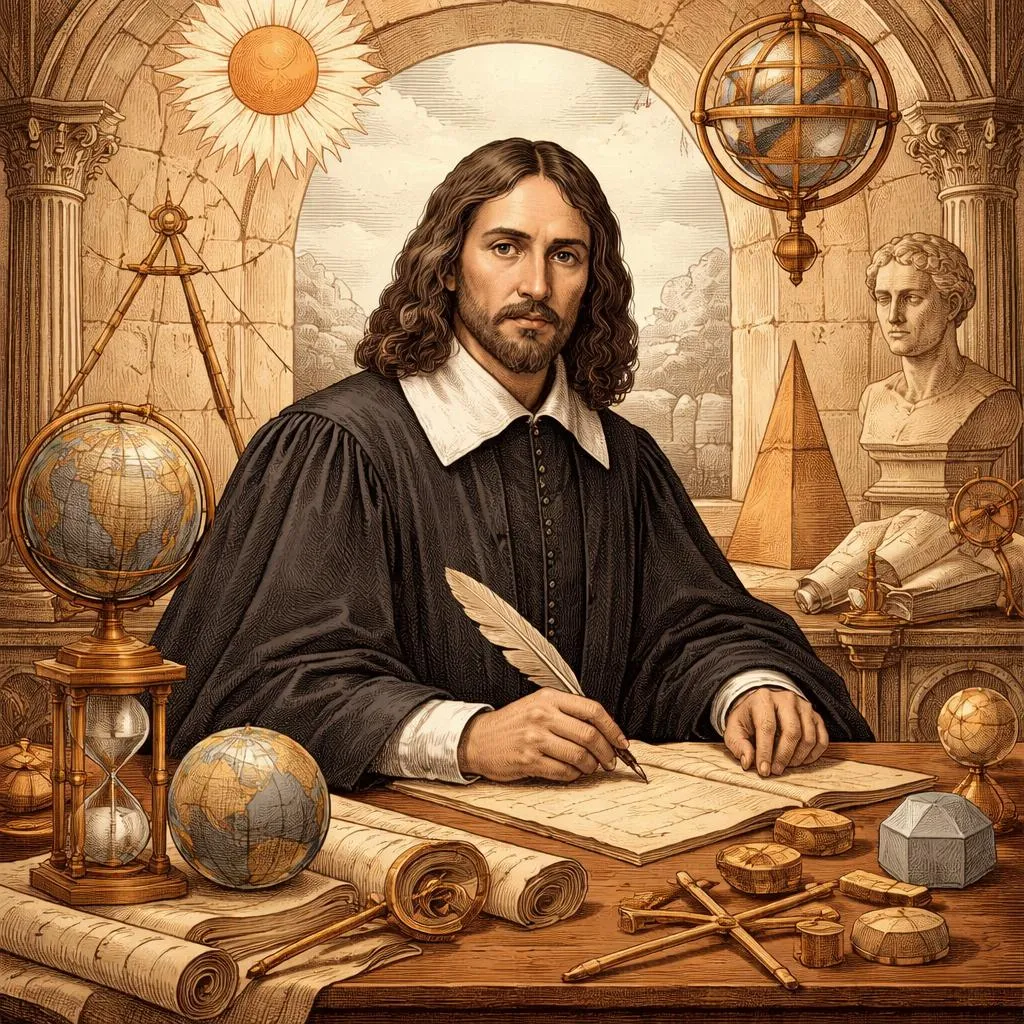

Isaac Barrow was born in London in 1630, and died at Cambridge in 1677. He went to school first at Charterhouse (where he was so troublesome that his father was heard to pray that if it pleased God to take any of his children he could best spare Isaac), and subsequently to Felstead. He completed his education at Trinity College, Cambridge; after taking his degree in 1648, he was elected to a fellowship in 1649; he then resided for a few years in college, but in 1655 he was driven out by the persecution of the Independents. He spent the next four years in the East of Europe, and after many adventures returned to England in 1659. He was ordained the next year, and appointed to the professorship of Greek at Cambridge. In 1662 he was made professor of geometry at Gresham College, and in 1663 was selected as the first occupier of the Lucasian chair at Cambridge. He resigned the latter to his pupil Newton in 1669, whose superior abilities he recognized and frankly acknowledged. For the remainder of his life he devoted himself to the study of divinity. He was appointed master of Trinity College in 1672, and held the post until his death.
He is described as "low in stature, lean, and of a pale complexion," slovenly in his dress, and an inveterate smoker. He was noted for his strength and courage, and once when travelling in the East he saved the ship by his own prowess from capture by pirates. A ready and caustic wit made him a favourite of Charles II., and induced the courtiers to respect even if they did not appreciate him. He wrote with a sustained and somewhat stately eloquence, and with his blameless life and scrupulous conscientiousness was an impressive personage of the time.
His earliest work was a complete edition of the Elements of Euclid, which he issued in Latin in 1655, and in English in 1660; in 1657 he published an edition of the Data. His lectures, delivered in 1664, 1665, and 1666, were published in 1683 under the title Lectiones Mathematicae; these are mostly on the metaphysical basis for mathematical truths. His lectures for 1667 were published in the same year, and suggest the analysis by which Archimedes was led to his chief results. In 1669 he issued his Lectiones Opticae et Geometricae. It is said in the preface that Newton revised and corrected these lectures, adding matter of his own, but it seems probable from Newton's remarks in the fluxional controversy that the additions were confined to the parts which dealt with optics. This, which is his most important work in mathematics, was republished with a few minor alterations in 1674. In 1675 he published an edition with numerous comments of the first four books of the Conics of Apollonius, and of the extant works of Archimedes and Theodosius.
In the optical lectures many problems connected with the reflexion and refraction of light are treated with ingenuity. The geometrical focus of a point seen by reflexion or refraction is defined; and it is explained that the image of an object is the locus of the geometrical foci of every point on it. Barrow also worked out a few of the easier properties of thin lenses, and considerably simplified the Cartesian explanation of the rainbow.
The geometrical lectures contain some new ways of determining the areas and tangents of curves. The most celebrated of these is the method given for the determination of tangents to curves, and this is sufficiently important to require a detailed notice, because it illustrates the way in which Barrow, Hudde and Sluze were working on the lines suggested by Fermat towards the methods of the differential calculus.
Fermat had observed that the tangent at a point P on a curve was determined if one other point besides P on it were known; hence, if the length of the subtangent MT could be found (thus determining the point T), then the line TP would be the required tangent. Now Barrow remarked that if the abscissa and ordinate at a point Q adjacent to P were drawn, he got a small triangle PQR (which he called the differential triangle, because its sides PR and PQ were the differences of the abscissae and ordinates of P and Q), so that
TM : MP = QR : RP.
To find QR : RP he supposed that x, y were the co-ordinates of P, and x - e, y - a those of Q (Barrow actually used p for x and m for y, but I alter these to agree with modern practice). Substituting the co-ordinates of Q in the equation of the curve, and neglecting the squares and higher powers of e and a as compared with their first powers, he obtained e : a. The ratio a/e was subsequently (in accordance with a suggestion made by Sluze) termed the angular coefficient of the tangent at the point. Barrow applied this method to the curves (i) x² (x² + y²) = r²y²;(ii) x³ + y³ = r³; (iii) x³ + y³ = rxy, called la galande; (iv) y = (r - x) tan πx/2r, the quadratrix; and (v) y = r tan πx/2r. It will be sufficient here if I take as an illustration the simpler case of the parabola y² = px. Using the notation given above, we have for the point P, y² = px; and for the point Q, (y - a)² = p(x - e). Subtracting we get 2ay - a² = pe. But, if a be an infinitesimal quantity, a² must be infinitely smaller and therefore may be neglected when compared with the quantities 2ay and pe. Hence 2ay = pe, that is, e : a = 2y : p. Therefore TP : y = e : a = 2y : p. Hence TM = 2y²/p = 2x. This is exactly the procedure of the differential calculus, except that there we have a rule by which we can get the ratio a/e or dy/dx directly without the labour of going through a calculation similar to the above for every separate case.
خلفية ومقدمة المؤلف
كان إسحاق بارو عالم رياضيات ولاهوتيًا بارزًا في القرن السابع عشر. ولد في لندن عام 1630، وعاش في زمن شهد اكتشافات علمية وتغيرات فكرية عظيمة. لم يكن بارو مجرد عالم، بل كان أيضًا مغامرًا شجاعًا، معروفًا بقوته وذكائه. على الرغم من شبابه الجامح بعض الشيء، أصبح أحد أبرز علماء الرياضيات في عصره، وشغل مناصب أكاديمية مرموقة في جامعة كامبريدج. وضع عمل بارو أسسًا مهمة لحساب التفاضل والتكامل، وهو فرع من الرياضيات سيتم تطويره لاحقًا على يد تلميذه الشهير، إسحاق نيوتن.
تعلمنا قصة حياة بارو عن المثابرة والفضول الفكري وأهمية التعرف على المواهب وتشجيعها لدى الآخرين. إن قراره بالتنازل عن كرسي لوكاسيان المرموق لنيوتن يدل على التواضع والالتزام بالنهوض بالمعرفة بما يتجاوز الطموح الشخصي.
شرح وتوضيح مفصل
يصف النص أعلاه مساهمات بارو في الرياضيات، وخاصة في الهندسة والبصريات. عمل على مسائل تتعلق بانعكاس وانكسار الضوء، وشرح كيفية تكون الصور من خلال العدسات - وهو موضوع لا يزال أساسيًا في الفيزياء والبصريات اليوم. قدمت محاضراته عن الهندسة طرقًا جديدة لإيجاد المماسات للمنحنيات، وهو مفهوم أساسي في حساب التفاضل والتكامل.
تضمنت طريقة بارو في التعامل مع المماسات ما نسميه الآن "المثلث التفاضلي"، وهي أداة هندسية ذكية ساعدته في تقريب منحدرات المنحنيات قبل التطور الرسمي لحساب التفاضل والتكامل. كانت هذه الطريقة بمثابة حجر زاوية نحو التقنيات القوية التي سيقوم نيوتن وليبنيز بتأصيلها لاحقًا. ساعد عمل بارو على المقاطع المخروطية وتعليقه على علماء الرياضيات القدماء مثل أبولونيوس وأرخميدس أيضًا في الحفاظ على المعرفة الرياضية الكلاسيكية والنهوض بها.
ما يمكن للطلاب تعلمه
-
السياق التاريخي للرياضيات: يساعد فهم عمل بارو الطلاب على تقدير كيفية تطور الأفكار الرياضية بمرور الوقت. يوضح أن حساب التفاضل والتكامل، وهو موضوع غالبًا ما يُنظر إليه على أنه صعب، تم تطويره خطوة بخطوة من قبل العديد من المفكرين الذين بنوا على اكتشافات بعضهم البعض.
-
التعلم متعدد التخصصات: جمع بارو بين اهتماماته بالرياضيات واللاهوت والفلسفة، مما يدل على قيمة التعليم الواسع والترابط بين المجالات المختلفة.
-
التفكير النقدي وحل المشكلات: تعلم طريقة بارو في تحليل المنحنيات والضوء الطلاب كيفية التعامل مع المشكلات بشكل إبداعي ومنطقي، وتقسيم الأفكار المعقدة إلى أجزاء أبسط.
-
التواضع والتوجيه: إن اعتراف بارو بموهبة نيوتن المتفوقة واستعداده للتنحي هو درس قوي في التواضع وأهمية دعم نمو الآخرين.
التطبيقات في الحياة والتعلم
-
في المدرسة: يمكن للطلاب تطبيق مثال بارو من خلال التحلي بالفضول والمثابرة في دراساتهم، خاصة في المواد الصعبة مثل الرياضيات والعلوم. يمكن أن يجعل تعلم التاريخ وراء المفاهيم هذه أكثر إثارة للاهتمام وأسهل في الفهم.
-
في البيئات الاجتماعية: تشجع قصة بارو على احترام مواهب الآخرين وأهمية التوجيه. يمكن أن يساعد مساعدة الزملاء والتعرف على نقاط قوتهم في بناء مجتمع تعليمي إيجابي.
-
في النمو الشخصي: تظهر حياة بارو أن الأخطاء أو الصعوبات المبكرة لا تحدد مستقبل الشخص. بالجهد والتفاني، يمكن لأي شخص تحقيق أشياء عظيمة.
كيفية تنمية الصفات الإيجابية من قصة بارو
-
الفضول: اطرح دائمًا الأسئلة وحاول أن تفهم كيف تعمل الأشياء، تمامًا كما استكشف بارو طبيعة الضوء والمنحنيات.
-
الشجاعة: لا تخف من مواجهة التحديات أو التجارب الجديدة، كما فعل بارو عندما سافر وواجه القراصنة.
-
التواضع: اعترف عندما يكون لدى الآخرين أفكار أفضل وكن على استعداد للتعلم منهم.
-
الضمير: اسعَ لتحقيق النزاهة والعمل الدقيق، كما فعل بارو في حياته العلمية والشخصية.
التأمل والتقدير
يمكن أن يلهم القراءة عن إسحاق بارو الطلاب لتقدير كل من المعرفة والشخصية. إن مزيجه من الذكاء الفكري والشجاعة الشخصية يجعله نموذجًا يحتذى به ليس فقط للعلماء وعلماء الرياضيات الطموحين، ولكن لأي شخص يريد أن ينمو كفرد مفكر ومحترم وشجاع. من خلال دراسة حياته وعمله، يمكن للمتعلمين الشباب أن يروا كيف يسير التفاني في التعلم واللطف مع الآخرين جنبًا إلى جنب في إحداث تأثير هادف على العالم.
