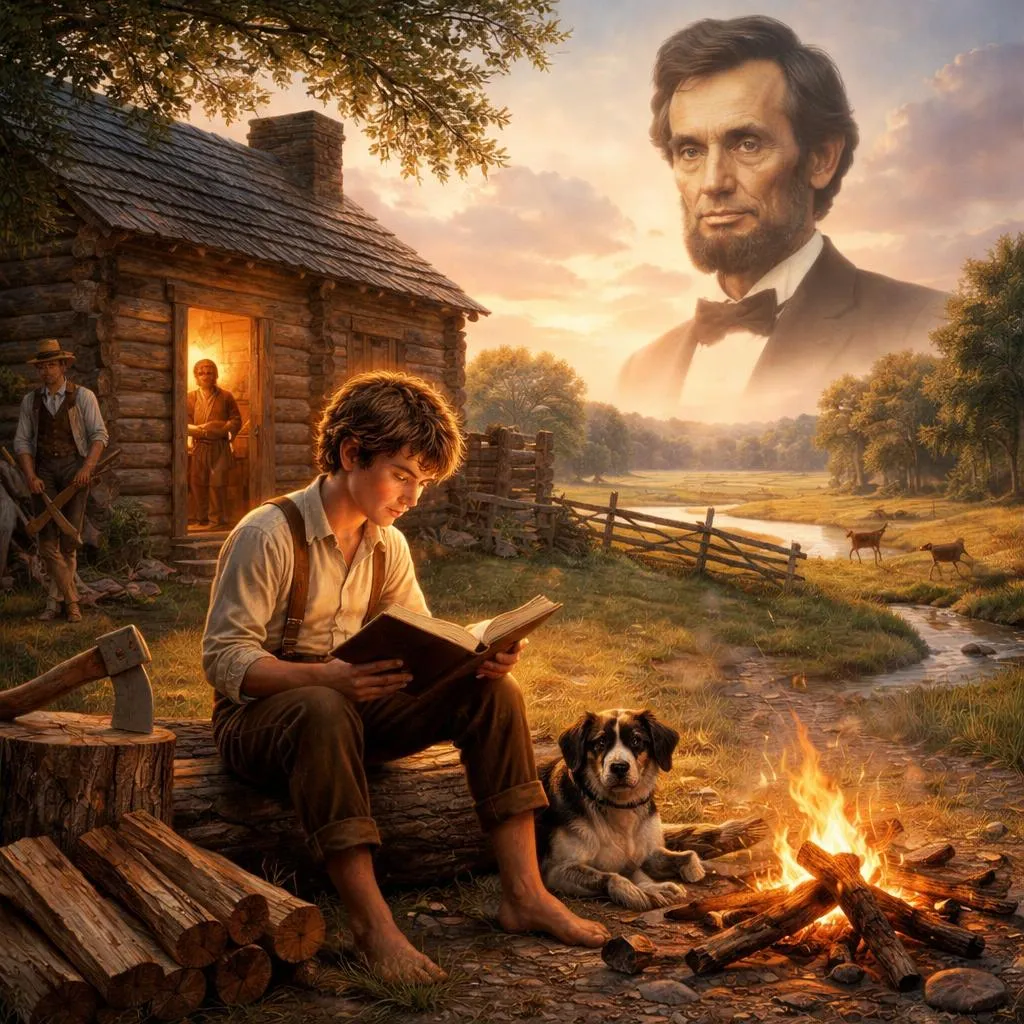

A severe and mysterious sickness broke out in the little Kentucky settlement where the Lincolns lived when Abe was about seven. Nancy Hanks Lincoln, the mother of young Abraham Lincoln died. Meanwhile, Sarah Bush Johnston had married about the time Lincoln’s father married Nancy Hanks. Her husband had died too. She was left with three children. Lincoln’s father went back to his home and married the widow Sarah.
The household goods that she brought with her to the Lincoln home filled a four-horse wagon. Her own three children were well clothed and cared for. She was able to bring little Abraham and his eleven year old sister Sarah comforts they had never known.
The new stepmother quickly became very fond of Abraham. She encouraged him in every way to study and improve himself. Mr. Lincoln once wrote, “It was a wild region, with many bears and other wild animals still in the woods. There I grew up.”
The family moved to Indiana. For two years Lincoln went without schooling of any sort. The school he attended shortly after Sarah came was very simple. The Pigeon Creek settlement had only eight or ten very poor families. They lived deep in the forest. Even if they had the money, it would have been impossible to buy books, slates, pens, ink, or paper.
In Lincoln’s seventeenth year he had more books and better teachers, but he had to walk four or five miles to reach them. We know that he learned to write, and was given pen, ink, a copybook, and a very small supply of writing paper. The instruction he received from his five teachers—two in Kentucky and three in Indiana—stretched over nine years. All together his schooling did not amount to one year.
The fact that he received this instruction, as he himself said, “by littles,” was an advantage. A lazy or not caring boy would have forgotten what was taught him at school. Abraham was neither indifferent or not caring. Every moment of instruction was a precious step to self-help. He worked on his studies with very unusual purpose and determination. He wanted to understand them at the moment. He also wanted to fix them firmly in his mind. His early companions all agree that he employed every spare moment to his studies. His stepmother tells us that “When he came across a passage that struck him, he would write it down on boards if he had no paper. He would keep it there until he did get paper. Then he would rewrite it, look at it, and repeat it. He had a copybook, a kind of scrapbook, in which he put down all things, and thus saved them.” He spent long evenings writing sums on the fire-shovel. Abraham worked his sums by the flickering firelight, making his figures with a piece of charcoal. When the shovel was all covered, he used a drawing-knife to shave it clean again.
He borrowed every book in the neighborhood. The list is a short one: Robinson Crusoe, Aesop’s Fables, Bunyan’s Pilgrim’s Progress, Weems’s Life of Washington, and A History of the United States. When everything else had been read, he began on the Revised Statutes of Indiana, which he visited a neighbor in order to read.
He was a social, sunny-tempered lad, as fond of jokes and fun as he was kindly and industrious. His stepmother said of him: “I can say, what scarcely one mother in a thousand can say, Abe never gave me a cross word or look, and never refused . . . to do anything I asked him. . . I must say . . that Abe was the best boy I ever saw or expect to see.”
He was not only a tall, strong country boy: he soon grew to be a tall, strong, sinewy man. He soon reached the unusual height of six feet four inches. His long arms gave him power as an axman. He usually beat his friends in races and mind puzzles. He could out-run, out-lift, out-wrestle his friends, that he could chop faster, split more rails in a day, carry a heavier log at a “raising,” or beat the neighborhood champion in any frontier athletics made him proud; but stronger than that was his hunger for learning. He felt that using the mind rather than muscle was the key to success. He wished not only to wrestle with the best of them, but also to be able to talk like the preacher, spell and cipher like the schoolmaster, argue like the lawyer, and write like the editor.
Because of his reading and his excellent memory, he soon became the best storyteller among his companions. The training from his studies made his naturally bright mind grow. His wit might be mischievous, but it was never malicious, and his nonsense was never intended to wound. He took no pleasure in hunting. Almost every youth of the backwoods early became an excellent shot and sportsman. The woods still swarmed with game, and every cabin depended largely upon this for its supply of food. But to his strength was added a gentleness, which made him shrink from killing or inflicting pain. The time the other boys spent lying in ambush, he preferred to spend in reading or improving his mind.
In March, 1831, at the end of a terrible winter, Abraham Lincoln left his father’s cabin to seek his own fortune in the world.
خلفية ومقدمة المؤلف
تحكي هذه القصة عن الحياة المبكرة لأبراهام لينكولن، الرئيس السادس عشر للولايات المتحدة، المعروف بقيادته خلال الحرب الأهلية الأمريكية وجهوده لإلغاء الرق. مستوحاة الرواية من الروايات التاريخية والسير الذاتية التي تفصل بدايات لينكولن المتواضعة في مستوطنة حدودية. لقد رُويت قصة حياة لينكولن وأعيدت روايتها في عدد لا يحصى من السير الذاتية وكتب الأطفال والروايات التاريخية، مع التركيز على مثابرته وتعليمه الذاتي وشخصيته الأخلاقية.
قصة أبراهام لينكولن ليست مجرد قصة عن قائد مشهور، بل عن قوة التصميم والتعلم على الرغم من الصعوبات. يهدف مؤلف العديد من هذه القصص السيرية إلى إلهام القراء الشباب من خلال إظهار كيف تغلب لينكولن على الفقر والخسارة والتعليم المحدود ليصبح رجلاً عظيماً.
التفسير التفصيلي والأهمية
تسلط هذه القصة الضوء على العديد من الموضوعات الرئيسية: المرونة في مواجهة الشدائد، وقيمة التعليم، وأهمية الشخصية. يوضح موت والدة لينكولن ووصول زوجة أب عطوفة كيف يلعب الدعم الأسري دوراً حاسماً في التنمية الشخصية. على الرغم من الموارد والفرص المحدودة، فإن عطش لينكولن للمعرفة والتحسين الذاتي يتألق.
تكشف القصة أيضاً عن تحديات الحياة الحدودية - المدارس النادرة، والمسافات الطويلة إلى المعلمين، والحاجة إلى الموازنة بين العمل البدني والدراسة. يوضح أسلوب لينكولن في الكتابة على الألواح وإعادة نسخ المقاطع إبداعه وتصميمه على التعلم. إن استعارته لكتب مثل روبنسون كروزو و حكايات إيسوب تظهر حماسه لاستكشاف الأفكار والقصص المختلفة.
تتوازن قوة لينكولن البدنية ومهاراته الرياضية مع طبيعته اللطيفة وفضوله الفكري، مما يصور شخصية متوازنة. يشير تفضيله للقراءة على الصيد إلى عقل متفكر يركز على النمو بدلاً من مجرد البقاء على قيد الحياة.
الدروس والأفكار للطلاب
- المثابرة والانضباط الذاتي: تعلم قصة لينكولن الطلاب أهمية العمل الجاد والاستفادة القصوى من كل فرصة للتعلم، حتى عندما تكون الظروف صعبة.
- قيمة التعليم: حتى مع أقل من عام من التعليم الرسمي، ساعد تفاني لينكولن في القراءة والكتابة على النجاح. هذا يدل على أن التعليم لا يقتصر فقط على الوقت الذي يقضيه في المدرسة، بل يتعلق بجودة الجهد والمشاركة.
- الإبداع في التعلم: باستخدام أي مواد متاحة، وجد لينكولن طرقاً لممارسة الكتابة وحفظ المقاطع المهمة. وهذا يشجع الطلاب على أن يكونوا مبدعين ومثابرين.
- الشخصية واللطف: يضرب سلوك لينكولن المحترم واللطيف تجاه زوجة أبيه وأصدقائه مثالاً على حسن الخلق والتفاعل الاجتماعي الإيجابي.
- الموازنة بين القوة واللطف: لا يعني أن تكون قوياً أن تكون قاسياً؛ يعلم لطف لينكولن إلى جانب قوته البدنية التعاطف واحترام الآخرين.
التطبيقات في الحياة اليومية
- في التعلم: يمكن للطلاب محاكاة لينكولن من خلال تخصيص وقت للدراسة بانتظام، واستخدام طرق إبداعية إذا كانت الموارد محدودة، والبحث عن المعرفة خارج الكتب المدرسية.
- في الأوساط الاجتماعية: يذكر سلوك لينكولن المحترم الطلاب بمعاملة الآخرين بلطف والتعاون، مما يساعد على بناء علاقات قوية.
- في التغلب على التحديات: عند مواجهة الصعوبات، يمكن للطلاب أن يتذكروا مثال لينكولن على المثابرة والتفاؤل، مع فهم أن النكسات جزء من النمو.
- في النمو الشخصي: يمكن أن يساعد تحقيق التوازن بين الأنشطة البدنية والمساعي الفكرية في تطوير شخصية متوازنة، تماماً كما جمع لينكولن بين القوة وحب القراءة.
تنمية الصفات الإيجابية من القصة
- الفضول: شجع على طرح الأسئلة واستكشاف مواضيع جديدة.
- الاجتهاد: ضع أهدافاً للدراسة والممارسة بانتظام.
- الاحترام: أظهر التقدير للعائلة والمعلمين والأقران.
- المرونة: تعلم كيفية التعافي من الإخفاقات أو العقبات.
- التعاطف: افهم مشاعر الآخرين وتجنب إيذاءهم.
تعد قصة حياة أبراهام لينكولن المبكرة مثالاً قوياً للقراء الشباب. يوضح أن العظمة تبدأ بجهود صغيرة ومتسقة وأن الشخصية واللطف لا يقلان أهمية عن الذكاء والقوة. من خلال التعلم من رحلته، يمكن للطلاب أن يجدوا الإلهام لمتابعة أحلامهم بشجاعة وقلب.
