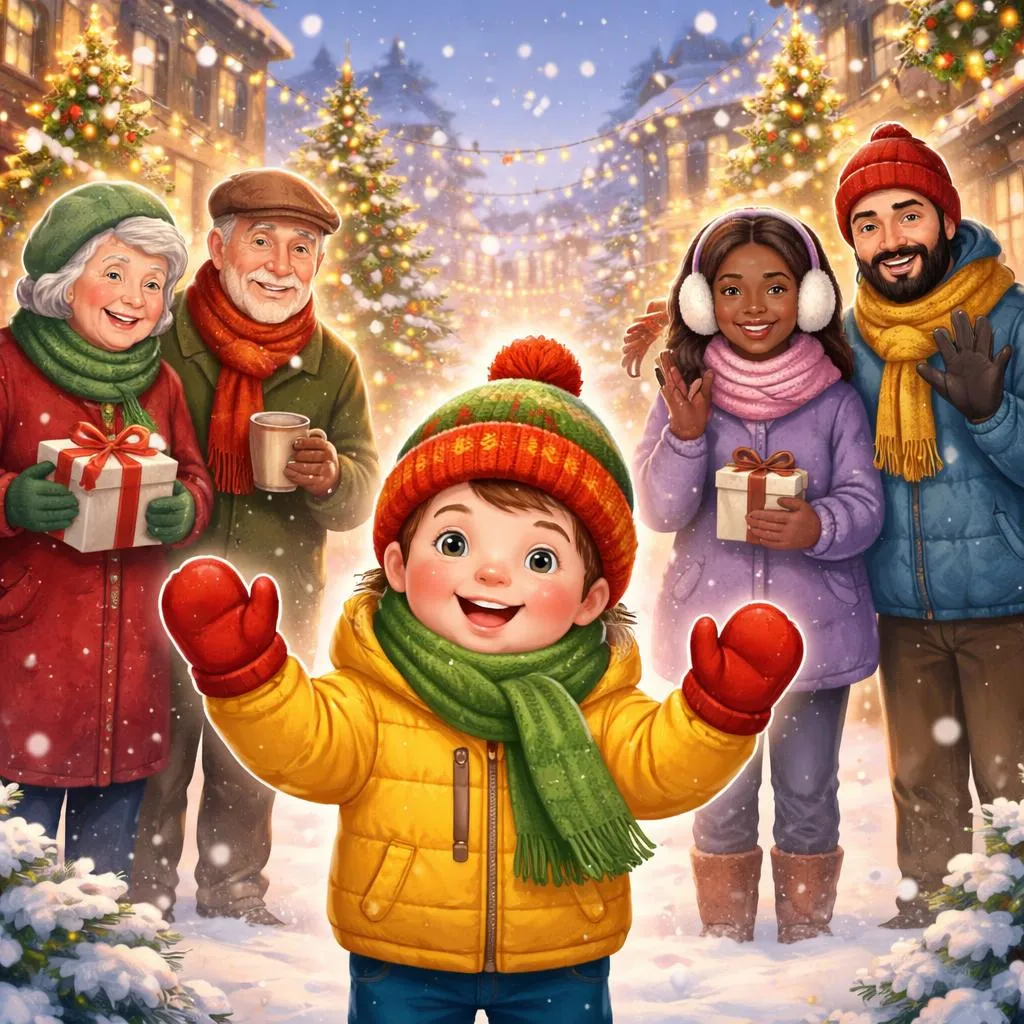

What Do These Expressions Mean? “Merry Christmas” and “happy holidays” both send warm wishes during the winter season. They tell someone that you hope they have joy during festive days. Children hear these words in December at school, stores, and parties. Both spread kindness.
“Merry Christmas” means may your Christmas day be joyful and full of cheer. It is specific to the Christian holiday. A child says it to family and friends who celebrate Christmas. It feels traditional and warm.
“Happy holidays” means may all the holidays in this season bring you joy. It is broader and more inclusive. A child says it when they are not sure what someone celebrates. It feels kind and respectful.
These expressions seem similar. Both wish happiness in December. Both come from a kind heart. But one is for a specific holiday while one is for all holidays.
What's the Difference? One is specific. One is general. “Merry Christmas” names the December 25th holiday. It is perfect for people you know celebrate Christmas. It is traditional and cozy.
“Happy holidays” includes Christmas, Hanukkah, Kwanzaa, and New Year's. It works for everyone, no matter what they celebrate. It is safe and kind when you are not sure. It shows respect for different traditions.
Think of a child at school. They know their friend celebrates Christmas. “Merry Christmas” is right. They meet a new friend and do not know. “Happy holidays” is kinder. One fits known traditions. One fits unknown.
One is for some people. The other is for all people. “Merry Christmas” is for Christians. “Happy holidays” is for everyone. Using “happy holidays” never hurts. It always includes.
Also, “merry” means joyful and lively. “Happy” means content and glad. Both are good. Both are kind. But “merry” only goes with Christmas. “Happy” goes with everything.
When Do We Use Each One? Use “merry Christmas” when you know someone celebrates Christmas. Use it with family, close friends, and neighbors you know. Use it at Christmas parties and with relatives. It fits specific, known situations.
Examples at home: “Merry Christmas, Grandma. I love you.” “Merry Christmas to my whole family.” “Merry Christmas. Let's open presents.”
Use “happy holidays” when you are not sure what someone celebrates. Use it at school, in stores, or with new friends. Use it to be kind and respectful to everyone. It fits inclusive situations.
Examples for inclusion: “Happy holidays to my teacher and classmates.” “We wish you happy holidays from our family to yours.” “Happy holidays. Enjoy your winter break.”
Children should learn both. “Merry Christmas” for people they know celebrate it. “Happy holidays” for everyone else. Both spread joy. One spreads more inclusion.
Example Sentences for Kids Merry Christmas: “Merry Christmas, Daddy. Thank you for my gift.” “Merry Christmas to my best friend.” “Merry Christmas. I love the tree.”
Happy holidays: “Happy holidays to everyone in my class.” “Happy holidays. I hope you have a wonderful break.” “Happy holidays, mail carrier. Thank you for our packages.”
Notice “merry Christmas” feels like a cozy fireplace. “Happy holidays” feels like a warm welcome to all. Children learn both. They learn that kindness includes everyone.
Parents can use both. At home: “merry Christmas.” At school drop-off: “happy holidays to your teacher.” Children learn when to use each.
Common Mistakes to Avoid Some children say “merry Christmas” to people who do not celebrate it. That is not mean, but it is not accurate. If you are not sure, say “happy holidays.” It is safe and kind.
Wrong: “Merry Christmas” (to someone who celebrates Hanukkah). Right: “Happy holidays” (to anyone).
Another mistake: thinking “happy holidays” is not for Christmas people. People who celebrate Christmas also enjoy “happy holidays.” It includes them too. No one is hurt by happy holidays.
Wrong: “I can only say merry Christmas.” Right: “Merry Christmas to my family, and happy holidays to everyone.”
Some learners forget that “holidays” includes New Year's too. “Happy holidays” is for the whole season. From December through early January. It is a long, lovely wish.
Also avoid correcting someone who says merry Christmas or happy holidays. Both are kind. Both come from good hearts. Accept the wish and say it back. Kindness wins.
Easy Memory Tips Think of “merry Christmas” as a candy cane. Red and white. Sweet. Traditional. For people who celebrate that special day. Specific and cozy.
Think of “happy holidays” as a big wreath. Green and round. Welcoming everyone. For all traditions and all people. Inclusive and warm.
Another trick: remember the purpose. “Merry” is for one specific day. “Happy holidays” is for a whole season. Specific day gets “merry.” Whole season gets “happy holidays.”
Parents can say: “Merry for those you know. Happy for the whole show.” That means known Christmas celebrators get “merry.” Everyone else gets “happy holidays.”
Practice in December. Wish family: “merry Christmas.” Wish the bus driver: “happy holidays.” Two different greetings. One kind child.
Quick Practice Time Let us try a small exercise. Choose the better phrase for each situation.
Your child is writing a card to their grandmother who always puts up a Christmas tree. a) “Happy holidays, Grandma.” b) “Merry Christmas, Grandma. I love you.”
Your child is greeting their entire class, which includes friends from many different traditions. a) “Merry Christmas, everyone.” b) “Happy holidays, everyone.”
Answers: 1 – b. A known Christmas celebrator fits “merry Christmas.” 2 – b. A mixed group fits the inclusive “happy holidays.”
Fill in the blank: “When I give a gift to my Christian grandparents, I say ______.” (“Merry Christmas” fits this known, specific celebration.)
One more: “When I greet my diverse classroom before winter break, I say ______.” (“Happy holidays” is the kind, inclusive choice.)
The holidays are about love. “Merry Christmas” shares your own tradition. “Happy holidays” welcomes all traditions. Teach your child both. Teach them that kindness means including everyone.
Wrap-up “Merry Christmas” wishes joy for the specific Christian holiday on December 25. “Happy holidays” includes all seasonal celebrations like Christmas, Hanukkah, Kwanzaa, and New Year's. Use “merry Christmas” when you know someone celebrates it. Use “happy holidays” when you are not sure or want to be inclusive. Both phrases spread seasonal cheer. The kindest greeting is the one that welcomes everyone.