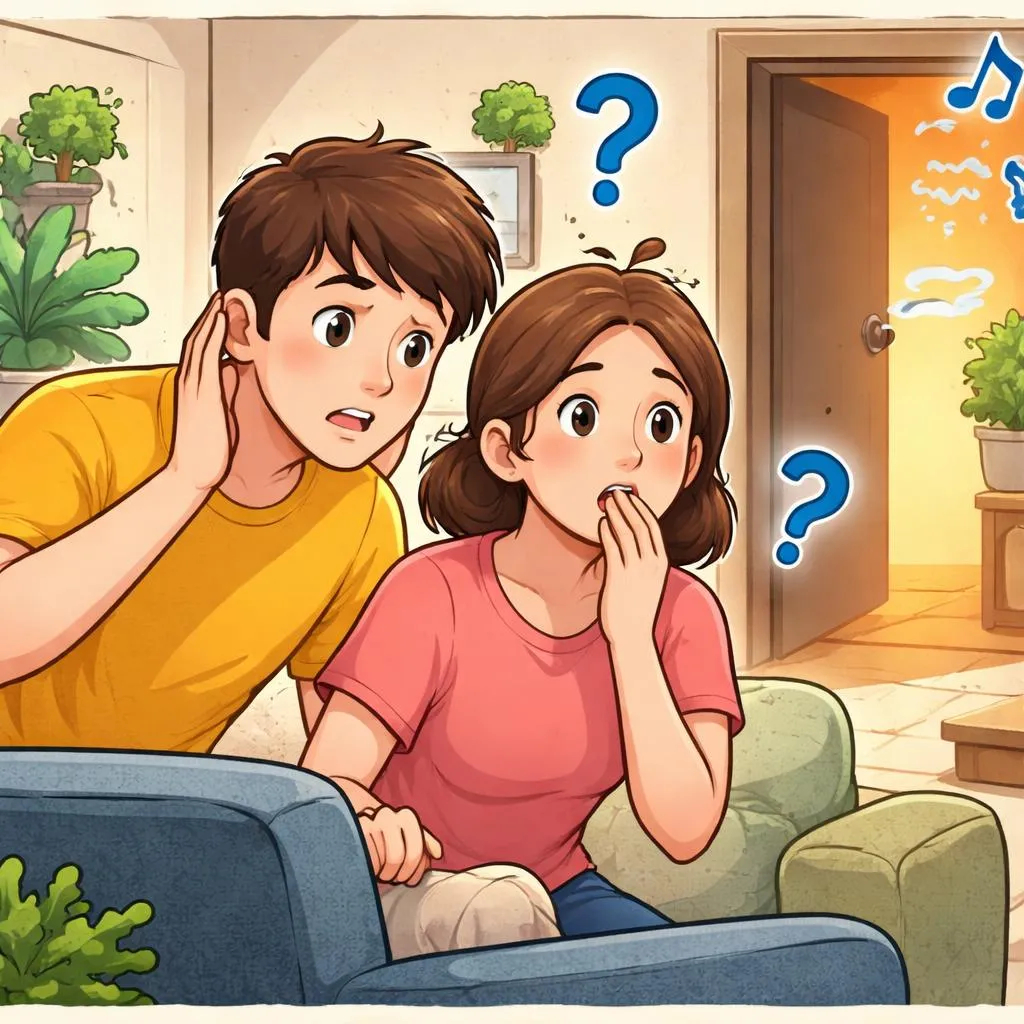

What Do These Expressions Mean? “What's that sound?” and “what noise is that?” both ask for the identification of an auditory event. They tell someone that you have heard something and want to know what is making it. Children say these words when they hear a mysterious thump, a beep, or a humming. Both express curiosity.
“What's that sound?” means I hear something; tell me what it is. It is common and natural. A child says it when a strange buzz fills the room. It is the everyday question.
“What noise is that?” also asks for an identification, but it often implies the sound is unpleasant or unwanted. It is slightly more negative. A child says it when a loud crash interrupts play. It focuses on disturbance.
These expressions seem similar. Both ask for the source of a sound. Both show curiosity or alarm. But one is neutral while one often suggests the sound is bad.
What's the Difference? One is neutral. One often implies the sound is annoying or scary. “What's that sound?” can be used for any sound: a beautiful bird, a strange rumble, a quiet hum. It is open and curious.
“What noise is that?” often means the sound is unwanted or disturbing. A banging pipe, a screeching animal, a loud crash. It focuses on the disturbance. It is less positive.
Think of a child hearing a bird sing. “What's that sound? It's pretty.” If they heard a garbage truck grinding, “what noise is that?” fits better. One is for wonder. One is for annoyance.
One is for any sound. The other is for unpleasant sounds. “What's that sound?” for a new instrument. “What noise is that?” for a dripping faucet at night. Use the first for curiosity. Use the second for disturbance.
Also, “noise” often means unwanted sound. “Sound” is neutral. Teach the difference in connotation.
When Do We Use Each One? Use “what's that sound?” for most unknown sounds. Use it for interesting, neutral, or mysterious sounds. Use it to express curiosity. It fits wonder.
Examples at home: “What's that sound? It sounds like rain.” “Stop. What's that sound? I think I hear a bee.” “What's that sound? It's coming from the basement.”
Use “what noise is that?” for annoying or scary sounds. Use it for loud crashes, screeches, or persistent buzzes. Use it to express concern. It fits disturbance.
Examples for disturbance: “What noise is that? It's keeping me awake.” “What noise is that? It sounds like someone is drilling.” “What noise is that? It's coming from the engine.”
Children can use both. “What's that sound?” for curiosity. “What noise is that?” for concern. Both ask for answers.
Example Sentences for Kids What's that sound?: “What's that sound? It sounds like a flute.” “What's that sound? Is it a cat?” “What's that sound? It's getting louder.”
What noise is that?: “What noise is that? It's giving me a headache.” “What noise is that? The car sounds broken.” “What noise is that? It's so loud.”
Notice “what's that sound?” is curious. “What noise is that?” is often annoyed or scared. Children learn both. One for wonder. One for worry.
Parents can use both. A new bird: “what's that sound?” A loud truck: “what noise is that?” Children learn different sound questions.
Common Mistakes to Avoid Some children say “what noise is that?” for a beautiful sound. That sounds negative. A bird singing is a sound, not a noise. Teach the difference.
Wrong: “What noise is that? It's a pretty bird.” Better: “What's that sound? It's a pretty bird.”
Another mistake: being afraid of every noise. Not every noise is dangerous. Help your child learn to identify sounds calmly. Curiosity reduces fear.
Wrong: (panicked) “What noise is that?” Better: (calm) “What's that sound? Let's find out.”
Some learners forget that “noise” can mean a signal in science. “White noise” is a sound. But for children, keep it simple. Noise = bad or loud. Sound = neutral.
Also avoid making fun of a child for being scared of a noise. Validate their feeling. Then identify the sound together. Safety matters.
Easy Memory Tips Think of “what's that sound?” as a curious ear. Head tilted. Listening. For neutral or interesting sounds.
Think of “what noise is that?” as a worried frown. Eyes wide. Concerned. For annoying or scary sounds.
Another trick: remember the feeling. “Sound” = interesting. “Noise” = annoying. Interesting gets “sound.” Annoying gets “noise.”
Parents can say: “Sound for a wonder round. Noise for a bother sound.”
Practice at home. Rain: “what's that sound?” Lawn mower: “what noise is that?”
Quick Practice Time Let us try a small exercise. Choose the better phrase for each situation.
A child hears a gentle flute melody coming from another room. a) “What noise is that?” b) “What's that sound? It's pretty.”
A child hears a loud, repetitive banging from the basement. a) “What's that sound?” b) “What noise is that? It's scary.”
Answers: 1 – b. A gentle, pretty melody fits the curious “what's that sound?” 2 – b. A loud, scary, banging noise fits the concerned “what noise is that?”
Fill in the blank: “When I hear a new bird singing in the yard, I ask ______.” (“What's that sound?” is the curious, neutral, wonder-filled choice.)
One more: “When I hear a loud, grinding, annoying noise from the sink, I ask ______.” (“What noise is that?” fits the annoyed, concerned, disturbance-focused choice.)
The world is full of sounds. “What's that sound?” wonders. “What noise is that?” worries. Teach your child both. A child who asks can learn to be calm and curious.
Wrap-up “What's that sound?” is a neutral, curious question for identifying any new or interesting auditory event. “What noise is that?” often implies the sound is unwanted, annoying, or scary. Use “what's that sound?” for birds, music, and gentle tones. Use “what noise is that?” for bangs, screeches, and loud disturbances. Both questions help children identify their world. A child who asks about sounds learns to listen without fear.