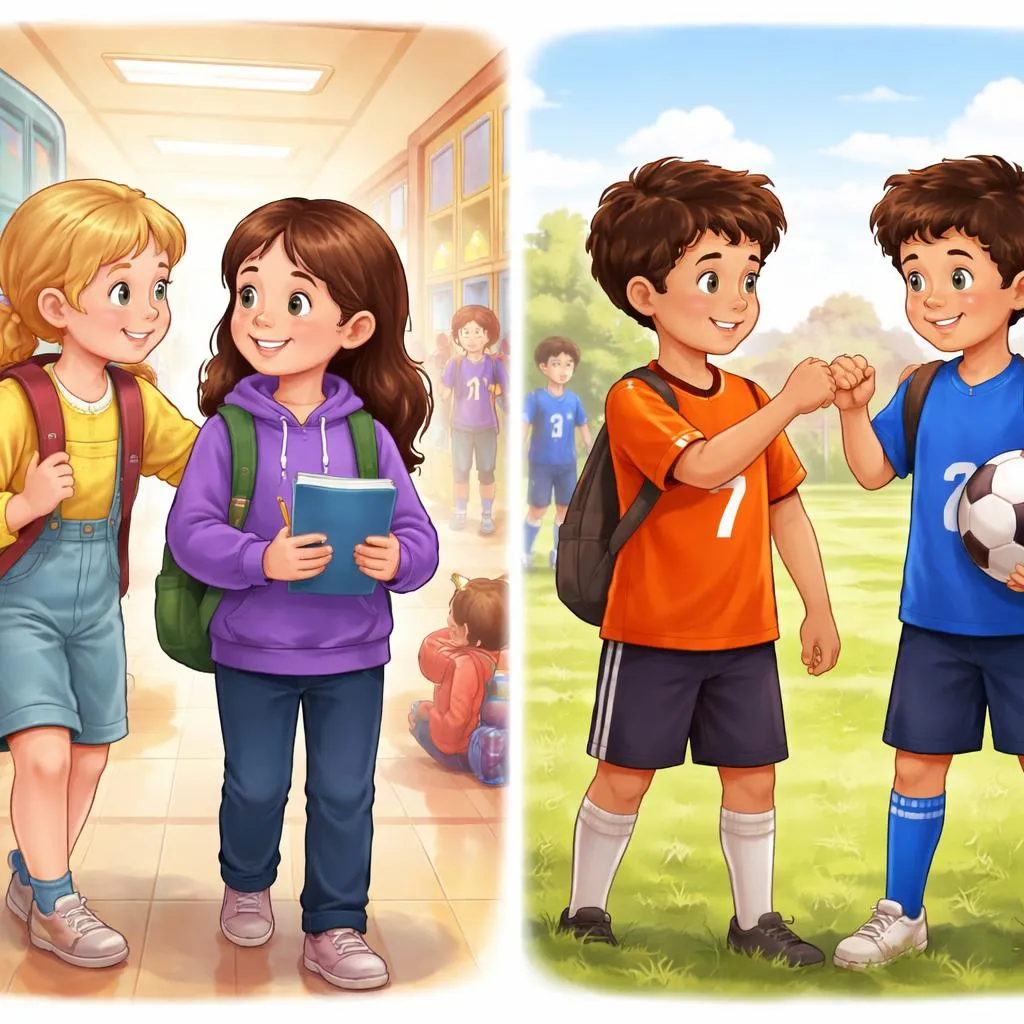

What Do These Expressions Mean? “Good luck” and “best of luck” both wish someone success through fortune. They tell a person that you hope favorable things happen for them. Children say these words before tests, games, auditions, or competitions. Both offer support and kindness.
“Good luck” means may fortune favor you. It is common and simple. A child says it before a spelling bee. It feels friendly and warm.
“Best of luck” means may the very best fortune find you. It sounds a bit stronger and more formal. An adult says it before a big job interview. It feels extra sincere.
These expressions seem similar. Both say “I want you to do well.” Both take a moment to support a friend. But one is for everyday events while one is for bigger moments.
What's the Difference? One is for all events. One is for especially important events. “Good luck” works for almost everything. A quiz. A race. A piano recital. It is the standard, perfect choice.
“Best of luck” sounds a little bigger. You might say it for a college exam or a championship game. A child saying “best of luck” for a small quiz sounds too dramatic. It is correct but heavy.
Think of a child before a weekly spelling test. “Good luck, Sam” is perfect. “Best of luck, Sam” sounds like a movie speech. One matches the moment. One is a bit too much.
One is more common. The other is more intense. “Good luck” appears dozens of times a day. “Best of luck” appears for milestone moments. Use the first for routine. Use the second for something truly big.
Also, “best of luck” can sound like “this is very hard.” If you want to be light and encouraging, say “good luck.” Save “best” for moments that need extra weight.
When Do We Use Each One? Use “good luck” for most events. Use it for tests, games, performances, and competitions. Use it when you want to be kind and encouraging. It fits daily life.
Examples at home and school: “Good luck on your math test today.” “Good luck at your soccer game.” “Good luck. I know you will do great.”
Use “best of luck” for very important events. Use it for final exams, championship games, or big auditions. Use it when you want to show extra support. It fits milestone moments.
Examples for big events: “Best of luck in the spelling bee finals.” “Best of luck with your big piano audition.” “This is the championship game. Best of luck to you.”
Children can use both. “Good luck” every time. “Best of luck” for something truly special. Both are kind. One is extra warm.
Example Sentences for Kids Good luck: “Good luck on your presentation today.” “Good luck at your swim meet. I will be cheering.” “Good luck. You practiced so hard.”
Best of luck: “Best of luck in the final round.” “This is your big chance. Best of luck.” “Best of luck to your team in the tournament.”
Notice “good luck” sounds like a friendly pat on the back. “Best of luck” sounds like a warm, serious handshake. Children learn both. But they should say “good luck” for most moments.
Parents can use both. Weekly test: “good luck.” Final exam for a big grade: “best of luck.” Children learn the scale of encouragement.
Common Mistakes to Avoid Some children say “best of luck” for every small test. That sounds like they are trying too hard. Save “best of” for truly important events. Use “good luck” for everyday.
Wrong: “Best of luck on your two-question quiz.” Right: “Good luck on your quiz.”
Another mistake: saying “good luck” for things that don't need luck. You do not need luck to brush your teeth. Save luck wishes for events with uncertainty. For routine tasks, say “have fun” or “good job.”
Wrong: “Good luck eating your lunch.” Right: “Enjoy your lunch.”
Some learners forget that luck is not everything. Add “you've got this” or “you worked hard.” Luck plus effort is the real formula. Encourage both.
Also avoid saying “good luck” in a sarcastic tone. “Good luck with that” can mean “you will fail.” Say it with a smile and a kind voice. Sarcasm hurts.
Easy Memory Tips Think of “good luck” as a four-leaf clover. Small. Common. Lucky. You find it in the grass. Everyday magic.
Think of “best of luck” as a rainbow. Rare. Beautiful. Special. You stop to look. Big moment magic.
Another trick: remember the intensity. “Good” is a smile. “Best” is a hug. Smile gets “good luck.” Hug gets “best of luck.”
Parents can say: “Good for daily. Best for a big finale.” That means everyday events get “good luck.” Championship or final exams get “best of luck.”
Practice at home. Spelling quiz: “good luck.” State spelling bee: “best of luck.” Two different levels of support.
Quick Practice Time Let us try a small exercise. Choose the better phrase for each situation.
Your child has a weekly vocabulary quiz every Friday. a) “Best of luck on your quiz.” b) “Good luck on your quiz. You know these words.”
Your child is competing in the regional gymnastics finals after years of practice. a) “Good luck in the finals.” b) “Best of luck in the finals. This is your moment.”
Answers: 1 – b. A weekly quiz fits the friendly “good luck.” 2 – b. A major final fits the extra warm “best of luck.”
Fill in the blank: “When my friend takes a driver's test, I say ______.” (“Good luck” is the natural, kind choice for a passing event.)
One more: “When my cousin performs in a national piano competition, I say ______.” (“Best of luck” fits that rare, high-stakes moment.)
Luck is a wish. “Good luck” says “I hope things go well.” “Best of luck” says “I hope things go wonderfully.” Teach your child both. Every wish plants a seed of kindness.
Wrap-up “Good luck” wishes fortune for everyday events. “Best of luck” wishes extra fortune for very important moments. Use “good luck” for tests, games, and recitals. Use “best of luck” for finals, championships, and big auditions. Both phrases say “I am on your side.” That is the best luck of all.