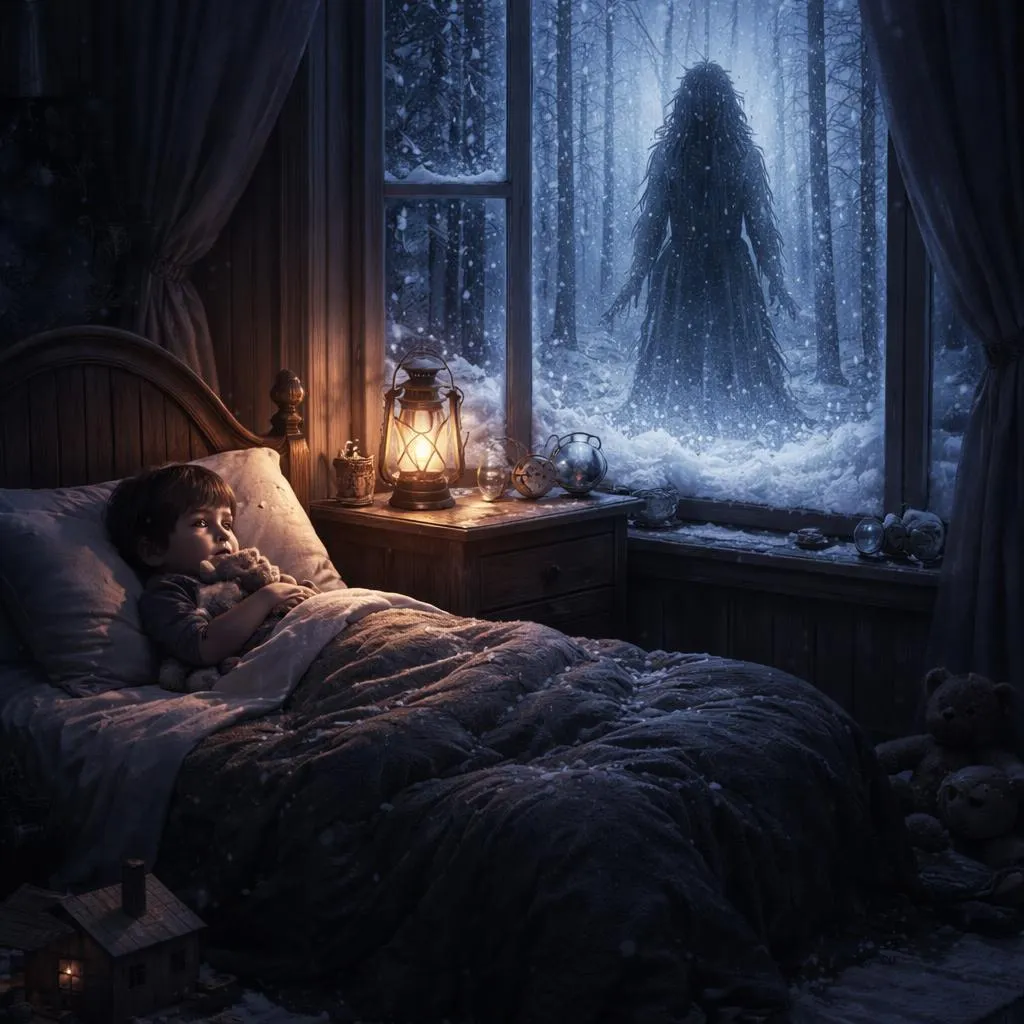

Let us gently set aside the mental list of today’s unfinished tasks and tomorrow’s quiet anxieties. For now, place your attention softly on the rhythm of your breath, feeling the slight, cool intake and the warmer release. Now, imagine, if you will, a different kind of tale. Not one of monsters under the bed, but of the quiet monsters of the mind—the worries, the rush, the incessant hum of thought. The true scariest bedtime stories, you see, are not written on pages; they are the ones we compose in our own heads after the lights go out, narratives of lack and fear that play on a loop. Tonight, we will gently close that book. We will replace it with a different space, a different sense. Imagine yourself standing at the edge of a silent, ancient forest, as the deepest part of a winter’s night settles in. The air is still, and a recent snowfall has blanketed everything in a thick, forgiving layer of white that glows with a soft blue light under a sky dense with stars.
You are safe, wrapped in a thick, woolen coat, and you know the path. It leads to a small, solitary cabin, its single window emitting a steady, amber invitation. This is your journey away from those internal, shadowy tales. With each step, the snow crunches softly under your boots, a crisp, rhythmic sound that begins to sync with your breathing. The cold air is clean in your lungs, smelling faintly of pine and frost. As you walk, you might give form to those swirling thoughts—the unfinished email becomes a wisp of grey cloud from your mouth, dissolving into nothing against the stars. The nagging doubt is a dark knot in an old pine tree you pass by; you acknowledge it, and you leave it behind, anchored to the earth, as you move forward. This is the antithesis of the scariest bedtime stories; this is a walking meditation, a sensory poem written with your own movement through the hushed world.
You reach the cabin door, its wood worn smooth by time and weather. You lift the simple iron latch and step inside. The change is immediate and enveloping. The silence outside is now companioned by a new sound: the gentle, sap-fueled crackle and pop of a fire burning low in a stone fireplace. The room is warm, the light from the flames dancing along walls lined with books, their leather spines glowing. You shed your outer layers, the weight physically and symbolically falling away. In the center of the room rests a deep, worn armchair with a soft blanket draped over its back. You settle into it, the chair accepting you with a familiar sigh. Before you, on a small table, sits a waiting mug of tea, steam curling in a lazy spiral towards the rough-hewn beams of the ceiling. You wrap your hands around its warmth, feeling the heat seep into your fingers. The scent is of chamomile, honey, and a faint slice of ginger—a fragrance that feels like a kind memory itself.
From this place of absolute safety, you can look out the window at the vast, sleeping forest. The scariest bedtime stories of the mind hold no power here. Their tension cannot survive this profound quiet, this deliberate calm. Here, the only narrative is one of presence. You watch the snow begin to fall again, not in a storm, but in large, slow, drifting flakes. They catch the firelight as they pass the window, sparkling for a moment like tiny, fleeting stars before joining the collective white below. Your breathing has slowed to match the languid descent of the snow. With each exhale, you can imagine releasing another fragment of the day’s residue, letting it go to be absorbed and quieted by the immense peace of the night. This scene, this feeling, is the most potent answer to those internal, anxious tales. It is not a fight, but a gentle, overwhelming displacement.
You take a slow sip of the tea, its warmth traveling down your throat and spreading through your chest. The fire whispers. A log settles, sending a small constellation of embers spiraling up the chimney. Your eyes grow heavy, not with fatigue, but with a luxurious, earned weight. The edges of the room, the book titles, the pattern on the blanket, all soften, blending into the comforting gloom beyond the fire’s direct reach. The scariest bedtime stories we tell ourselves require sharp edges and frantic pacing to survive. In this atmosphere, they simply evaporate, starved of the attention that fuels them. What remains is the simple, profound truth of your own being here, now, supported and warm. The silence is not empty; it is full—a velvet cushion for your mind to finally rest upon.
The flickering light on the walls begins to slow, merging into a steady, dim glow. The mug, now empty, rests lightly in your hands. The snow continues its silent, eternal work outside, tucking the world in. In this cabin, in this chair, you have found the perfect ending to all unwanted narratives. There is no more plot, no more conflict to resolve. Only a deep, expanding sense of ease. The scariest bedtime stories are, after all, just stories. And this—this tangible peace, the scent of woodsmoke and pine, the deep quiet of the winter night—this is real. This is your sanctuary. Let the final image be the gentle dance of snow against the dark window, a lullaby in visual form. The story now is complete, its purpose served. It fades, as all good stories should, leaving only the steady rhythm of your heart and the deep, welcoming darkness behind your eyelids. It is time to release even this gentle narrative, and allow yourself to sink, fully and completely, into the quiet, dreamless sleep that has been patiently waiting for you all along. Goodnight.