
Are Similar Words Really Interchangeable?
Words with close meanings often confuse young learners. “Old and elderly” is a good example. Both words relate to age. Both describe people or things that have existed for a long time. Yet they do not always work in the same way.
Children often learn “old” first. It is simple and common. Later, they meet “elderly” in books or conversations. At that moment, they may think the two words are exactly the same. This idea can lead to small mistakes.
Understanding the difference helps children build stronger language skills. It also helps them speak with care and respect. Parents can guide children step by step. With clear examples, children can learn when to use each word.
Set 1: Old vs Elderly — Which One Is More Common?
“Old” is much more common in daily English. Children hear it early. They use it to describe toys, houses, animals, and people. It is simple and flexible.
For example, a child may say, “This is an old book.” Or, “My dog is old.” These sentences sound natural and clear. The word fits many situations.
“Elderly” appears less often. It is more specific. It usually describes older people, not objects. Children may hear it in stories, news, or formal conversations.
Because “old” is more frequent, children feel more comfortable using it. However, learning “elderly” adds richness to their vocabulary. It also helps them speak more politely.
Set 2: Old vs Elderly — Same Meaning, Different Contexts
Both words describe age, but they appear in different contexts. “Old” works in almost any situation. It can describe people, animals, or things.
For example, “an old tree” or “an old house” sounds natural. It can also describe people, such as “an old man.” This use is common but can sound direct.
“Elderly,” on the other hand, mainly describes people. It often appears in contexts that require respect or care. For example, “elderly people need support” sounds gentle and appropriate.
This difference matters. In some situations, “old” may sound too direct or even impolite. “Elderly” helps soften the tone. It shows awareness of social language.
Set 3: Old vs Elderly — Which Word Is “Bigger” or More Emphatic?
“Old” is a broad word. It covers many meanings. It can describe something slightly aged or very aged. Its strength depends on context.
For example, “old shoes” may simply mean not new. It does not always suggest extreme age. The meaning stays flexible.
“Elderly” is more specific and stronger in meaning. It usually refers to people who are clearly advanced in age. It suggests a later stage of life.
Because of this, “elderly” often carries more weight. It highlights age more clearly than “old.” It also brings attention to care, respect, and understanding.
Children can learn that “elderly” is more focused. It is not just about age. It also connects to how society treats older people.
Set 4: Old vs Elderly — Concrete vs Abstract
“Old” often describes concrete things. It can refer to objects we can see and touch. For example, “old toys,” “old buildings,” or “old clothes.”
This makes it easy for children to understand. They can connect the word to real objects around them. It becomes part of their everyday vocabulary.
“Elderly” is more abstract. It does not describe objects. It refers to a stage of life. It connects to ideas like aging, care, and community.
Because of this, “elderly” requires deeper understanding. Children need more examples and guidance. They learn not only the meaning but also the feeling behind the word.
Set 5: Old vs Elderly — Verb or Noun? First Understand the Role
Both “old” and “elderly” are adjectives. They describe nouns. They do not act as verbs or nouns themselves in most cases.
“Old” can appear in many structures. For example, “an old car” or “He is old.” It works easily in simple sentences.
“Elderly” usually appears before nouns. For example, “elderly people” or “an elderly woman.” It rarely stands alone as a simple description.
This difference matters for sentence building. Children can use “old” more freely. “Elderly” requires more careful placement.
Understanding parts of speech helps children avoid confusion. It also supports clearer communication.
Set 6: Old vs Elderly — American English vs British English
Both words appear in American and British English. However, usage may differ slightly.
“Old” remains common in both forms. It is simple and universal. Children in any English-speaking region will hear it often.
“Elderly” appears more in formal or respectful contexts. In both American and British English, it often shows care and politeness.
In British English, speakers may also use phrases like “senior citizens.” In American English, “older adults” is also common.
Teaching children these variations helps them understand real-world language. It also prepares them for different communication styles.
Set 7: Old vs Elderly — Which Fits Formal Situations?
“Old” works well in casual speech. It is clear and simple. However, in formal situations, it may sound too direct when describing people.
For example, saying “old people need help” may sound less polite. The sentence is correct, but the tone may feel strong.
“Elderly” fits better in formal or respectful contexts. For example, “elderly people need support” sounds softer and more thoughtful.
This difference is important for children to learn. Language is not only about meaning. It is also about tone and respect.
Parents can guide children by modeling polite expressions. Over time, children will choose words more carefully.
Set 8: Old vs Elderly — Which One Is Easier for Kids to Remember?
“Old” is easier for young learners. It is short and simple. Children can quickly understand and use it.
They also see and hear it often. Repetition helps memory. The word becomes part of their daily speech.
“Elderly” is longer and less familiar. It may take more time to remember. Children need repeated exposure and examples.
Parents can use stories, pictures, and conversations to introduce the word. Linking it to real-life situations helps understanding.
With practice, children can remember both words. They can also learn when each word works best.
Mini Exercise: Can You Spot the Differences Between These Similar Words?
Try these simple activities with children.
Choose the correct word: “This is an ______ building.” (old / elderly) Choose the polite sentence: a) Old people need care. b) Elderly people need care. Fill in the blank: “My grandfather is ______.” (old / elderly) Match the word to the correct noun: Old → ______ Elderly → ______
These small exercises help children notice differences. They also build confidence in using new vocabulary.
Parent Tips: How to Help Kids Learn and Remember Similar Words
Children learn best through daily exposure. Parents can support learning in simple ways.
Use both words in natural conversations. For example, talk about an old toy and an elderly neighbor. This shows real differences.
Read books together. Point out how authors use “old” and “elderly.” Discuss why they choose one word over the other.
Encourage children to speak. Let them try both words in sentences. Gentle correction helps them improve.
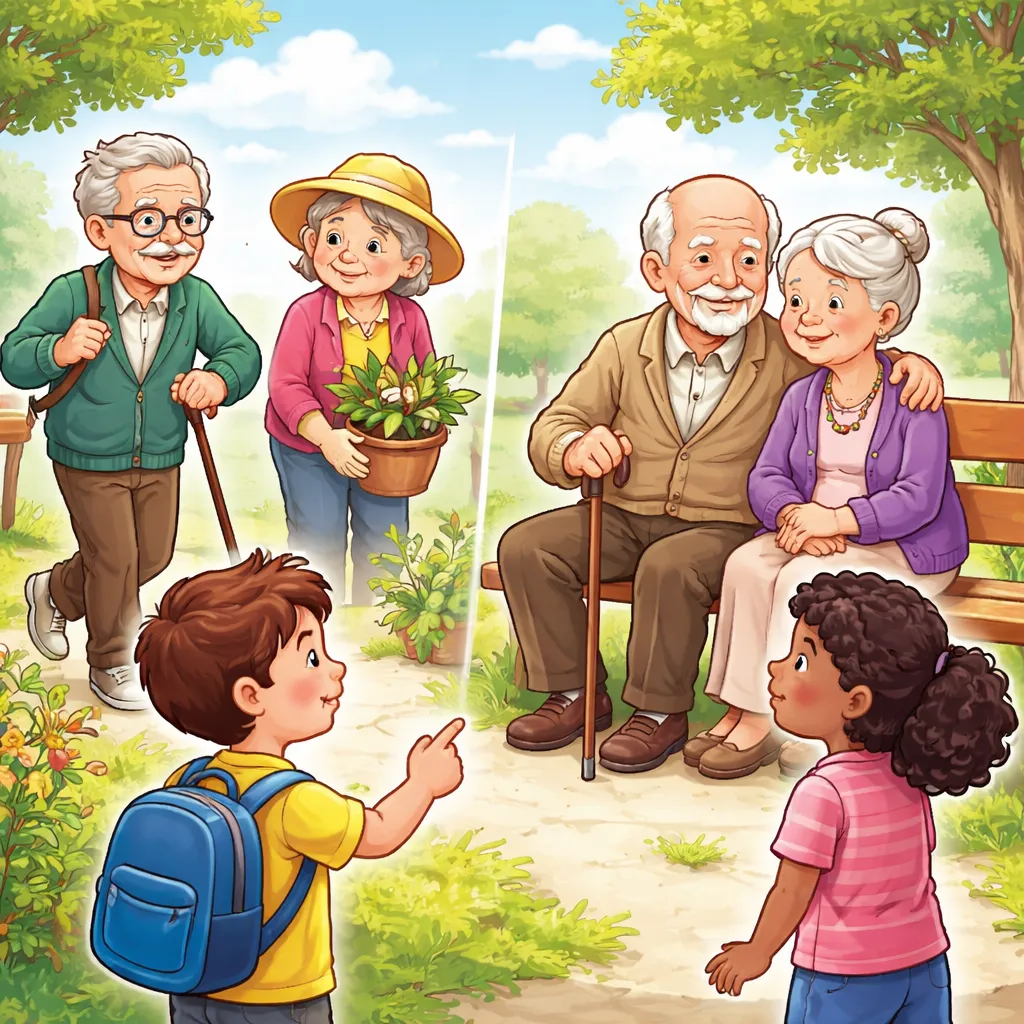
Use visuals. Pictures of objects and people can help children connect meaning with words.
Most importantly, keep learning positive. When children feel comfortable, they explore language more freely. Over time, they build a strong and thoughtful vocabulary.