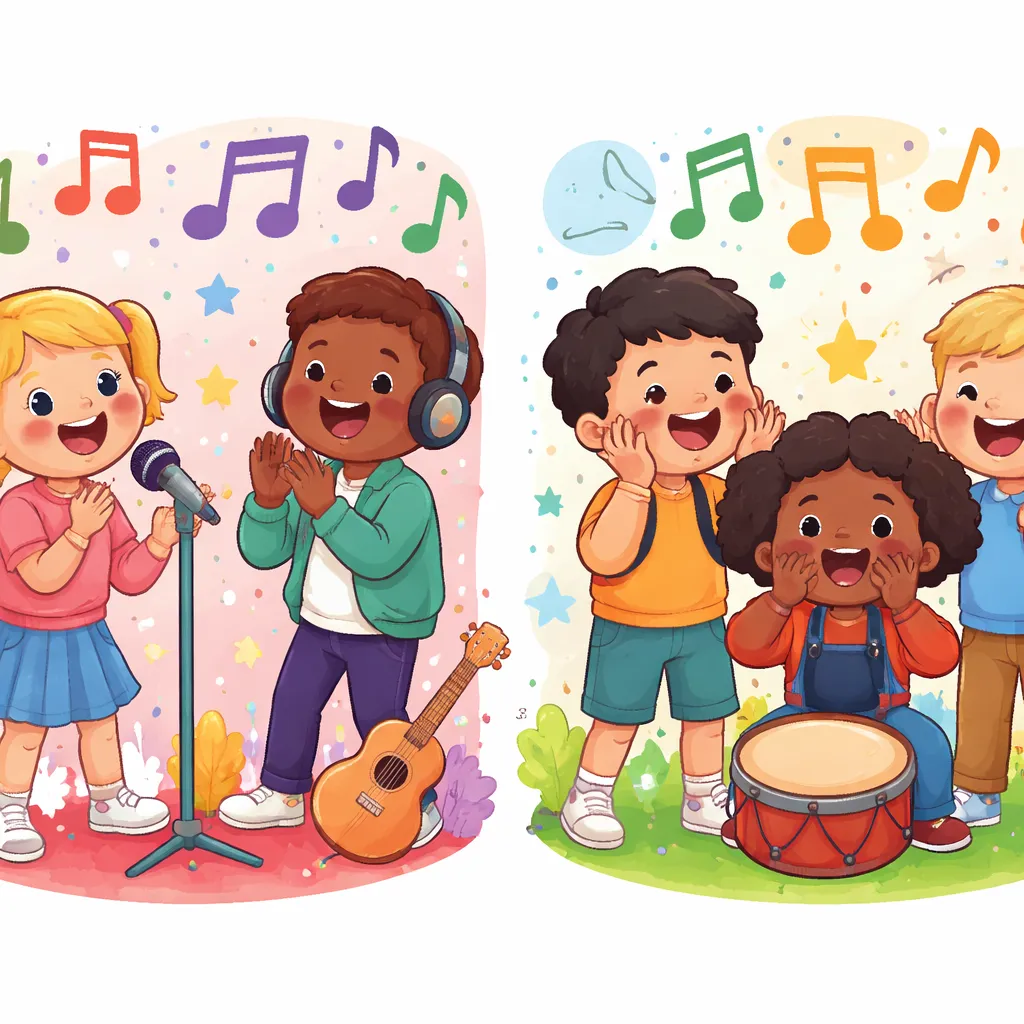

Hello, sound maker! Do you love making music with your voice? What do you do in music class? Or at a big sports game? Do you sing a beautiful song? Or do you chant with the crowd? They both use your voice in a special way. But are they the same? They are like two different kinds of musical magic. One is a free, soaring bird. One is a powerful, steady drum. Let's find out! Today, we explore the word friends "sing" and "chant". Knowing their secret is a superpower. It lets you describe all kinds of music. Let's start our musical adventure!
First, let's be Music Detectives. Listen at home. Here are two sentences. "My sister loves to sing her favorite pop songs in the shower." "My little brother likes to chant 'Go, team, go!' during the big game on TV." They both talk about using your voice. A pop song. A team cheer. Do they sound the same? One feels like a melody. One feels like a repeated shout. Can you sense it? Great observation! Now, let's listen to the sounds.
Adventure! Into the World of Voiced Music
Welcome to the world of voice magic! "Sing" and "chant" are two different sound-makers. Think of "sing" as a free, soaring bird. It flies high and low with beautiful melody. Think of "chant" as a powerful, steady drum. It has a strong, repeating rhythm. Both use your voice. But one is for melody. One is for rhythm and power. Let's learn about each one.
The Soaring Bird vs. The Steady Drum Think about the word "sing". To "sing" feels like a bird. Your voice moves up and down. It makes a tune. You follow notes and melody. You sing a song. She loves to sing. Let's sing together. It is about musical notes. Now, think about "chant". To "chant" feels like a drum. Your voice says words in a strong, repeating rhythm. The tune is simple or has none. Fans chant for their team. We chanted the slogan. The crowd chanted his name. "Sing" is the bird. "Chant" is the drum. One is about melody. The other is about rhythm and words.
Melody and Range vs. Rhythm and Power Let's compare their focus. "Sing" is all about melody. Your voice changes pitch. It can be high or low. It can be soft or loud. You can sing a slow song. You can sing a fast song. The music has a tune. "Chant" is all about rhythm and power. The words are repeated. The rhythm is strong. The tune is very simple. People chant to show support. People chant in protest. "Sing" is for beauty of sound. "Chant" is for strength of message. One creates a tune. The other creates a beat.
Their Special Word Partners and Common Uses Words have best friends. "Sing" loves music and performance. Sing a song. Sing in a choir. Sing along. "Chant" loves groups, sports, and slogans. Chant a slogan. A football chant. The chant of the crowd. Note: You "sing" a lullaby. You "chant" a cheer. You "sing" in a musical. You "chant" at a rally.
Let's visit a school scene. In music class, everyone learns a new song. The whole class sings the melody together. This is about following notes and making a tune. At a school pep rally, the cheerleaders lead a call. The students shout back the same words. The whole crowd chants to support the team. This is about rhythm, power, and group unity. Using "chant" for the music class song is wrong. There is a melody. Using "sing" for the pep rally cheer is possible. But "chant" is the perfect fit for the repeated, rhythmic shout.
Now, let's go to the playground. You are by yourself on the swings. You might sing a happy song to yourself. This is a personal, melodic act. A group of friends invent a cool rhyme for a clapping game. They say the words in a strong beat. They chant the rhyme while they play. The word "sing" paints the solo melody. The word "chant" paints the group's rhythmic words.
Our Little Discovery So, what did we find? "Sing" and "chant" both use your voice in a special way. But they are very different. To "sing" is to make musical sounds with your voice. You follow a melody. The notes go up and down. You sing a song. To "chant" is to say words in a strong, repeating rhythm. The tune is very simple or not there. The power is in the beat and the group. Fans chant at a game. Knowing this helps you describe music and sounds perfectly.
Challenge! Become a Sound Word Champion
Ready for a musical test? Let's try your new skills!
"The Best Choice" Challenge Let's imagine a nature scene. A bird sits on a branch at sunrise. It makes beautiful, warbling, tuneful sounds. The notes flow up and down. The bird is beginning to sing. This is a melodic, musical sound. A group of frogs in a pond at night. They all croak the same sound together, "Ribbit, ribbit, ribbit!" It is loud, rhythmic, and repeating. The frogs chant their nightly call. "Sing" wins for the bird's beautiful melody. "Chant" is the champion for the frogs' rhythmic, group croak.
"My Sentence Show" Your turn to create! Here is your scene: At a big birthday party with friends. Can you make two sentences? Use "sing" in one. Use "chant" in the other. Try it! Here is an example: "All my friends gathered to sing 'Happy Birthday' to me when I blew out the candles." This is a group doing a specific, melodic song. "Then we started a loud, funny chant of 'Cake! Cake! Cake!' because we were so excited for dessert." This is a group saying simple words in a strong, repeating rhythm. Your sentences will show two kinds of group sounds!
"Eagle Eyes" Search Look at this sentence. Can you find the word that could be better? Let's check a home context. "The people in the church began to chant a beautiful hymn with the organ." Hmm. A hymn is a type of religious song. It usually has a melody and is sung. The word "sing" is the correct choice for a melodic song. "The people in the church began to sing a beautiful hymn with the organ." Using "chant" here makes it sound like a rhythmic shout, not a melodic song. Did you spot it? Excellent word work!
Harvest and Action! Turn Knowledge Into Your Superpower
Great exploring! We started thinking "sing" and "chant" were similar. Now we know they are two different sound-makers. We can enjoy the free bird of "sing". We can feel the steady drum of "chant". You can now talk about music and sounds with perfect accuracy. This is a great skill for understanding songs and games.
What you can learn from this article: You can now feel that to "sing" is to use your voice to make musical sounds with a clear melody, like the notes in your favorite song, and it can be done alone or in a group. You can now feel that to "chant" is to say words or sounds in a strong, repeating rhythm, often as a group, to show support or power, like at a sports game, and the tune is very simple or not important. You know that you sing in the school choir, but you might chant with fans at a football game. You learned to match the word to the sound: "sing" for melody and tune, "chant" for rhythm and group power.
Life practice application: Try your new skill today! Listen to the sounds around you. Is that someone choosing to sing a melody? Or is it a group starting a chant? Next time you watch a sports game, listen for the chants. Next time you hear a song, notice the singing. Tell a friend about your favorite song to sing. Describe a cool chant you heard. You are now a master of musical words! Keep making wonderful sounds.