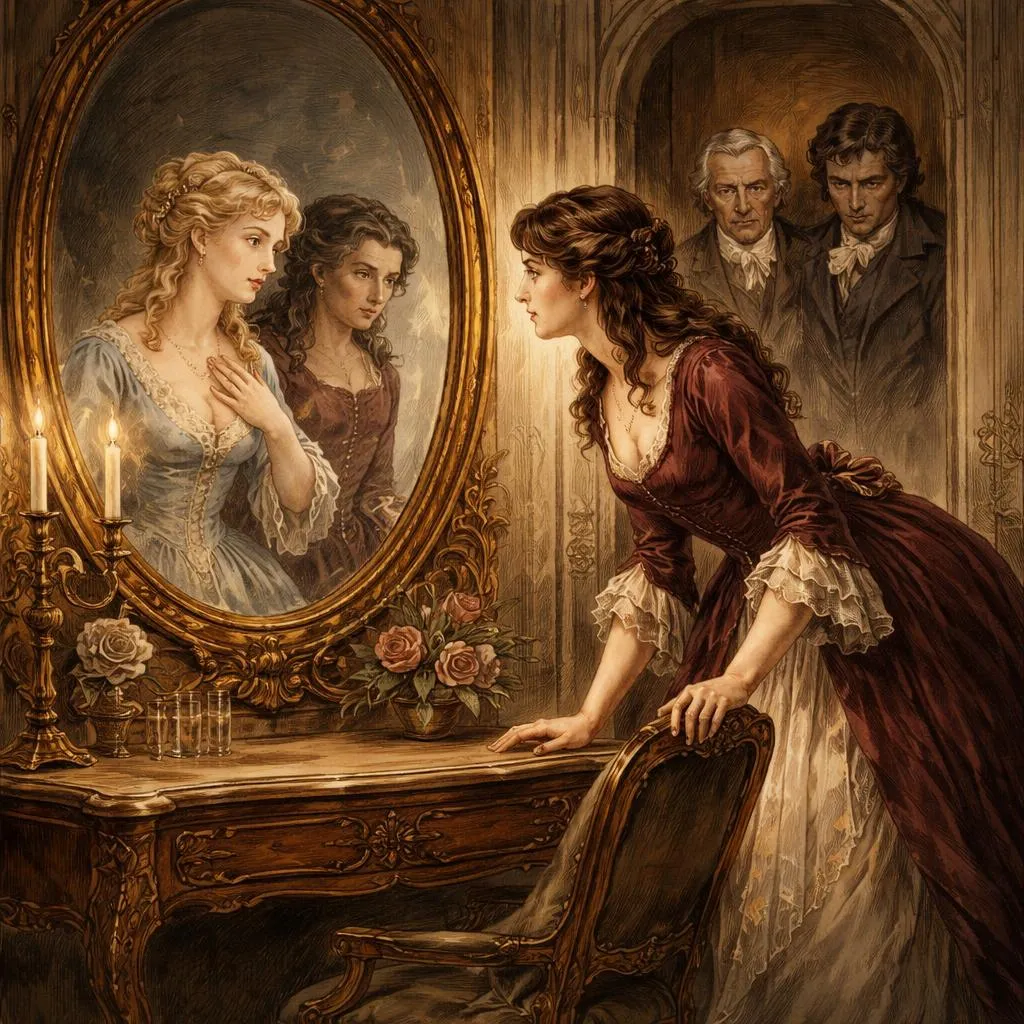

“Sydney,” said Mr. Stryver, on that self-same night, or morning, to his jackal; “mix another bowl of punch; I have something to say to you.”
Sydney had been working double tides that night, and the night before, and the night before that, and a good many nights in succession, making a grand clearance among Mr. Stryver’s papers before the setting in of the long vacation. The clearance was effected at last; the Stryver arrears were handsomely fetched up; everything was got rid of until November should come with its fogs atmospheric, and fogs legal, and bring grist to the mill again.
Sydney was none the livelier and none the soberer for so much application. It had taken a deal of extra wet-towelling to pull him through the night; a correspondingly extra quantity of wine had preceded the towelling; and he was in a very damaged condition, as he now pulled his turban off and threw it into the basin in which he had steeped it at intervals for the last six hours.
“Are you mixing that other bowl of punch?” said Stryver the portly, with his hands in his waistband, glancing round from the sofa where he lay on his back.
“I am.”
“Now, look here! I am going to tell you something that will rather surprise you, and that perhaps will make you think me not quite as shrewd as you usually do think me. I intend to marry.”
“DO you?”
“Yes. And not for money. What do you say now?”
“I don’t feel disposed to say much. Who is she?”
“Guess.”
“Do I know her?”
“Guess.”
“I am not going to guess, at five o’clock in the morning, with my brains frying and sputtering in my head. if you want me to guess, you must ask me to dinner.”
“Well then, I’ll tell you, said Stryver, coming slowly into a sitting posture. “Sydney, I rather despair of making myself intelligible to you, because you are such an insensible dog.
“And you,” returned Sydney, busy concocting the punch, “are such a sensitive and poetical spirit—”
“Come!” rejoined Stryver, laughing boastfully, “though I don’t prefer any claim to being the soul of Romance (for I hope I know better), still I am a tenderer sort of fellow than YOU.”
“You are a luckier, if you mean that.”
“I don’t mean that. I mean I am a man of more—more—”
“Say gallantry, while you are about it,” suggested Carton.
“Well! I’ll say gallantry. My meaning is that I am a man,” said Stryver, inflating himself at his friend as he made the punch, “who cares more to be agreeable, who takes more pains to be agreeable, who knows better how to be agreeable, in a woman’s society, than you do.”
“Go on,” said Sydney Carton.
“No; but before I go on,” said Stryver, shaking his head in his bullying way, I’ll have this out with you. You’ve been at Doctor Manette’s house as much as I have, or more than I have. Why, I have been ashamed of your moroseness there! Your manners have been of that silent and sullen and hangdog kind, that, upon my life and soul, I have been ashamed of you, Sydney!”
“It should be very beneficial to a man in your practice at the bar, to be ashamed of anything,” returned Sydney; “you ought to be much obliged to me.”
“You shall not get off in that way,” rejoined Stryver, shouldering the rejoinder at him; “no, Sydney, it’s my duty to tell you—and I tell you to your face to do you good—that you are a devilish ill-conditioned fellow in that sort of society. You are a disagreeable fellow.”
Sydney drank a bumper of the punch he had made, and laughed.
“Look at me!” said Stryver, squaring himself; “I have less need to make myself agreeable than you have, being more independent in circumstances. Why do I do it?”
“I never saw you do it yet,” muttered Carton.
“I do it because it’s politic; I do it on principle. And look at me! I get on.”
“You don’t get on with your account of your matrimonial intentions,” answered Carton, with a careless air; “I wish you would keep to that. As to me—will you never understand that I am incorrigible?”
He asked the question with some appearance of scorn.
“You have no business to be incorrigible,” was his friend’s answer, delivered in no very soothing tone.
“I have no business to be, at all, that I know of,” said Sydney Carton. “Who is the lady?”
“Now, don’t let my announcement of the name make you uncomfortable, Sydney,” said Mr. Stryver, preparing him with ostentatious friendliness for the disclosure he was about to make, “because I know you don’t mean half you say; and if you meant it all, it would be of no importance. I make this little preface, because you once mentioned the young lady to me in slighting terms.”
“I did?”
“Certainly; and in these chambers.”
Sydney Carton looked at his punch and looked at his complacent friend; drank his punch and looked at his complacent friend.
“You made mention of the young lady as a golden-haired doll. The young lady is Miss Manette. If you had been a fellow of any sensitiveness or delicacy of feeling in that kind of way, Sydney, I might have been a little resentful of your employing such a designation; but you are not. You want that sense altogether; therefore I am no more annoyed when I think of the expression, than I should be annoyed by a man’s opinion of a picture of mine, who had no eye for pictures: or of a piece of music of mine, who had no ear for music.”
Sydney Carton drank the punch at a great rate; drank it by bumpers, looking at his friend.
“Now you know all about it, Syd,” said Mr. Stryver. “I don’t care about fortune: she is a charming creature, and I have made up my mind to please myself: on the whole, I think I can afford to please myself. She will have in me a man already pretty well off, and a rapidly rising man, and a man of some distinction: it is a piece of good fortune for her, but she is worthy of good fortune. Are you astonished?”
Carton, still drinking the punch, rejoined, “Why should I be astonished?”
“You approve?”
Carton, still drinking the punch, rejoined, “Why should I not approve?”
“Well!” said his friend Stryver, “you take it more easily than I fancied you would, and are less mercenary on my behalf than I thought you would be; though, to be sure, you know well enough by this time that your ancient chum is a man of a pretty strong will. Yes, Sydney, I have had enough of this style of life, with no other as a change from it; I feel that it is a pleasant thing for a man to have a home when he feels inclined to go to it (when he doesn’t, he can stay away), and I feel that Miss Manette will tell well in any station, and will always do me credit. So I have made up my mind. And now, Sydney, old boy, I want to say a word to YOU about YOUR prospects. You are in a bad way, you know; you really are in a bad way. You don’t know the value of money, you Eve hard, you’ll knock up one of these days, and be ill and poor; you really ought to think about a nurse.”
The prosperous patronage with which he said it, made him look twice as big as he was, and four times as offensive.
“Now, let me recommend you,” pursued Stryver, “to look it in the face. I have looked it in the face, in my different way; look it in the face, you, in your different way. Marry. Provide somebody to take care of you. Never mind your having no enjoyment of women’s society, nor understanding of it, nor tact for it. Find out somebody. Find out some respectable woman with a little property—somebody in the landlady way, or lodging-letting way—and marry her, against a rainy day. That’s the kind of thing for YOU. Now think of it, Sydney.”
“I’ll think of it,” said Sydney.
Hintergrund und Einführung des Autors
Dieser Abschnitt stammt aus Eine Geschichte aus zwei Städten, einem berühmten Roman von Charles Dickens, einem der größten englischen Romanautoren des 19. Jahrhunderts. Dieser 1859 veröffentlichte Roman spielt in den turbulenten Zeiten der Französischen Revolution. Dickens ist bekannt für seine lebendigen Charaktere und tiefgründigen Sozialkommentare, die oft die Kämpfe der Armen und die Ungerechtigkeiten der Gesellschaft hervorheben.
Die Geschichte kontrastiert das Leben in London und Paris und erforscht Themen wie Opferbereitschaft, Wiedergeburt und die Möglichkeit der Erlösung. Die Charaktere in dem Roman stehen vor moralischen Dilemmas und persönlichen Veränderungen inmitten des politischen Chaos.
Detaillierte Interpretation der Passage
In dieser Szene offenbart Mr. Stryver, ein selbstbewusster und etwas prahlerischer Anwalt, Sydney Carton, seinem Freund und Kollegen, dass er beabsichtigt, Miss Manette zu heiraten. Sydney, der eine komplexe und etwas selbstironische Persönlichkeit hat, reagiert mit einer Mischung aus Sarkasmus und Gleichgültigkeit.
Der Dialog offenbart wichtige Charaktereigenschaften: Stryvers Ehrgeiz und Wunsch nach sozialem Aufstieg durch Heirat und Cartons Zynismus und emotionale Distanziertheit. Die Erwähnung von Miss Manette verbindet sich mit der größeren Geschichte, da sie eine zentrale Figur ist, deren Schicksal die Protagonisten tiefgreifend beeinflusst.
Stryvers Rat an Carton über die Ehe ist praktisch, aber auch herablassend und spiegelt die sozialen Einstellungen der Zeit wider. Cartons Reaktion zeigt seinen inneren Konflikt und deutet seine späteren heldenhaften Taten im Roman an.
Lektionen und Erkenntnisse für Schüler
-
Das Verständnis der Charakterkomplexität: Diese Passage hilft den Schülern zu erkennen, dass Menschen oft kompliziert sind, mit Stärken und Schwächen. Sydney Cartons Mischung aus Humor, Traurigkeit und Einsicht macht ihn zu einer unvergesslichen Figur, die im Laufe der Geschichte wächst.
-
Soziale und persönliche Verantwortung: Stryvers Fokus auf die Ehe als Mittel zur Sicherheit und zum Status spiegelt den gesellschaftlichen Druck wider. Die Schüler können lernen, kritisch darüber nachzudenken, wie gesellschaftliche Erwartungen persönliche Entscheidungen beeinflussen.
-
Freundschaft und Ehrlichkeit: Trotz ihrer Unterschiede verbindet Stryver und Carton eine offene Beziehung. Dies zeigt den Wert ehrlicher Kommunikation zwischen Freunden, auch wenn Meinungen abweichen.
-
Selbstreflexion: Cartons sarkastische Bemerkungen und die Bereitschaft, „darüber nachzudenken“, deuten auf die Bedeutung von Selbstbewusstsein und Offenheit für Veränderungen hin.
Anwendung dieser Lektionen im Leben und Lernen
-
In der Schule: Die Schüler können lernen, Charaktere tiefgehend zu analysieren und Motivationen und Konflikte zu verstehen, was das kritische Denken und die Empathie fördert.
-
In sozialen Situationen: Die Erkenntnis, dass Menschen unterschiedliche Persönlichkeiten und Kämpfe haben, kann den Schülern helfen, Geduld und Freundlichkeit in Freundschaften zu entwickeln.
-
In der persönlichen Entwicklung: Wie Sydney Carton können die Schüler mit Momenten des Zweifels oder Zynismus konfrontiert werden. Die Reflexion über ihre Einstellungen und die Offenheit für neue Perspektiven kann zu persönlicher Verbesserung führen.
-
Bei der Entscheidungsfindung: Das Verständnis gesellschaftlicher Einflüsse, wie es Stryvers pragmatischer Ansatz zeigt, kann den Schülern helfen, fundierte Entscheidungen über ihre Zukunft zu treffen und persönliche Wünsche mit praktischen Erwägungen in Einklang zu bringen.
Förderung positiver Eigenschaften aus der Geschichte
-
Empathie: Indem sie die Welt durch die Augen von Charakteren wie Carton und Manette sehen, können die Schüler ein tieferes Verständnis für die Gefühle anderer entwickeln.
-
Mut und Opferbereitschaft: Der Roman als Ganzes lehrt über Tapferkeit und das Stellen anderer vor sich selbst und inspiriert die Schüler, mit Integrität zu handeln.
-
Resilienz: Charaktere stehen vor Schwierigkeiten, bemühen sich aber weiterhin um ein besseres Leben, was die Schüler ermutigt, Herausforderungen zu meistern.
Schlussfolgerung
Dieser Auszug aus Eine Geschichte aus zwei Städten bietet reichhaltiges Material für Schüler, um die menschliche Natur, soziale Dynamiken und moralische Entscheidungen zu erforschen. Durch die Auseinandersetzung mit der Geschichte können junge Leser Erkenntnisse gewinnen, die ihnen helfen, ihr eigenes Leben mit größerer Weisheit und Mitgefühl zu meistern.
