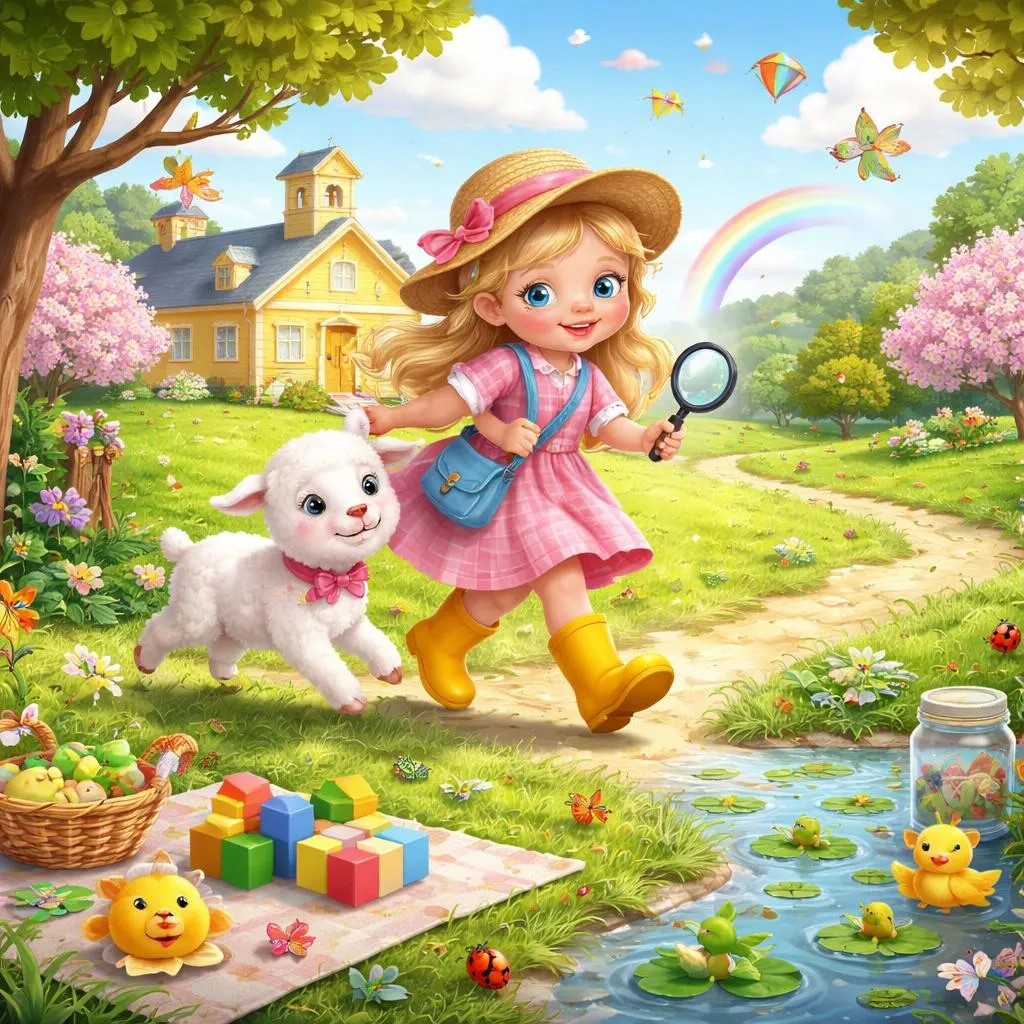

What is the Rhyme "Mary Had a Little Lamb"? "Mary Had a Little Lamb" is a timeless nursery rhyme loved by children all over the world. It tells the story of Mary and her little lamb who follows her everywhere. The song has a simple, catchy melody that children can easily sing along. It is often used in classrooms, homes, and early learning centers to introduce basic vocabulary and rhythm. The rhyme encourages listening, speaking, and early reading skills. It also introduces concepts of animals, actions, and simple storytelling.
The rhyme is highly interactive. Children can act out Mary walking with her lamb. Clapping, marching, and gestures make the story come alive. It helps children understand sequences of events and cause-and-effect relationships. The simplicity of the lyrics makes it easy for children to remember. Singing together builds social skills and group participation.
Mary Had a Little Lamb Lyrics The lyrics start with: “Mary had a little lamb, its fleece was white as snow.” It continues: “And everywhere that Mary went, the lamb was sure to go.” Repetition is a key feature, making it easier for children to memorize. The song introduces basic vocabulary, such as “lamb,” “fleece,” “white,” “snow,” and “went.” It also includes verbs like “had” and “went,” helping children connect words to actions.
The rhyme can be sung slowly or quickly depending on the activity. Children often mimic Mary and her lamb while singing. The lyrics support early literacy skills by reinforcing sight words. Children learn pronunciation and rhythm simultaneously. Using props like toy lambs or hand gestures makes the rhyme interactive. Repetition and song structure help children recall words effortlessly.
Vocabulary Learning The rhyme introduces animal-related vocabulary. Words like “lamb,” “fleece,” and “snow” expand children’s word knowledge. Verbs like “had” and “went” show action in context. Children understand adjectives through words like “little” and “white.” Visual aids enhance learning and connect words to real objects. Songs provide a natural context for new vocabulary.
Flashcards, pictures, or plush toys can reinforce vocabulary. Children point to the lamb, Mary, or snow while singing. These visual cues strengthen memory and comprehension. Repetition through song helps children internalize new words. Linking words with movement or objects builds multi-sensory learning. Vocabulary becomes meaningful, not just memorized.
Phonics Points The rhyme supports early phonics skills. Spelling and sound patterns are introduced in a playful way. Words like “Mary,” “lamb,” and “snow” highlight consonant and vowel sounds. Rhymes in the song, like “snow” and “go,” teach sound matching. Children practice blending sounds and pronouncing new words.
Clapping or tapping to the rhythm emphasizes syllables. This helps children understand word stress and pronunciation. Listening to repeated sounds improves phonemic awareness. Singing also reinforces how letters make specific sounds. Movement and gestures combined with singing enhance phonics learning naturally.
Grammar Patterns The rhyme uses simple sentence structures. For example, “Mary had a little lamb” is a subject-verb-object sentence. Children learn basic past tense with “had” and “was.” The story uses repetition and simple conjunctions like “and” for sequencing. Short, clear sentences make grammar accessible to young learners.
Children notice patterns and sentence structure without formal grammar lessons. Repeated singing reinforces language patterns and word order. Understanding past tense and descriptive words builds foundational grammar skills. The rhyme demonstrates how sentences convey meaning naturally. These simple structures prepare children for more complex sentences later.
Learning Activities The rhyme can be paired with interactive learning activities. Children act out Mary walking with the lamb. Clapping, marching, or hand gestures enhance rhythm and engagement. Toy lambs or pictures can make the activity more tactile. Children can create their own versions with new animals or colors.
Games support vocabulary and memory. For example, “Follow the Lamb” encourages children to move while singing. Letter-matching games reinforce sight words in the lyrics. Arts and crafts, like coloring Mary and her lamb, integrate creativity. Interactive apps or videos provide animated versions to follow along. Group activities promote social interaction, listening, and speaking skills.
Printable Materials Printable flashcards enhance vocabulary and letter recognition. Cards may include words like “Mary,” “lamb,” “fleece,” and “snow.” Children can match words with images while singing. Worksheets can include tracing letters, coloring, or sequencing exercises.
Lyric sheets allow children to follow the rhyme visually. Highlighting key words and letters improves reading comprehension. Worksheets provide repeated practice in a tangible way. Materials can be used at home or in classrooms for extended learning. Hands-on activities reinforce memory, language, and literacy skills.
Educational Games Games complement the rhyme and make learning playful. Memory games with animal and word cards improve recall. Puzzle activities connect letters and words to pictures of Mary and her lamb. Movement games like “Simon Says Mary” combine action with language practice.
Group singing and role-play reinforce listening, speaking, and cooperation. Children ask and answer questions about the story while acting it out. Positive feedback and rewards increase motivation and engagement. Games develop vocabulary, phonics, grammar, and sentence skills. Songs and activities together create a joyful and effective learning environment.
Singing the rhyme with family or classmates strengthens social bonds. Children imitate sounds, gestures, and letters, reinforcing learning. Interactive play builds confidence and communication skills. Mary Had a Little Lamb provides a rich, multi-sensory learning experience. Children learn language, rhythm, and storytelling in a fun and memorable way.
The rhyme combines melody, vocabulary, phonics, and grammar in a simple story. Visuals, games, and printable materials enhance understanding and engagement. Repetition, music, and movement support memory, language, and literacy development. Children can create their own verses or new animal characters, expanding creativity. Mary Had a Little Lamb remains a classic, joyful tool for early learning.