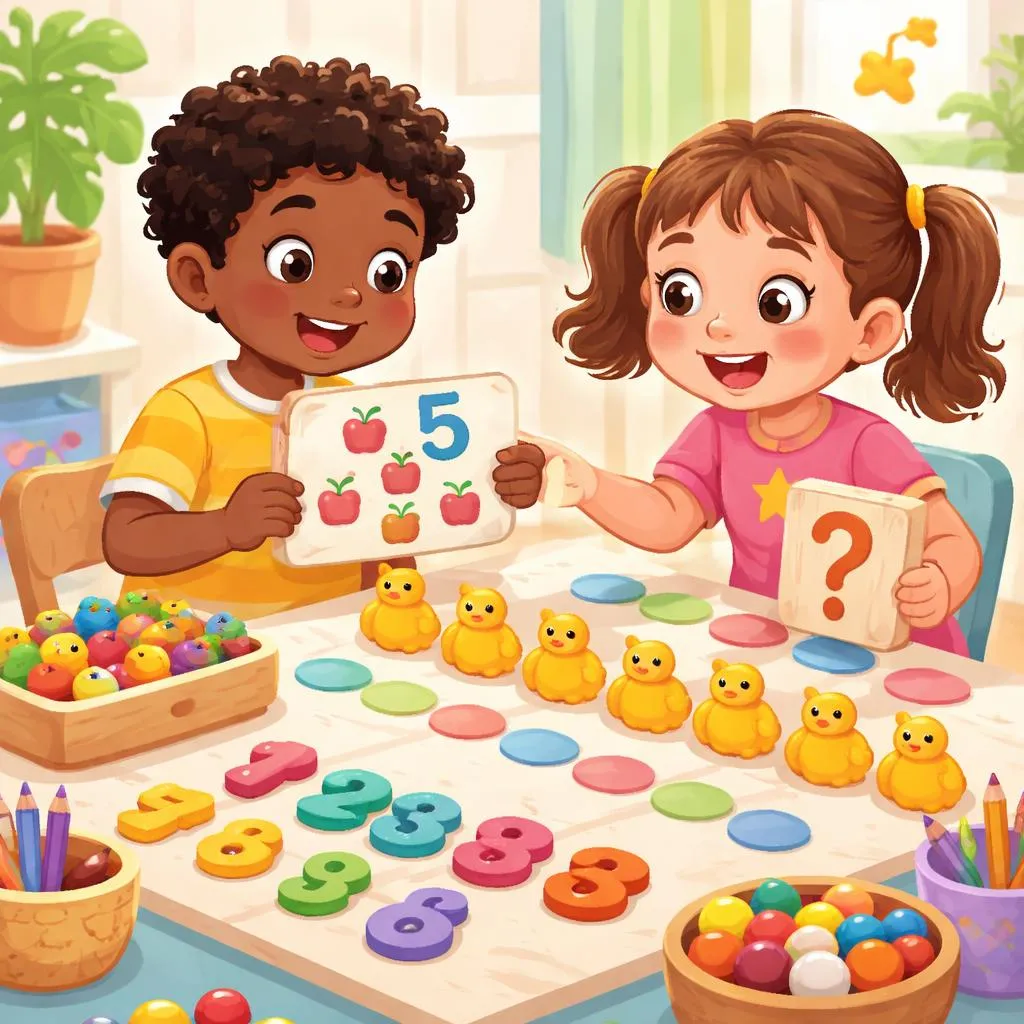

What Do These Expressions Mean? “How many?” and “what number?” both ask for a quantity. They seek a numerical answer about a group or position. Children ask these questions when exploring numbers. Both build early math skills.
“How many?” means give me the total count of items. It asks for an amount. A child asks it when looking at a pile of toys. It expects an answer like “five.”
“What number?” means tell me the numeral or position. It asks for a specific digit or place in a line. A child asks it when looking at a phone or a race. It expects an answer like “seven” or “third.”
These expressions seem very similar. Both end with a number. Both help children understand math. But one asks for a total while the other asks for an identity.
What's the Difference? One asks for an amount. The other asks for a label. “How many?” counts things you can see or touch. It answers with a number like 2, 10, or 100. It focuses on groups.
“What number?” asks for a specific digit. It answers with a numeral or order. It focuses on positions, codes, or names. It works for one thing, not many.
Think of a jar of candies. “How many candies?” counts all of them. The answer could be 20. “What number is the red candy?” asks for its place in line. The answer could be “seventh.”
One is for quantity. The other is for identity. “How many?” appears in grocery stores and toy boxes. “What number?” appears in games and addresses. Both teach different parts of math.
Also, “how many?” works for uncountable nouns with “much.” But that is another lesson. For now, remember: many = countable groups. Number = specific digits.
When Do We Use Each One? Use “how many?” for counting groups. Use it for toys, people, apples, or books. Use it when you want a total. It fits daily life all day long.
Examples at home: “How many cookies did you eat?” “How many friends are coming to the party?” “How many pages are in this book?”
Use “what number?” for identifying digits. Use it for house numbers, jersey numbers, or phone numbers. Use it for positions in a line or race. It fits games, addresses, and order.
Examples for identity: “What number is your soccer jersey?” “What number comes after six?” “What number is Grandma's house on this street?”
Children hear “how many?” more often. It asks about the world around them. “What number?” asks about labels and order. Both are useful. One appears more.
Example Sentences for Kids How many? “How many stars do you see in the sky?” “How many legs does a spider have?” “How many days until your birthday?”
What number? “What number is on the front of the bus?” “What number shows up when you roll the dice?” “What number are you in the lunch line?”
Notice “how many?” answers with a quantity (3, 10, 22). “What number?” answers with a digit or word (seven, 9, twelfth). The difference is clear when you see examples.
Parents can ask both throughout the day. At breakfast: “How many eggs do you want?” On a walk: “What number is that fire truck?” Learning happens in small moments.
Common Mistakes to Avoid Some children say “what number?” for groups. That sounds strange to native speakers. If you want a total, say “how many?” “What number” asks for one specific numeral.
Wrong: (looking at a pile of blocks) “What number of blocks?” Right: “How many blocks are there?”
Another mistake: using “how many?” for one thing. If you ask “how many is your jersey?” that is wrong. A jersey has one number. Ask “what number is your jersey?”
Wrong: “How many is your house?” Right: “What number is your house?”
Some learners forget plural nouns after “how many.” Always use a plural noun or “of the.” “How many dog” is wrong. “How many dogs” is correct.
Wrong: “How many apple?” Right: “How many apples?”
Also avoid answering with words when a number fits. “How many?” expects digits. “What number?” also expects digits. Do not say “a lot.” Say “five.” Numbers are the answer.
Easy Memory Tips Think of “how many?” as a crowd. The crowd has many faces. You count each one. Many items get “how many.”
Think of “what number?” as a name tag. The tag has one number. That number identifies one thing. One label gets “what number.”
Another trick: remember the M. “Many” has M for “more than one.” “Number” has N for “name.” M for counting. N for labeling. That small clue helps.
Parents can say: “How many for groups. What number for labels.” Practice at the grocery store. “How many apples?” (count the pile) “What number is the price tag?” (read the digit)
Everyday moments teach best. Point at things. Ask the right question. Your child will learn naturally. Numbers will feel like friends.
Quick Practice Time Let us try a small exercise. Choose the better phrase for each situation.
You see a basket of oranges. You want to know the total. a) “What number of oranges?” b) “How many oranges are there?”
You see a clock. You want to read the hour digit. a) “How many on the clock?” b) “What number is the hour hand pointing to?”
Answers: 1 – b. A total needs “how many.” 2 – b. Reading a single digit needs “what number.”
Fill in the blank: “When I want to count my toy cars, I ask ______.” (“How many” works because you want the total.)
One more: “When I want to know my place in a race, I ask ______.” (“What number” fits positions and order.)
Both questions build number confidence. Use them at home, at the store, and outside. Numbers are everywhere. Your child can learn to ask about them all.
Wrap-up “How many?” asks for a total count of items. “What number?” asks for a specific digit or position. Use “how many?” for groups. Use “what number?” for labels and order. Both questions open the door to math. Every question your child asks builds a stronger mind.