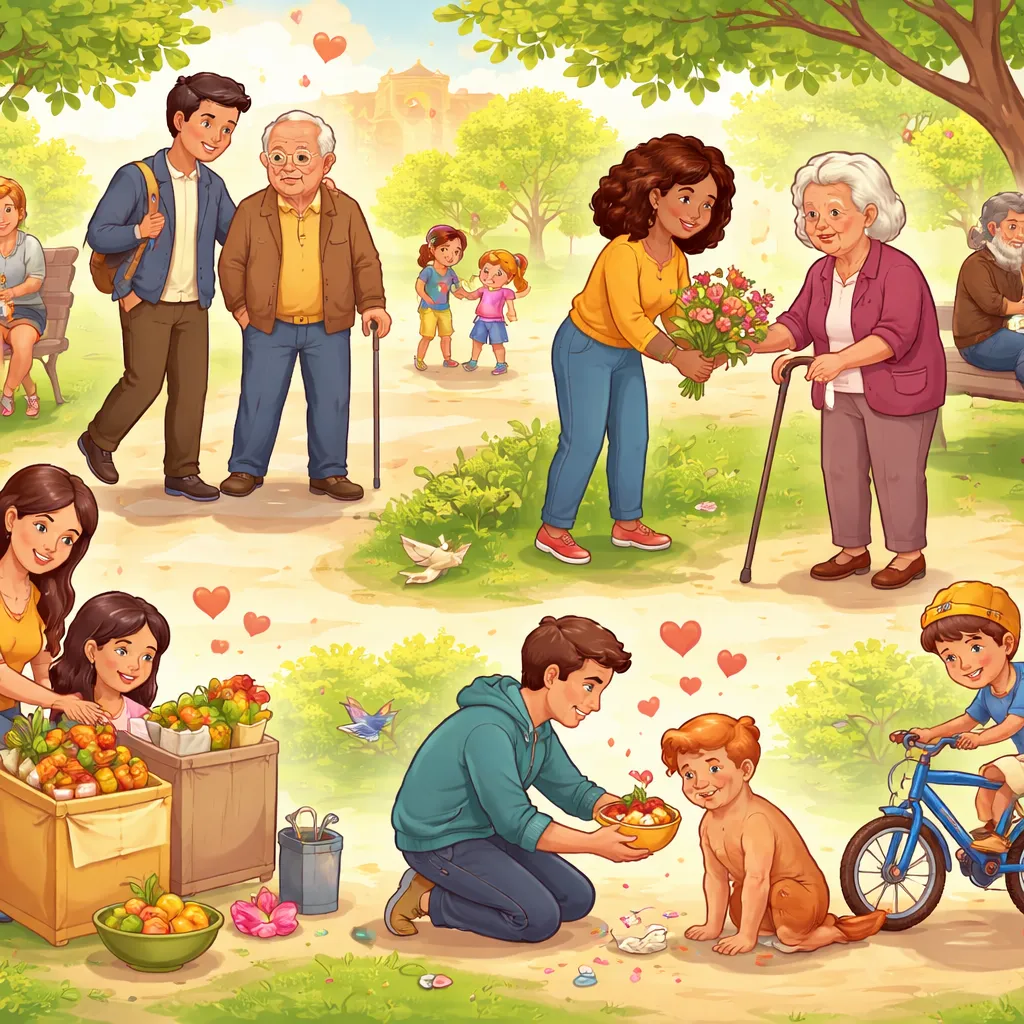

Words about sharing and kindness appear often. Two beautiful words are “generous and giving.” Both describe people who share. But they carry different shades of meaning. One focuses on the amount or spirit of sharing. The other focuses on the action itself. Children need to know this difference. Parents can help by showing real examples. This article compares “generous and giving” clearly. We will look at frequency, context, and emotional tone. We will also explore formal and casual uses. By the end, your family will use these words with confidence. Let us begin this warm learning journey.
Are Similar Words Really Interchangeable?
“Generous and giving” share a basic meaning. Both describe people who share. But you cannot always swap them. For example, “She is a generous person” sounds correct. “She is a giving person” also works. However, “That is a generous portion of food” sounds natural. “That is a giving portion of food” sounds strange. Food portions cannot be giving. Also, “He has a giving spirit” works. “He has a generous spirit” also works. So they overlap for people but not for things. “Generous” describes amounts, actions, and people. “Giving” describes people’s nature or character. Children learn this slowly. That is fine. Parents can point out examples. A generous gift is large. A giving person always shares. Understanding this distinction builds better vocabulary.
Set 1: Generous vs Giving — Which One Is More Common?
“Generous” appears more often. People use it for gifts, portions, and people. “Thank you for the generous donation.” “That is a generous serving.” “Giving” appears often too, but in different contexts. “She has a giving heart.” “He is a giving person.” “Giving” feels more about character. “Generous” feels more about specific actions or amounts. For example, “The generous man donated $100” focuses on the amount. “The giving man donates every month” focuses on the habit. Teach both words together. They are equally useful. Start with “generous” for describing gifts. Then introduce “giving” for describing character. This order builds from specific to general.
Set 2: Generous vs Giving — Same Meaning, Different Contexts
Sometimes these words overlap. “My grandmother is generous” equals “My grandmother is giving.” Both describe a kind person. But the context changes the nuance. “Generous” often implies giving more than expected. “Giving” implies a consistent nature. For example, “He was generous with his time” means he spent more time than required. “He is a giving person” means he naturally shares. The first is about a specific action. The second is about identity. Parents can ask children: “Is this about one action or their whole personality?” One action uses “generous.” Whole personality uses “giving.” That question guides the word choice.
Set 3: Generous vs Giving — Which Word Is “Bigger” or More Emphatic?
“Generous” feels bigger in terms of quantity. “A generous gift” means a large gift. “A generous portion” means a lot of food. “Giving” does not imply quantity. “A giving person” shares, but not necessarily a lot. They share consistently. For example, “She gave a generous $500” focuses on the large amount. “She is a giving person” focuses on the habit, not the amount. So “generous” emphasizes abundance. “Giving” emphasizes the act of sharing. Children can feel this difference. Ask them: “Which word means sharing a lot?” Most will say “generous.” “Giving” means sharing often. Use “generous” for big shares. Use “giving” for regular kindness.
Set 4: Generous vs Giving — Concrete vs Abstract
“Generous” works for concrete and abstract ideas. “A generous slice of cake” (concrete). “A generous spirit” (abstract). “Giving” works for both too. “A giving hand” (concrete). “A giving nature” (abstract). However, “generous” often describes measurable things. Money, time, food, space. “Giving” describes the person’s essence. For example, “The generous donation” is concrete. “The giving heart” is abstract. For children, start with concrete for both. “A generous scoop. A giving hug.” Then move to abstract. “Generous praise. Giving love.” This builds depth.
Set 5: Generous vs Giving — Verb or Noun? First Understand the Role
Both words are adjectives. “A generous offer. A giving person.” Their noun forms differ. “Generosity” is the noun for “generous.” “Givingness” is the noun for “giving,” but it is rare. Most people say “generosity” for both. For example, “Her generosity inspired others.” “His giving nature helped many.” Children learn adjectives first. That is fine. But knowing nouns adds precision. Teach “generous” as a describing word. “The gift was generous.” Then teach “giving” as a describing word. “She is a giving person.” For nouns, focus on “generosity.” Practice making sentences. “Generosity changes lives. Giving feels good.” This builds strong grammar. Note that “giving” is also a verb form. “He is giving a gift.” That is different.
Set 6: Generous vs Giving — American English vs British English
Both words work similarly in American and British English. However, “generous” is universal. “Giving” as an adjective (“a giving person”) is slightly more common in American English. British English might say “a generous person” more often. But both are correct. One small difference: British English uses “generous” for wine servings. “A generous glass” means a large pour. Americans say the same. No major confusion exists. Teach children both forms. Let them hear examples from different media. A British show might say “That is very generous of you.” An American cartoon might say “She has a giving heart.” Both are correct. Focus on meaning, not accents.
Set 7: Generous vs Giving — Which Fits Formal Situations?
Formal writing prefers “generous” for most contexts. “The foundation received a generous donation” sounds professional. “Giving” works in formal writing too, but as part of phrases. “A giving spirit” is acceptable but less common. Legal and business language uses “generous” often. “Generous terms. Generous offer.” “Giving” appears in non-profit contexts. “Giving campaign. Giving Tuesday.” For academic essays, teach children to use “generous” for formal descriptions. “The philanthropist made generous contributions.” Use “giving” for character descriptions in casual writing. “Her giving nature made her a beloved figure.” This distinction shows advanced vocabulary control.
Set 8: Generous vs Giving — Which One Is Easier for Kids to Remember?
“Generous” is harder for young children. It has three syllables: gen-er-ous. The “gen” sound starts like “gentle.” That might help. “Giving” has two syllables: giv-ing. The word “give” is inside it. Children know “give” from a young age. “Give me the toy.” So “giving” is easier. Start with “giving.” Use it in simple sentences. “You are giving when you share. A giving person helps others.” That builds confidence. Then introduce “generous” around age seven. Connect it to large amounts. “A generous slice of pizza. A generous gift.” Use drawings. Draw a child sharing one toy. Label it “giving.” Draw a child sharing many toys. Label it “generous.” Also use gestures. For “giving,” extend your hand as if giving. For “generous,” extend both hands wide. Physical memory aids learning. Practice both words weekly. Within a month, both will feel natural.
Mini Exercise: Can You Spot the Differences Between These Similar Words?
Let us practice together. Read each sentence. Choose “generous” or “giving.” Parents and children can answer together.
My aunt is very ______. She always thinks of others first. (generous / giving)
The restaurant served a ______ portion of fries. (generous / giving)
Volunteers have a ______ spirit that helps the community. (generous / giving)
He made a ______ donation of $1,000 to the library. (generous / giving)
A ______ person shares without expecting anything back. (generous / giving)
Answers: 1. both work, “giving” emphasizes character, 2. generous (large amount), 3. giving (consistent nature), 4. generous (large donation), 5. both work, “giving” fits the definition slightly better.
Now create your own examples. Write two sentences using “generous.” Write two using “giving.” Exchange with a parent. See if you agree on each choice. This exercise takes five minutes. It builds sharp instincts for word choice.
Parent Tips: How to Help Kids Learn and Remember Similar Words
Parents, you guide language growth every day. Here are gentle ways to teach “generous and giving” at home.
First, use the words during daily life. When a child shares, say “That was giving of you.” When they share more than expected, say “That was generous.” Real moments create real learning.
Second, play the “Generous or Giving” game. Describe a situation. Ask your child to choose the correct word. “You share your last cookie. Generous or giving?” Both work, but “generous” fits the sacrifice. “You always share your snacks. Generous or giving?” Answer: giving (consistent habit).
Third, read stories about kindness. Pause and ask “Is this character generous or giving?” Discuss the difference. A character who gives a big gift is generous. A character who shares daily is giving.
Fourth, use sticky notes. Write “generous” on a gold note. Write “giving” on a green note. Place “generous” on a picture of a large gift. Place “giving” on a picture of someone helping.
Fifth, practice sharing. Set up scenarios. “You have five stickers. Your friend has none. A generous share is giving three. A giving person shares two every day.” This builds understanding through action.
Sixth, celebrate mistakes gently. If your child says “The giving portion of fries,” smile and say “That is close. ‘Generous portion’ is better. ‘Giving’ is for people’s character.” No shame. Just redirect.
Finally, be patient. Word mastery takes years. Some children learn quickly. Others need more time. Both paths lead to fluency. Keep the atmosphere light. Use games, not drills. Your calm presence teaches more than any worksheet. Together, you and your child will master “generous and giving.” Then you can explore the next word pair. English is a journey. Enjoy every chance to share.