
Are Similar Words Really Interchangeable?
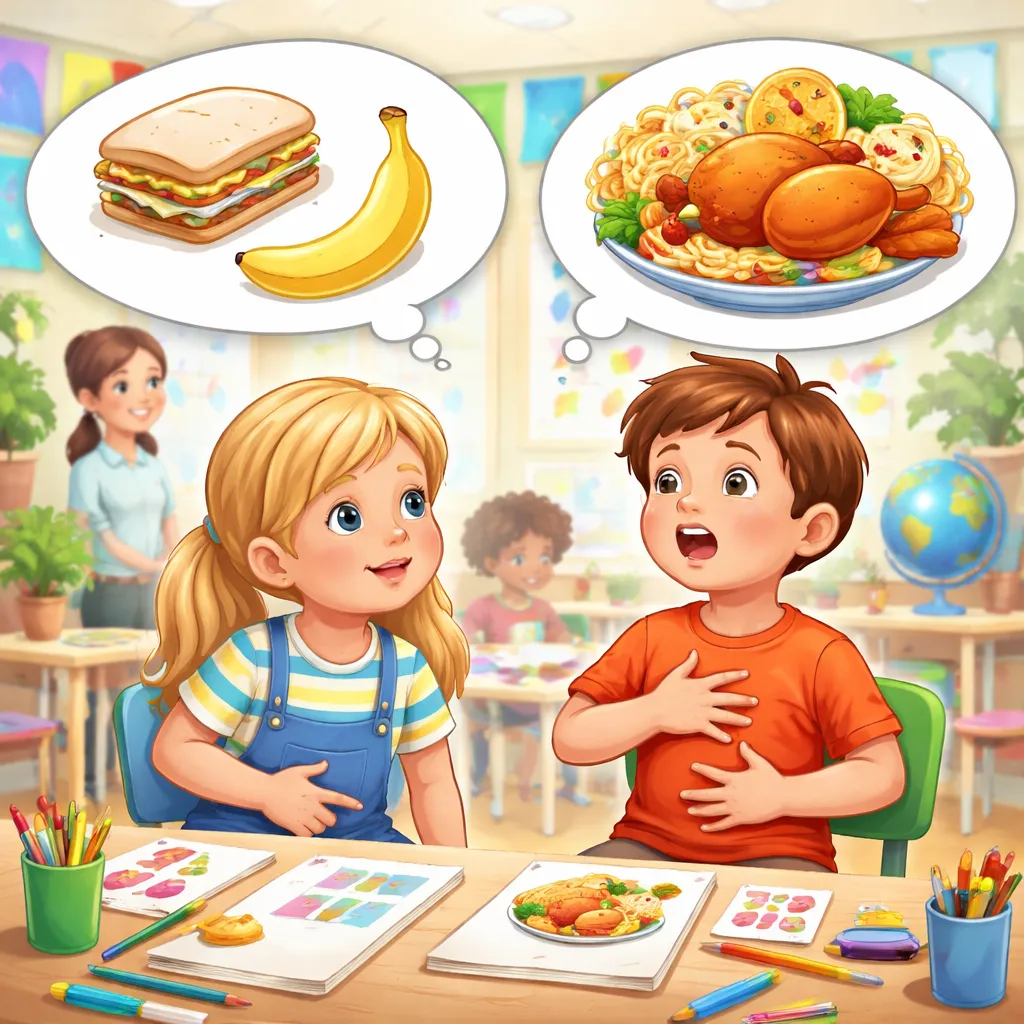
Children often learn new words that seem similar. Some words share a close meaning but differ in strength or tone. “Hungry and famished” is one such pair.
Both words describe the need for food. Both appear in daily conversation and storytelling. However, they are not always interchangeable.
“Hungry” is common and neutral. It simply means a person needs food. “Famished” is stronger. It suggests extreme hunger.
Understanding this difference helps children express their feelings more clearly. It also helps them understand others better.
Parents can guide children by using both words in real situations. Over time, children learn when each word fits best.
Set 1: hungry vs famished — Which One Is More Common?
“Hungry” is much more common in everyday English. Children hear it early in life. It appears in daily routines, such as mealtime.
For example:
“I am hungry.” “Are you hungry?”
“Famished” is less common. It appears more in storytelling or expressive speech.
For example:
“I am famished after the long walk.”
Because “hungry” appears more often, children learn it first. It becomes part of their basic vocabulary.
Parents can explain that “famished” is a stronger version of “hungry.”
This helps children understand frequency and usage.
Set 2: hungry vs famished — Same Meaning, Different Contexts
“Hungry and famished” both describe the need to eat. However, they fit different situations.
“Hungry” works in most everyday contexts. It describes normal hunger.
“Famished” describes extreme hunger. It often appears after a long time without food or after physical activity.
For example:
“I feel hungry before dinner.” “I feel famished after running.”
Context helps children decide which word to use.
Encourage children to think about intensity. Ask: Is it normal hunger or very strong hunger?
This simple question builds awareness.
Set 3: hungry vs famished — Which Word Is “Bigger” or More Emphatic?
“Famished” is more emphatic than “hungry.” It expresses a stronger feeling.
When someone says “famished,” they often want to emphasize their need for food.
“Hungry” is neutral. It does not show strong emotion.
For example:
“I am hungry.” (simple statement) “I am famished!” (strong feeling)
Children can think of “famished” as a bigger word. It adds emotion and emphasis.
Learning this difference helps children express intensity in language.
Set 4: hungry vs famished — Concrete vs Abstract
Both “hungry” and “famished” describe physical needs. They refer to the body needing food.
However, “hungry” also appears in abstract expressions. It can describe desire or ambition.
For example:
“She is hungry for success.”
“Famished” rarely appears in abstract ways. It mostly stays connected to physical hunger.
For children, it is best to focus on the concrete meaning first.
Once they understand this, they can explore abstract uses of “hungry.”
This step-by-step learning builds strong understanding.
Set 5: hungry vs famished — Verb or Noun? First Understand the Role
“Hungry” and “famished” are adjectives. They describe a person’s condition.
For example:
“The child is hungry.” “The child is famished.”
They answer the question: “How do you feel?”
Neither word acts as a verb. However, “hunger” can be a noun or verb in advanced use.
For beginners, focus on simple sentences.
For example: “I am hungry.” “I feel famished.”
These patterns help children build confidence.
Set 6: hungry vs famished — American English vs British English
Both “hungry and famished” appear in American and British English. Their meanings remain the same.
“Hungry” is very common in both regions. People use it in daily life.
“Famished” appears in both varieties but less frequently. It often appears in expressive speech or writing.
Children may hear “famished” more in stories or books.
Parents can explain that both forms are correct. The difference lies in frequency and tone.
Exposure to both helps children become flexible learners.
Set 7: hungry vs famished — Which Fits Formal Situations?
In formal situations, word choice matters.
“Hungry” works well in both formal and informal contexts. It sounds neutral and clear.
For example:
“The children felt hungry after the trip.”
“Famished” is more expressive. It may appear in descriptive writing but less often in formal reports.
For example:
“The travelers were famished after hours of walking.”
This sentence works in storytelling but may feel too strong in formal writing.
Children can learn that “hungry” is a safe choice in most situations.
Set 8: hungry vs famished — Which One Is Easier for Kids to Remember?
“Hungry” is easier for children to remember. It is short and commonly used.
Children hear it often at home and school. This repetition helps memory.
“Famished” is longer and less common. It may take more time to learn.
However, its strong meaning makes it memorable. Children often remember it when used in stories.
Parents can create simple connections:
Hungry = need food Famished = very, very hungry
These associations help children recall meaning quickly.
Mini Exercise: Can You Spot the Differences Between These Similar Words?
Try these simple exercises together.
Choose the correct word: “I skipped lunch, and now I feel ___.” Answer: famished Choose the correct word: “I am ___ and ready for dinner.” Answer: hungry Fill in the blank: “After the game, the players were ___.” Answer: famished True or False: “Famished” means slightly hungry. Answer: False True or False: “Hungry” can describe both normal and general need for food. Answer: True
These exercises help children practice meaning and usage.
They also make learning interactive and engaging.
Parent Tips: How to Help Kids Learn and Remember Similar Words
Children learn best through daily life. Mealtime is a natural opportunity.
When children talk about food, introduce both words. Ask simple questions: “Are you hungry or famished?”
Encourage them to explain their feelings. This builds vocabulary and thinking skills.
Use repetition in real situations. After playtime or exercise, use “famished.” Before meals, use “hungry.”
Read stories together. Point out expressive words like “famished.” Discuss why the author chose them.
Use actions and expressions. Pretend to be very hungry. This makes learning fun and memorable.
Avoid strong correction. Guide gently with questions and examples.
Create small games. For example, act out “hungry” and “famished.”
Celebrate progress. Confidence grows when children feel supported.
Over time, children begin to understand subtle differences. “Hungry and famished” become useful tools for expressing needs and emotions clearly.