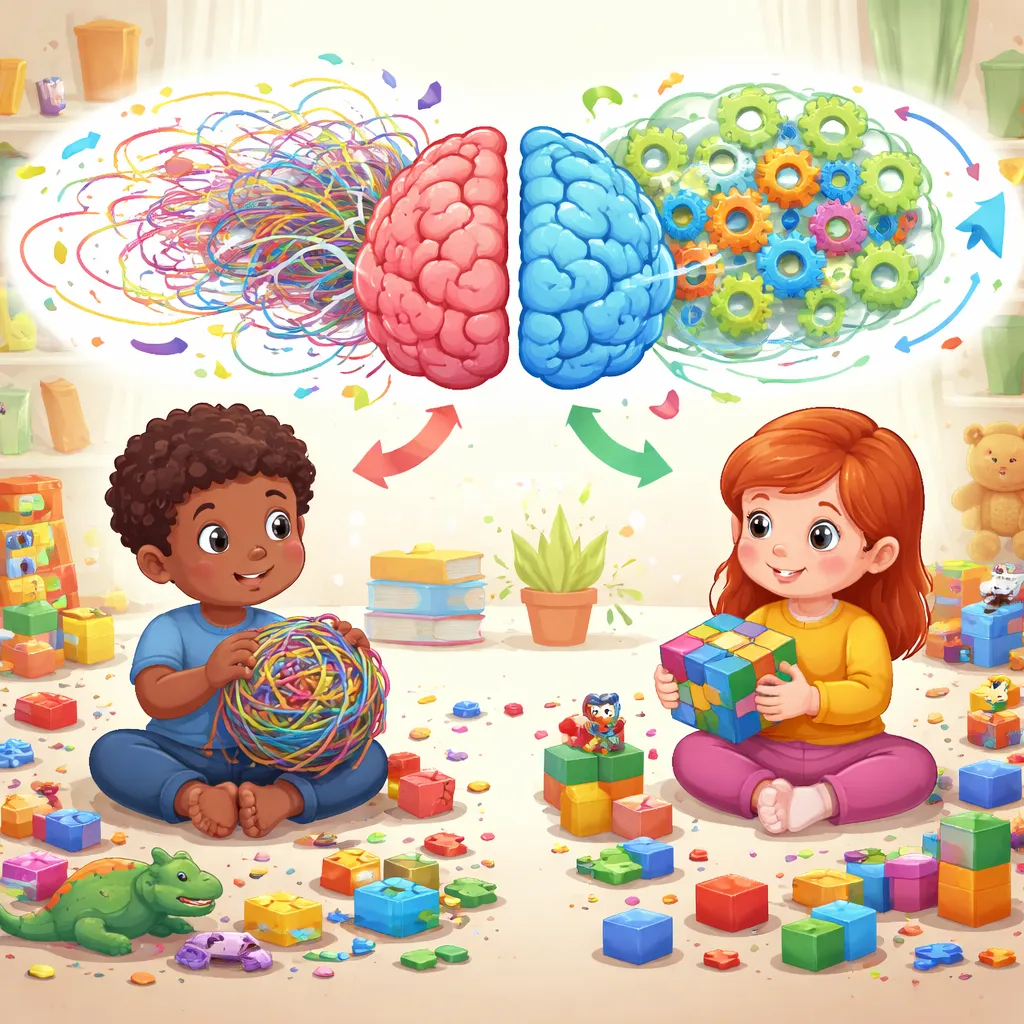

Are Similar Words Really Interchangeable?
Children often learn pairs of words that seem to share the same meaning. “Chaotic and disordered” is one such pair. Both words describe situations where there is no clear order.
At first glance, they may look interchangeable. However, each word carries a different tone and level of intensity.
“Chaotic” often suggests confusion, noise, and lack of control. “Disordered” often suggests something is not properly arranged or structured.
Understanding these differences helps children describe situations more precisely. It also supports clearer thinking and communication.
Parents can guide children by linking these words to real-life examples. This builds strong vocabulary skills over time.
Set 1: chaotic vs disordered — Which One Is More Common?
“Chaotic” is more common in everyday speech. Children may hear it when people describe busy or confusing situations.
For example:
“The room is chaotic.” “The morning was chaotic.”
“Disordered” appears less often in daily conversation. It is more common in formal or written English.
For example:
“The files are disordered.”
Because “chaotic” is more expressive and common, children usually learn it first.
Parents can introduce “disordered” as a more formal alternative.
Set 2: chaotic vs disordered — Same Meaning, Different Contexts
“Chaotic and disordered” both describe lack of order. However, they are used in different contexts.
“Chaotic” often describes situations full of confusion, movement, or noise.
“Disordered” focuses on structure. It suggests something is not arranged correctly.
For example:
“The classroom was chaotic.” (no control, noisy) “The papers are disordered.” (not arranged properly)
Children can ask: Is it about confusion or arrangement?
This helps them choose the correct word.
Set 3: chaotic vs disordered — Which Word Is “Bigger” or More Emphatic?
“Chaotic” is more emphatic. It expresses a strong sense of disorder and confusion.
“Disordered” is milder. It describes a lack of order without strong emotion.
For example:
“The scene was chaotic.” (strong feeling) “The room is disordered.” (neutral description)
“Chaotic” often creates a vivid image in the mind.
Children can think of it as a stronger and more expressive word.
Set 4: chaotic vs disordered — Concrete vs Abstract
“Disordered” is often concrete. It describes physical arrangement.
For example:
“The books are disordered.”
“Chaotic” can be both concrete and abstract.
For example:
“The desk is chaotic.” (physical) “The plan is chaotic.” (abstract)
This makes “chaotic” more flexible in language use.
Children can begin with simple, physical examples before exploring abstract ones.
Set 5: chaotic vs disordered — Verb or Noun? First Understand the Role
Both “chaotic” and “disordered” are adjectives. They describe nouns.
For example:
“chaotic situation” “disordered room”
“Chaotic” comes from the noun “chaos.”
“Disordered” comes from the verb “disorder,” but here it functions as an adjective.
Children can practice simple sentences: “The room is chaotic.” “The desk is disordered.”
These patterns help build clear and correct sentences.
Set 6: chaotic vs disordered — American English vs British English
Both “chaotic and disordered” are used in American and British English. Their meanings remain the same.
“Chaotic” is widely used in both regions in everyday speech.
“Disordered” appears more often in formal writing in both varieties.
There are no major regional differences in meaning or usage.
Children can learn both words without confusion.
Set 7: chaotic vs disordered — Which Fits Formal Situations?
In formal contexts, word choice is important.
“Disordered” fits better in formal or academic situations. It sounds neutral and precise.
For example:
“The system appears disordered.”
“Chaotic” is more expressive and informal. It adds emotion and vivid imagery.
For example:
“The event became chaotic.”
Children can learn that “disordered” works well in formal writing.
This supports academic language development.
Set 8: chaotic vs disordered — Which One Is Easier for Kids to Remember?
“Chaotic” may be easier for children to remember because it sounds interesting and expressive.
It often appears in stories or conversations about busy situations.
“Disordered” is longer and more formal. It may take more time to remember.
However, it becomes easier when linked to the word “order.”
Parents can create simple connections:
Chaotic = very confusing Disordered = not in order
These links help children remember both words effectively.
Mini Exercise: Can You Spot the Differences Between These Similar Words?
Try these simple exercises together.
Choose the correct word: “The classroom is noisy and confusing. It is ___.” Answer: chaotic Choose the correct word: “The books are not arranged. They are ___.” Answer: disordered Fill in the blank: “The situation is full of confusion. It is ___.” Answer: chaotic True or False: “Disordered” is often used in formal contexts. Answer: True True or False: “Chaotic” is a mild and neutral word. Answer: False
These exercises help children practice meaning and usage.
They also make learning more engaging.
Parent Tips: How to Help Kids Learn and Remember Similar Words
Children learn vocabulary best through real-life experiences. Daily life offers many examples of order and disorder.
Describe situations together. Ask: “Is this chaotic or disordered?”
Encourage children to explain their choices. This builds both language and thinking skills.
Use repetition in daily conversations. Talk about rooms, schedules, and activities.
Read stories and notice descriptive words. Discuss their meanings and differences.
Use drawing activities. Ask children to draw a chaotic scene and a disordered room.
Create simple sorting games. Group examples into “chaotic” and “disordered.”
Keep guidance gentle and supportive. Avoid strong correction.
Celebrate effort and improvement. Confidence grows step by step.
Over time, children begin to notice subtle differences in meaning. “Chaotic and disordered” become useful tools for describing levels of confusion and arrangement with clarity and confidence.