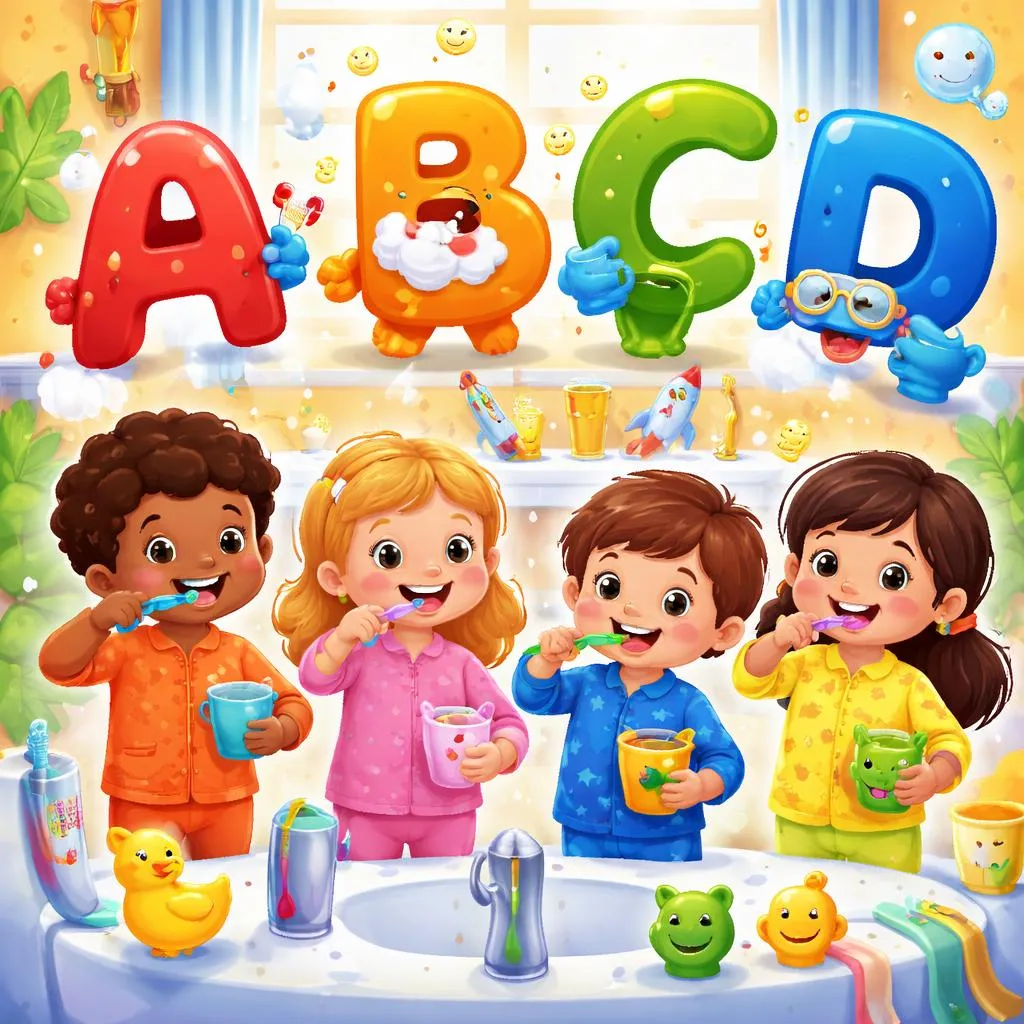

Hello, wonderful educators! Today we are exploring a delightful combination of learning and healthy habits. We will focus on the phrase "a b c d in the morning brush your teeth." This connects alphabet learning with daily hygiene routines. Children love songs and chants about familiar activities. We will examine what this phrase means. We will explore its educational value. We will share practical teaching strategies. We will provide engaging classroom activities. This guide will help you use this concept effectively. Let's begin this healthy and educational journey together.
What Is the "Brush Your Teeth" Rhyme?
This is a playful song that combines alphabet letters with tooth brushing. The most common version uses the tune of a familiar alphabet song. Children sing the letters while pretending to brush. This makes tooth brushing feel like fun rather than a chore.
The song typically goes through the alphabet. Each verse adds a new letter. Children brush in rhythm with the music. The song lasts about two minutes. This is exactly the recommended brushing time. The song teaches both letters and healthy habits at once.
Many versions exist with slight variations. Some focus only on the first few letters. Others go through the entire alphabet. The key element is connecting letter learning with the brushing motion.
The Lyrics of the Song
Let us review the complete traditional lyrics. The most common version goes like this:
A B C D in the morning brush your teeth,
E F G H in the morning brush your teeth,
I J K L in the morning brush your teeth,
Brush them every day!
M N O P in the morning brush your teeth,
Q R S T in the morning brush your teeth,
U V W X in the morning brush your teeth,
Brush them every day!
Y and Z in the morning brush your teeth,
Y and Z in the morning brush your teeth,
Y and Z in the morning brush your teeth,
Brush them every day!
Some versions add a final verse:
Now we've brushed them all clean,
Now we've brushed them all clean,
Now we've brushed them all clean,
Smile and show them bright!
Vocabulary Learning from the Song
This rhyme introduces several key vocabulary words. Let us explore each one carefully.
Morning: This is the first part of the day. We wake up in the morning. We eat breakfast in the morning. We brush teeth in the morning. This teaches time concepts.
Brush: This is the action we do with a toothbrush. We move it back and forth on our teeth. This is a daily habit word.
Teeth: These are the white parts in our mouths. We use them to chew food. We need to keep them clean and healthy. The singular form is tooth.
Clean: This means not dirty. After brushing, our teeth are clean. This describes a desired state.
Smile: This is a happy face showing teeth. We smile when we are pleased. Clean teeth make nice smiles.
Bright: This means shining or white. Clean teeth look bright. This is a descriptive word.
Phonics Points to Practice
The song offers excellent phonics opportunities through the alphabet letters. Let us focus on specific sounds.
Letter Names and Sounds: The song reviews all twenty-six letters. We can practice each letter name. We can also practice the sound each letter makes. A says /a/. B says /b/. This builds foundational phonics.
The BR Blend: Brush starts with BR. This is a consonant blend. Two consonants together make two sounds. We can practice other BR words. Brown, bread, and brother are good examples.
The TH Sound: Teeth has the /th/ sound in the middle. This is a digraph that requires practice. We can feel our tongue between our teeth. Other TH words include three, thumb, and bath.
The CH Sound: Brush has the /sh/ sound at the end. Actually brush ends with the /sh/ sound spelled SH. We can practice other SH words. Fish, dish, and wish are good examples.
Grammar Patterns We Can Teach
The simple sentences in this song provide grammar lessons. Let us look at a few patterns.
Imperative Sentences: The song gives a command. Brush your teeth. This is an imperative sentence. We use this form for instructions and requests.
Time Phrases: The song uses "in the morning." This tells when the action happens. We can practice other time phrases. In the afternoon. At night. After dinner. This builds temporal language.
Repetition for Emphasis: The song repeats the main phrase often. This emphasizes the importance of brushing. Repetition helps children remember the message.
Sequencing with Alphabet: The song moves through letters in order. This teaches alphabetical sequence naturally. Children learn which letters come next.
Learning Activities for the Classroom
Let us explore activities that bring this song to life. These ideas work for various learning styles.
Activity 1: Toothbrush Painting
Provide paper toothbrush cutouts and white paint. Students "brush" the paint onto paper teeth shapes. They practice the brushing motion while singing. This builds fine motor skills and connects to the song.
Activity 2: Alphabet Brushing Chart
Create a large chart with all twenty-six letters. Students take turns pointing to letters as the class sings. They "brush" each letter with a finger or small brush. This combines letter recognition with the song.
Activity 3: Healthy Teeth Discussion
Talk about why we brush our teeth. What happens if we don't brush? Sugar bugs cause cavities. Brushing removes them. This builds health awareness and science connections.
Activity 4: Brushing Practice with Models
Bring in large tooth models if available. Students practice brushing techniques on the models. They sing the song while brushing. This provides hands-on learning about proper technique.
Activity 5: Morning Routine Sequencing
Create cards showing morning activities. Wake up. Get dressed. Eat breakfast. Brush teeth. Go to school. Students arrange them in correct order. This builds sequencing and routine understanding.
Printable Materials for Your Lessons
Visual supports enhance learning for young children. Here are some printable ideas.
Alphabet Brushing Chart: Create a chart with all letters in order. Add a toothbrush picture at the beginning. Students can point to letters while singing. They can check off letters as they sing them.
Tooth Brushing Sticker Chart: Create a weekly chart for brushing. Morning and evening columns for each day. Students add stickers when they brush. This builds habit formation and parent involvement.
Healthy Teeth Coloring Page: Create a coloring page showing a happy tooth with a toothbrush. Add simple messages about brushing. Students color while discussing dental health.
Letter Brush Cards: Create cards with single letters on each. Students "brush" each letter with a finger while saying its name. This combines kinesthetic learning with letter practice.
Brushing Steps Mini Book: Create a small folded book showing brushing steps. Get toothbrush. Add toothpaste. Brush top teeth. Brush bottom teeth. Rinse. Smile! Students take these home to share.
Educational Games to Reinforce Learning
Games make hygiene learning fun and memorable. Here are some game ideas.
Game 1: Alphabet Brushing Relay
Divide the class into teams. Place letter cards at one end of the room. Students race to find a letter, "brush" it with a toothbrush, and bring it back. They must say the letter name. The team with the most letters wins.
Game 2: Sugar Bug Hunt
Hide small pictures of "sugar bugs" around the room. Give students toothbrushes. They search for sugar bugs and "brush" them away. Count how many each child finds. This teaches why brushing is important.
Game 3: What Letter Is Missing?
Place alphabet cards in order. Students close their eyes. Remove one letter. Students open eyes and guess which letter is missing. They must say, "The letter M is missing!" This builds letter recognition.
Game 4: Brush the Letter
Write letters on the board or on paper. Call out a letter sound. Students find that letter and pretend to brush it away. This builds sound-letter connections.
Game 5: Morning Routine Bingo
Create bingo cards with morning activities. Wake up, eat breakfast, brush teeth, get dressed, etc. Call out activities. Students cover matching pictures. The first to cover a row wins.
Game 6: Toothbrush Tunes
Create new verses for the song using other daily activities. "A B C D in the evening wash your face." "E F G H before you go to bed." Students invent their own verses. This builds creativity and routine awareness.
Game 7: Mirror Smile Game
Give each student a small mirror. They practice smiling and looking at their teeth. They can pretend to brush while watching in the mirror. This builds self-awareness and proper technique.
Game 8: Dental Health Sorting
Create picture cards of healthy and unhealthy foods for teeth. Apples are good. Candy is bad. Students sort them into two groups. They explain why each food helps or hurts teeth.
Game 9: Brush Along Video
Play a video of the song with brushing demonstrations. Students brush along with imaginary toothbrushes. They follow the timing and motions. This provides visual modeling of proper technique.
Game 10: Tooth Fairy Discussion
Talk about the tooth fairy tradition. What happens when teeth fall out? How should we care for baby teeth? This adds cultural and developmental discussion to the lesson.
Game 11: Alphabet Hop
Write letters on the floor with chalk or tape. Students hop from letter to letter while singing. They must land on the correct letter as they sing it. This combines gross motor skills with alphabet practice.
Game 12: Brush the Animal's Teeth
Create large animal faces with big paper teeth. Students take turns "brushing" the animal's teeth with a large toothbrush. They sing the song while brushing. This adds imaginative play to the lesson.
We have explored the wonderful combination of alphabet learning and dental health. The phrase "a b c d in the morning brush your teeth" creates a powerful teaching moment. Children learn their letters while learning lifelong healthy habits. The song makes tooth brushing feel fun rather than forced. We looked at what this song means. We explored the complete lyrics. We learned vocabulary and phonics. We practiced grammar patterns. We shared engaging activities and games. This integrated approach makes learning natural and effective. Children remember the letters because they connect to movement. They remember to brush because they connect to music. Use these strategies in your classroom. Adapt them to your students' needs. Watch as your learners sing, brush, and grow healthy and smart. Their smiles will be bright with clean teeth and new knowledge. Each morning will bring another chance to practice letters and healthy habits together.