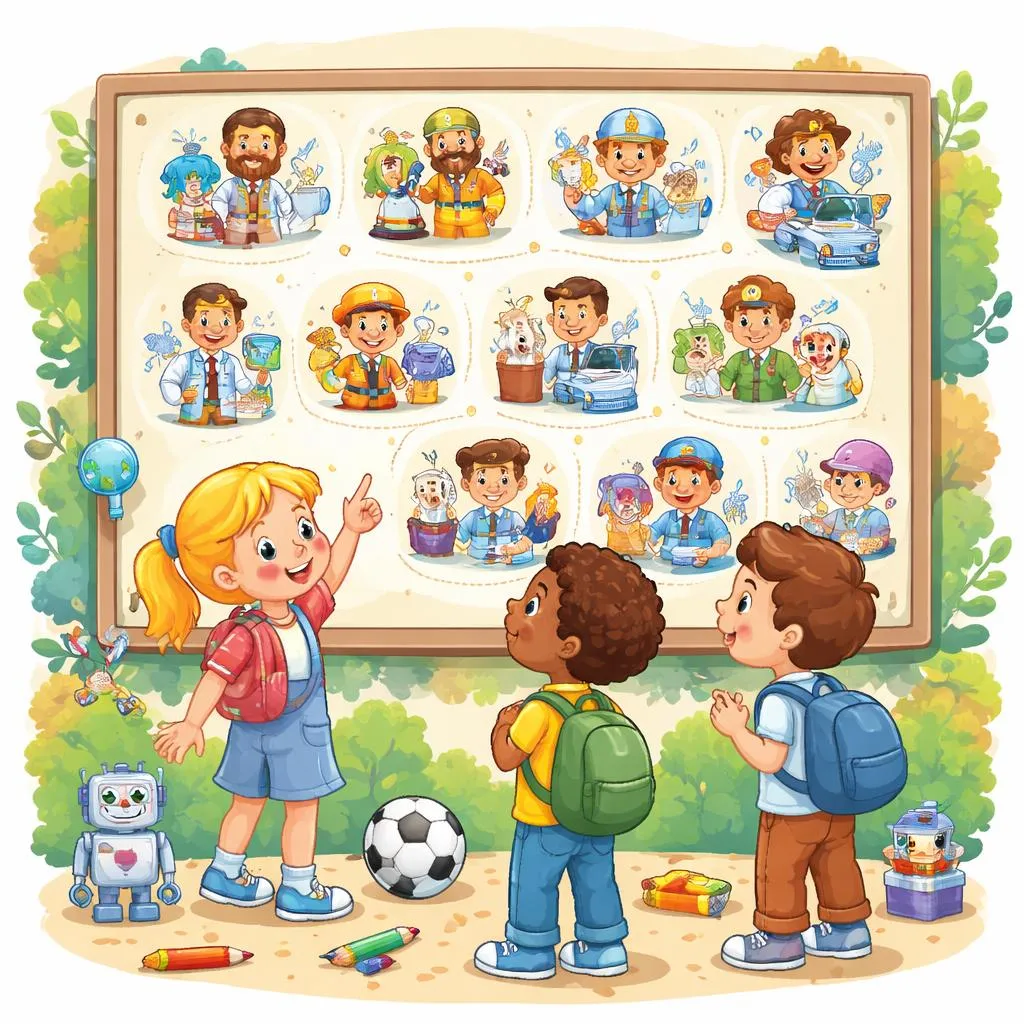

Hello, wonderful educators! Today we are exploring an essential vocabulary topic for young learners. We will focus on a "job name list." This collection of occupation words helps children understand the world around them. They meet people with different jobs every day. Learning these names builds community awareness. We will examine what job names mean. We will explore categories and examples. We will share practical teaching strategies. We will provide engaging classroom activities. This guide will help you teach occupation vocabulary effectively. Let's begin this career exploration journey together.
What Is a Job Name List?
A job name list is a collection of words that name different occupations. These are the titles we give to people based on their work. Doctor, teacher, firefighter, and farmer are all job names. Each tells us what a person does for a living.
Learning job names helps children understand their community. They see police officers keeping people safe. They visit doctors when feeling sick. They watch mail carriers deliver letters. Knowing the names gives children language to describe these helpers.
Job names also inspire future dreams. Children often imagine what they will be when grown. They might want to be an astronaut or a veterinarian. Having vocabulary for these dreams lets children express their aspirations.
These words also appear frequently in stories and conversations. Building this vocabulary supports overall language development.
Meaning and Explanation of Job Names
Let us explore the meaning behind job names. Each occupation has specific duties and responsibilities. Understanding these helps children grasp the concept of work.
Jobs provide goods or services to others. Bakers make bread and cakes. Teachers help children learn. Bus drivers transport people safely. Each job contributes to community functioning.
Some jobs require special training. Doctors study for many years. Pilots learn to fly planes. Chefs practice cooking techniques. This introduces the idea of education and preparation.
Jobs also involve different tools and environments. Construction workers use hard hats and tools. Chefs work in kitchens with stoves and knives. Artists use brushes and paints. These details enrich vocabulary learning.
Understanding jobs builds respect for all workers. Every job has value. Every worker contributes something important. This fosters appreciation for community helpers.
Categories or Lists of Common Job Names
Organizing job names into categories helps learning. It creates mental folders for students. Let us look at helpful categories.
Community Helpers: These jobs serve the public directly. Police officers, firefighters, mail carriers, librarians, and crossing guards belong here. Children see these workers regularly in their neighborhoods.
Health Care Jobs: These help people stay healthy. Doctors, nurses, dentists, veterinarians, and paramedics care for others. These jobs involve helping sick or injured people and animals.
Education Jobs: These work in schools and learning environments. Teachers, principals, teaching assistants, and school counselors help children learn and grow.
Food Service Jobs: These provide food to people. Chefs, bakers, waiters, cafeteria workers, and farmers grow and prepare what we eat.
Transportation Jobs: These move people and goods. Bus drivers, pilots, train conductors, truck drivers, and taxi drivers help us travel.
Construction and Building Jobs: These create structures. Carpenters, electricians, plumbers, architects, and construction workers build and fix things.
Creative Jobs: These involve art and imagination. Artists, musicians, actors, writers, and dancers express ideas through their work.
Science and Technology Jobs: These explore and invent. Scientists, engineers, computer programmers, and astronauts discover new things and solve problems.
Business Jobs: These run organizations. Shopkeepers, bankers, secretaries, and managers keep businesses operating smoothly.
Service Jobs: These help people in various ways. Hairdressers, cleaners, mechanics, and pet groomers provide useful services.
Daily Life Examples with Job Names
We can weave job names into everyday conversations. This makes learning natural and continuous.
During morning greetings, notice community helpers. "This morning I saw a mail carrier delivering letters." "A garbage truck came to our street with sanitation workers."
During story time, discuss characters' jobs. "The bear in this story is a baker. What does a baker do?" "The rabbit is a doctor. What tools might the rabbit use?"
During pretend play, provide occupation props. Hats, tools, and uniforms for different jobs. Children act out roles and use job names naturally.
During field trips or walks, point out workers. "Look, that person is a construction worker building a house." "There is a librarian at the library door."
During snack time, discuss food-related jobs. "A farmer grew these apples. A truck driver brought them to the store. A shopkeeper sold them to us."
Printable Flashcards for Job Names
Flashcards provide excellent visual support for vocabulary lessons. Here are some ideas for creating them.
Job Picture Cards: Create cards with clear pictures of workers on one side. Write the job name on the other side. Include diverse representations of each occupation.
Tool Matching Cards: Create cards showing job tools on one set. Create cards showing workers on another set. Students match each worker to their tools. A doctor matches a stethoscope. A firefighter matches a hose.
Workplace Cards: Create cards showing different workplaces. Hospital, school, fire station, restaurant, farm. Students match workers to their workplaces.
Uniform Cards: Create cards showing different work uniforms. Students identify which job matches each uniform. This builds observation and reasoning skills.
Job Description Cards: Create simple sentence cards describing jobs. "This person helps sick animals." Students guess the job and find the matching picture card.
Learning Activities or Games for Job Names
Games make vocabulary practice fun and memorable. Here are many engaging ideas.
Activity 1: Community Helper Dress-Up
Provide simple costume pieces for different jobs. A white coat for doctor. A hard hat for construction worker. A badge for police officer. Children dress up and describe what they do.
Activity 2: Job Charades
Act out job duties without speaking. Pretend to put out a fire for firefighter. Pretend to read a book for librarian. Pretend to cook for chef. Students guess the job.
Activity 3: Who Uses This?
Gather tools from different professions. Show a stethoscope. Ask, "Who uses this?" Students respond, "A doctor uses a stethoscope." This builds tool-job connections.
Activity 4: Job Bingo
Create bingo cards with job pictures. Call out job descriptions. "This person flies airplanes." Students cover the pilot picture. First to cover a row wins.
Activity 5: When I Grow Up...
Have children draw themselves doing a future job. They present their drawing to the class. "When I grow up, I want to be a veterinarian. I will help animals." This builds speaking skills and future thinking.
Activity 6: Job Sort
Provide a mix of job pictures and workplace pictures. Students sort jobs into the correct workplaces. All hospital workers together. All school workers together. This builds categorization skills.
Activity 7: Guess the Job from Sounds
Make sounds associated with different jobs. Siren sounds for police or firefighter. Hammering for construction worker. Typing for office worker. Students guess the job.
Activity 8: Job Interview Role Play
Set up simple job interview scenarios. One child is the boss. Another wants the job. They ask and answer questions. "Can you bake cakes?" "Yes, I can bake cakes." This builds conversational skills.
Activity 9: Job Alphabet
Go through the alphabet naming jobs for each letter. A is for astronaut. B is for baker. C is for carpenter. See how many the class can name together. This combines alphabet and job learning.
Activity 10: Community Helper Visit
Invite community helpers to visit the classroom. A firefighter can show their gear. A nurse can talk about helping people. Children prepare questions to ask. This provides real-world connections.
Activity 11: Job Puzzles
Create simple puzzles with job pictures cut into pieces. Students assemble the puzzles and name the job. This builds fine motor skills and vocabulary.
Activity 12: Where Do They Work?
Name a job. Students point to or go to the area of the room representing that workplace. Hospital corner for doctor. School corner for teacher. This adds movement to learning.
Activity 13: Job Rhyming Game
Say a job name. Students think of words that rhyme. Doctor and tractor. Teacher and creature. Farmer and warmer. This builds phonological awareness.
Activity 14: Job Shadow Drawing
Have children draw themselves shadowing a worker. They draw the worker doing the job and themselves watching. They describe what they learned. This builds observation and narrative skills.
Activity 15: Job Matching Memory Game
Create pairs of job cards. One card shows the worker. The matching card shows the workplace or tools. Place face down. Students find matches and name the job.
Activity 16: Thank You Cards for Helpers
Have children make thank you cards for community helpers. Firefighters, mail carriers, librarians. They write or draw appreciation messages. Deliver them to local workers. This builds gratitude and community connection.
Activity 17: Job Riddles
Create simple riddles about jobs. "I wear a white coat. I help sick people. I use a stethoscope. Who am I?" Students solve the riddles. This builds listening and reasoning.
Activity 18: Job Collage
Provide magazines and newspapers. Children cut out pictures of people working. They create a job collage. They name each job they included. This builds visual literacy and vocabulary.
Activity 19: Job Interview Circle
Sit in a circle. One child thinks of a job. Others ask yes or no questions to guess. "Do you work outside?" "Do you help people?" "Do you use tools?" This builds questioning skills.
Activity 20: Job Shadowing Through Books
Read books about different professions. After each book, discuss what the job involves. Add the job to a class list. Create a classroom job name list display.
We have explored the wonderful world of job names together. A "job name list" helps children understand the working world around them. They learn to name the helpers they see every day. They imagine their own future possibilities. They build respect for all types of work. We looked at what job names mean. We explored helpful categories. We found examples in daily life. We created printable flashcards for practice. We shared engaging games and activities. This integrated approach makes learning natural and meaningful. Use these strategies in your classroom. Adapt them to your students' needs. Watch as your learners gain vocabulary and understanding. They will see their community with new eyes. Every worker they meet will have a name and a purpose. Their own dreams for the future will have words to express them.