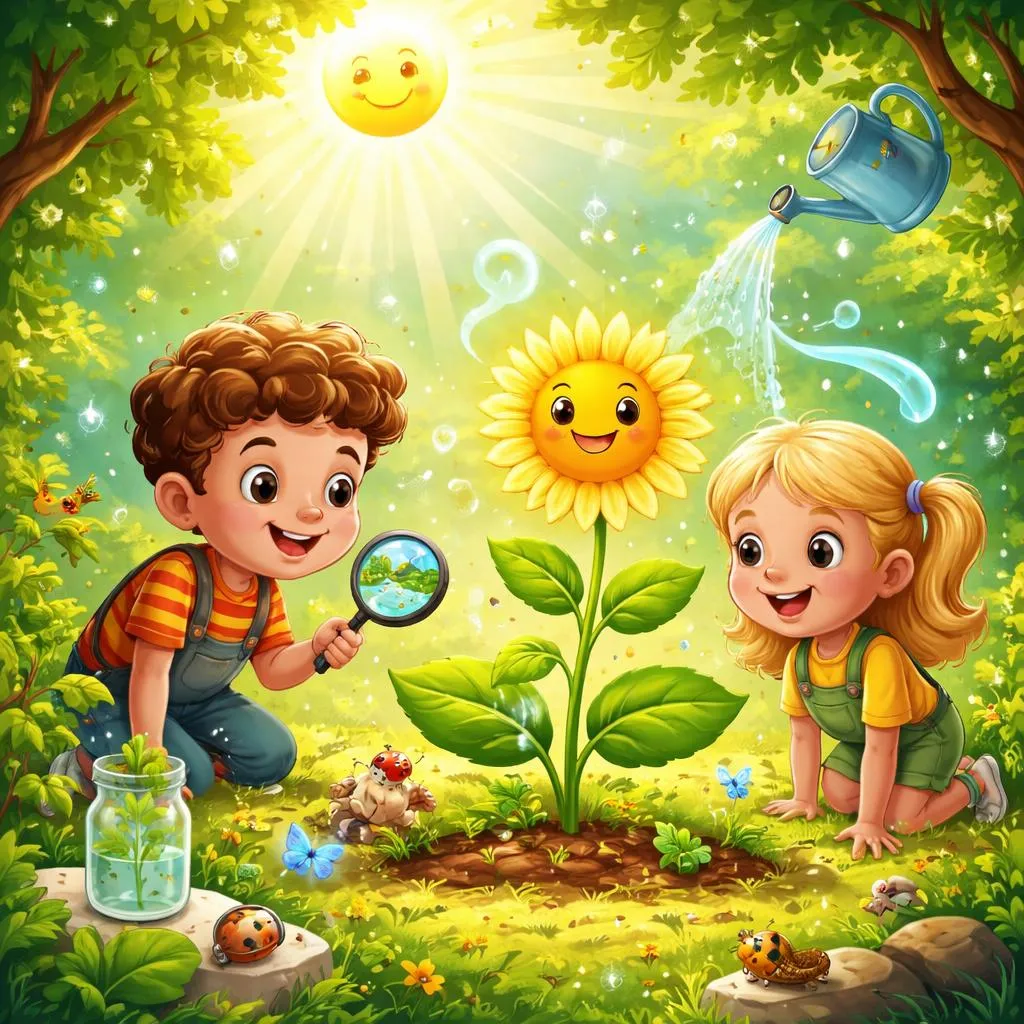

Science concepts often feel abstract to young learners. Words like sunlight, carbon dioxide, and chlorophyll seem distant from their daily experience. A photosynthesis children's story changes this completely. It transforms complex processes into relatable adventures. It gives plants personalities and purposes. It turns scientific vocabulary into story elements that children remember. This article explores how teachers can use storytelling to introduce one of nature's most amazing processes to young minds.
What Is a Photosynthesis Children's Story? A photosynthesis children's story is a narrative that explains how plants make food through engaging storytelling. It takes a scientific process and wraps it in characters and plot. The sun becomes a friendly character. Leaves become tiny kitchens. Roots become drinking straws. The story follows a plant through its day as it collects sunlight, drinks water, and breathes air to create its own food. These stories simplify complex concepts without losing accuracy. They create mental pictures that help children visualize what happens inside a leaf. The science becomes memorable because it lives within a story.
Meaning and Explanation Behind the Story Photosynthesis is the process plants use to make their own food. The word itself means "putting together with light." Plants take water from the soil through their roots. They take carbon dioxide from the air through tiny holes in their leaves. They capture sunlight with a green pigment called chlorophyll. Using the sun's energy, they combine water and carbon dioxide to create glucose, which is their food. Oxygen is released as a byproduct. This process feeds the plant and produces the oxygen animals need to breathe.
A photosynthesis children's story translates these steps into narrative form. The sun sends down golden rays of energy. The roots drink up water from the soil like straws. The leaves open tiny mouths to breathe in air. The chlorophyll acts like a magic green kitchen where the cooking happens. The food produced is stored in the plant for energy and growth. The oxygen released goes back into the air for people and animals to breathe. This story framework makes each step clear and connected.
The Main Characters in a Photosynthesis Story A good photosynthesis children's story features memorable characters that represent each part of the process.
Sunny the Sun: A warm and friendly character who sends golden energy beams down to Earth. Without Sunny, nothing else can happen. He represents the light energy that powers the whole process.
Rosie the Root: A hardworking character who lives underground. She drinks water from the soil and sends it up through thin tubes to the leaves. She represents the water uptake system of the plant.
Leo the Leaf: The main plant character where the action happens. He is green because he contains tiny chlorophyll kitchens. He catches sunlight and breathes in air. He represents the site of photosynthesis.
Chloe the Chlorophyll: A tiny green character who lives inside Leo the Leaf. She runs the kitchen where the cooking happens. She captures the sun's energy and uses it to combine water and air into food.
Coco the Carbon Dioxide: A molecule character floating in the air. He enters the leaf through tiny doors and becomes part of the food-making process.
Ozzy the Oxygen: The character released after the food is made. He floats out of the leaf to join the air where animals and people need him.
Daily Life Examples from the Photosynthesis Story A photosynthesis children's story connects to things children see every day. The grass in the playground is making food right now. The tree outside the classroom window is breathing. The houseplant on the windowsill is catching sunlight for its kitchens. These connections make the story real rather than abstract.
When children eat fruits and vegetables, they are eating the food the plant made through photosynthesis. An apple is stored energy from the sun. A carrot is food the plant made and stored in its root. The bread in a sandwich came from wheat that grew using photosynthesis. These connections help children understand that this process directly affects their lives.
The oxygen they breathe every moment comes from plants performing photosynthesis. Each breath connects them to a leaf somewhere in the world. This understanding builds appreciation for plants and their essential role in supporting all life.
Vocabulary Learning from the Photosynthesis Story A photosynthesis children's story introduces important scientific vocabulary in a memorable context.
Plant Part Words: Root, stem, leaf, flower, seed, trunk, branch, vein, pore.
Process Words: Photosynthesis, sunlight, energy, absorb, release, produce, combine, convert, store.
Scientific Words: Chlorophyll, carbon dioxide, oxygen, glucose, water, mineral, atmosphere, cell.
Action Words: Grow, drink, breathe, cook, capture, shine, float, rise, change.
Teachers can introduce these words before reading the story. Use simple definitions with pictures. Point out the words as they appear in the narrative. After reading, use the words in discussion questions. What does the root do? Where does the oxygen go? Why does the leaf need sunlight? The vocabulary becomes meaningful through repeated use in context.
Phonics Points in the Photosynthesis Story The specialized vocabulary in a photosynthesis children's story offers excellent phonics practice.
Syllable Practice: Long scientific words help children practice breaking words into syllables. Pho-to-syn-the-sis has five syllables. Chlo-ro-phyll has three syllables. Car-bon di-ox-ide has five syllables. Clapping syllables makes this a physical learning activity.
Letter Patterns: Words like photosynthesis contain the PH digraph making an F sound. Find other PH words. Phone, photo, phrase, sphere. This teaches that letter patterns can represent specific sounds.
Compound Words: Sunlight is sun plus light. Sunflower is sun plus flower. Rainforest is rain plus forest. Recognizing compound words helps children decode longer words by finding smaller words inside them.
Root Words: Many science words share roots. Photo means light in Greek. Synthesis means putting together. Understanding these roots helps children decode unfamiliar words they will encounter later.
Teachers can pause during reading to notice these patterns naturally. The science content provides a meaningful context for phonics instruction.
Grammar Patterns in the Photosynthesis Story The simple explanatory text in a photosynthesis children's story provides clear grammar models.
Present Tense for Facts: Science explanations use present tense to describe how things work. The roots drink water. The leaves catch sunlight. The plant makes food. This models the grammar of factual writing.
Cause and Effect Sentences: Photosynthesis involves clear cause and effect relationships. When the sun shines, the plant can make food. Because the roots bring water, the leaves stay healthy. These sentence patterns teach logical connections.
Sequencing Words: Explaining a process requires sequencing language. First, the roots drink water. Next, the water travels up the stem. Then, the leaves catch sunlight. Finally, the plant makes food. These words build understanding of process and order.
Descriptive Language: The story uses adjectives to create clear pictures. Green leaves, warm sunlight, tiny roots, invisible air. These descriptions enrich language and teach observation skills.
Teachers can point out these patterns during rereading. The second or third reading provides space for noticing language structures while the science content becomes more familiar.
Learning Activities for the Photosynthesis Story Activities bring a photosynthesis children's story to life in the classroom.
Activity 1: Plant Observation Place a potted plant near a sunny window. Observe it throughout the day. Notice how the leaves face the sun. Look for new growth. Water it together. Talk about what is happening inside the plant based on the story. This connects the narrative to real plant life.
Activity 2: Leaf Rubbings Take a nature walk to collect different leaves. Place each leaf under a piece of paper. Rub a crayon gently over the paper to reveal the leaf shape and veins. Talk about how the veins carry water and food, just like the story described. This creates art while reinforcing science concepts.
Activity 3: Photosynthesis Role Play Assign children the roles from the story. Some are roots drinking water. Some are leaves catching sunlight. Some are carbon dioxide entering the leaf. Some are oxygen being released. Act out the process together. This kinesthetic activity makes the abstract process physical and memorable.
Activity 4: Sun Print Paper Use special sun print paper available from educational suppliers. Place objects like leaves or flowers on the paper. Leave it in bright sunlight for a few minutes. Rinse in water to reveal the prints. This demonstrates the power of sunlight in a visual and artistic way.
Printable Materials for the Photosynthesis Story Printable resources extend learning from any photosynthesis children's story across multiple lessons.
Story Sequencing Cards: Create simple picture cards showing each step of photosynthesis. The sun shines. Roots drink water. Leaves take in air. Chlorophyll makes food. Oxygen releases. Plant grows. Children arrange the cards in correct order, retelling the process as they work.
Plant Part Diagram: Create a simple labeled diagram of a plant. Roots, stem, leaves, flowers. Children color and label the parts. This reinforces plant anatomy vocabulary.
Photosynthesis Coloring Page: Create an outline drawing showing a plant with sun, water, and air. Children color while reviewing the process. Labels identify each element.
Vocabulary Cards: Create flashcards with words and simple pictures. Sun, water, air, leaf, root, food, oxygen. Children practice reading and matching.
Mini-Book: Create a folded paper book with simple sentences about photosynthesis on each page. Children illustrate each page and take the book home to share with family.
Educational Games for the Photosynthesis Story Games provide a fun way to review photosynthesis concepts while maintaining engagement.
Game: Photosynthesis Bingo Create bingo cards with words and images from the process. Read definitions. Children cover the matching square. The first to complete a row wins. This game provides vocabulary review in a familiar format.
Game: Plant Part Match Create cards with plant part names and cards with functions. Root matches with drinks water. Leaf matches with catches sun. Children work in pairs to match each part with its job.
Game: What Does a Plant Need Place pictures of various items on the board. Sun, water, soil, air, shoes, book, hat, milk. Children take turns identifying which items a plant needs for photosynthesis and explaining why.
Game: Photosynthesis Relay Set up stations around the room representing different parts of the process. Sun station. Water station. Air station. Food station. Children move through the stations in order, performing an action at each one. This kinesthetic game reinforces the sequence physically.
Connecting Photosynthesis to Other Subjects A photosynthesis children's story can connect to many areas of the curriculum beyond science.
Art Connection: Create plant art using various materials. Leaf prints with paint. Collage gardens. Painted flowers. Discuss how real plants use sunlight to grow while creating art inspired by them.
Math Connection: Count leaves on a plant. Measure plant growth over time. Graph how many hours of sunlight different plants receive. This integrates math skills with science observation.
Health Connection: Discuss how plants provide the food we eat. Talk about fruits and vegetables as stored plant energy. Connect healthy eating to an understanding of where food comes from.
Environmental Connection: Discuss why trees and plants are important for clean air. Connect photosynthesis to environmental stewardship. Plant classroom seeds to grow and observe.
Extending Learning Through Garden Projects A classroom garden brings the photosynthesis children's story into daily experience.
Bean in a Bag: Place a bean seed and a damp paper towel in a clear plastic bag. Tape it to a sunny window. Watch as the seed sprouts and grows. Observe the roots reaching down and the leaves reaching up. Connect each observation back to the story.
Classroom Plants: Grow simple plants like herbs or small flowers in the classroom. Children take turns watering and caring for them. They observe how plants respond to sunlight by turning their leaves. They see new growth that comes from successful photosynthesis.
Garden Journal: Keep a simple journal documenting plant growth. Draw pictures of changes observed. Write simple sentences describing what the plants are doing. This builds observation and recording skills while reinforcing science concepts.
The beauty of a photosynthesis children's story lies in its ability to make the invisible visible. Children cannot see chlorophyll with their eyes. They cannot watch carbon dioxide enter a leaf. But through story, these elements become real and understandable. The sun becomes a friendly character sending energy. The leaf becomes a kitchen where magic happens. The oxygen released becomes a gift to the world. This narrative framework carries the science into young minds and hearts. Long after the specific vocabulary fades, the understanding remains. A plant needs sun, water, and air to make its food. That simple truth, delivered through story, becomes knowledge that lasts a lifetime.