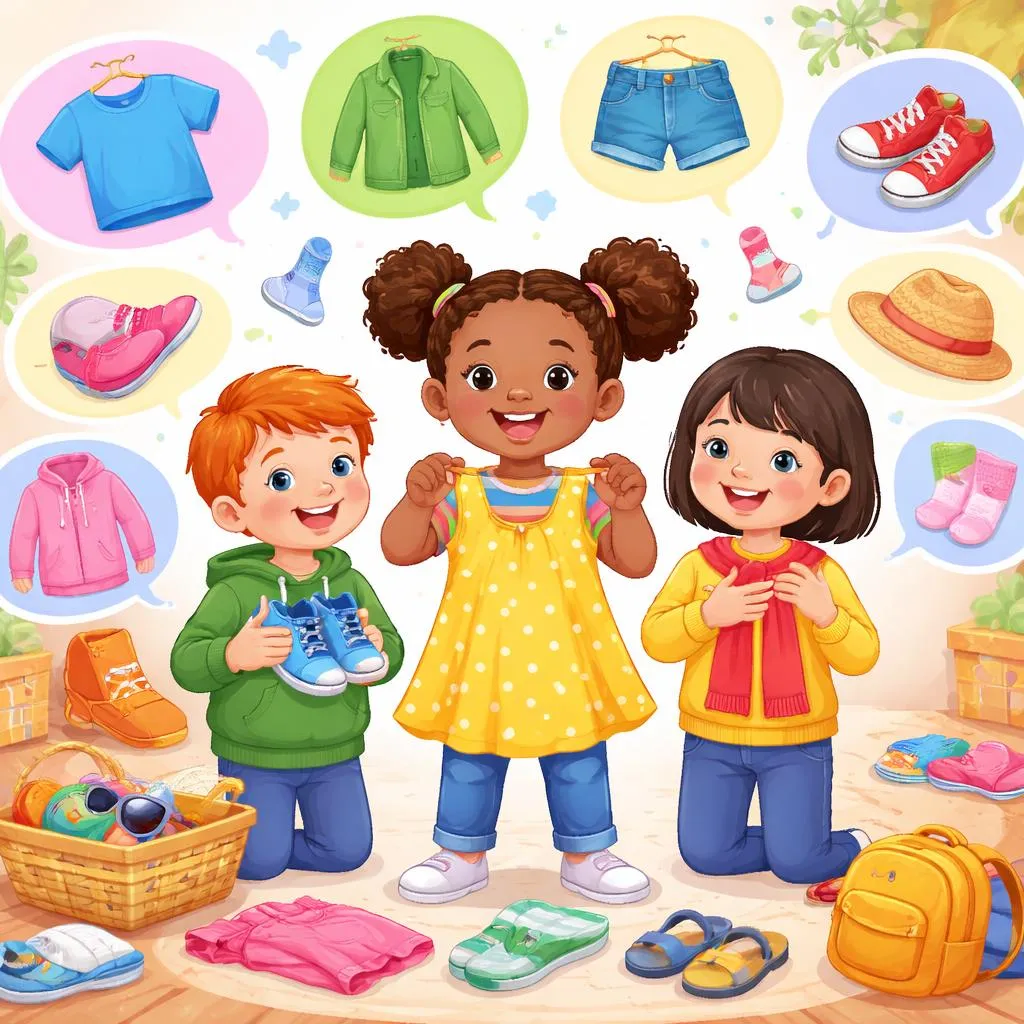

Hello, wonderful educators! Today we are exploring a practical and essential topic. We will focus on "names for clothing." This vocabulary appears in daily conversations constantly. Children encounter clothing words from morning until night. Learning these words helps students describe their world. They can express preferences and needs clearly. We will examine what clothing words mean. We will explore categories and examples. We will share practical teaching strategies. We will provide engaging classroom activities. This guide will help you teach clothing vocabulary effectively. Let's begin this fashionable learning journey together.
What Are Names for Clothing?
Clothing names are the words we use for items we wear. These include everything we put on our bodies. Shirts, pants, dresses, and shoes are common examples. Hats, socks, and jackets also belong to this group. These words describe both function and style.
Learning clothing names helps children in many ways. They can dress themselves independently. They can talk about what they like to wear. They can follow instructions about getting ready. This vocabulary connects to real life every single day.
Clothing words also teach about weather and seasons. We wear different things in summer and winter. This builds science connections naturally. Students learn to match clothing to situations.
Meaning and Explanation of Clothing Vocabulary
Let us explore the meaning behind clothing words. Each item has a specific purpose and place on the body.
Clothing protects us from weather. Coats keep us warm in winter. Raincoats keep us dry in storms. Hats shield our faces from sun. Shoes protect our feet from rough ground.
Clothing also expresses who we are. Uniforms show what school we attend. Fancy clothes show we are celebrating. Comfortable clothes show we are relaxing. Students can talk about how clothes make them feel.
We wear different clothes for different activities. Pajamas are for sleeping. Swimsuits are for swimming. Sports clothes are for playing games. Understanding these connections builds practical knowledge.
Categories or Lists of Common Clothing Names
Organizing clothing words into categories helps learning. It creates mental folders for students. Let us look at helpful categories.
Tops: These are clothes for the upper body. Shirts, t-shirts, blouses, sweaters, hoodies, jackets, and coats belong here. Each has a different style and purpose.
Bottoms: These are clothes for the lower body. Pants, jeans, shorts, skirts, and leggings fit this category. Some are long. Some are short. Some are loose. Some are tight.
Footwear: These are clothes for the feet. Shoes, sneakers, boots, sandals, slippers, and flip-flops protect our feet. Different shoes work for different activities.
Headwear: These are clothes for the head. Hats, caps, beanies, and helmets serve different purposes. Some keep us warm. Some keep sun off our faces. Some keep us safe.
Accessories: These add style or function. Socks, belts, gloves, scarves, glasses, watches, and jewelry complete outfits. They make clothing more useful or beautiful.
Sleepwear: These are clothes for sleeping. Pajamas, nightgowns, and robes keep us comfortable in bed. They are usually soft and loose.
Special Occasion Clothing: These are for specific events. Swimsuits for the pool. Raincoats for wet weather. Costumes for dress-up and holidays. Uniforms for school or sports.
Daily Life Examples with Clothing Names
We can weave clothing words into everyday conversations. This makes learning natural and continuous.
During morning arrival, notice what students wear. "Good morning! I see you are wearing a red sweater today." "Those are cool sneakers. Do they help you run fast?" This validates their choices and builds vocabulary.
During weather discussions, connect clothing to conditions. "It is raining outside. What should we wear?" Students suggest raincoats and boots. "It is very sunny. What protects our heads?" Students suggest hats and caps.
During dress-up time in the classroom, provide many options. Name each item as students explore. "This is a vest. This is a scarf. These are mittens." Let students try items on and say the names.
During story time, point to clothing in illustrations. "Look at the bear. He is wearing blue overalls." "The girl has a striped shirt." This builds observation skills alongside vocabulary.
Printable Flashcards for Clothing Names
Flashcards provide excellent visual support for vocabulary lessons. Here are some ideas for creating them.
Picture-Word Cards: Create cards with a clear clothing picture on one side. Write the word on the other side. Make a complete set including shirt, pants, dress, skirt, socks, shoes, hat, coat, sweater, and more.
Seasonal Clothing Sets: Create separate sets for different weather. One set shows warm weather clothes. Another set shows cold weather clothes. Students sort them by season. This builds categorization skills.
Getting Dressed Sequence Cards: Create cards showing the order of getting dressed. First underwear. Then shirt. Then pants. Then socks. Then shoes. Students arrange them in correct order. This builds sequencing skills.
Clothing Color Cards: Create cards showing the same clothing item in different colors. A red shirt. A blue shirt. A yellow shirt. Students practice color words alongside clothing words.
Matching Game Cards: Create two identical sets of clothing cards. Students play memory match. They must name the clothing when they find a match. This adds language practice to a classic game.
Learning Activities or Games for Clothing Vocabulary
Games make vocabulary practice fun and memorable. Here are some engaging activities.
Activity 1: Dress the Weather Bear
Create a large bear picture on the bulletin board. Provide paper clothing items for different weather. Students choose appropriate clothes for today's weather. They name each item as they dress the bear.
Activity 2: Clothing Store Role Play
Set up a pretend clothing store in the classroom. Hang real or paper clothes on racks. Provide play money and shopping bags. Students take turns being shopkeepers and customers. Customers say, "I want to buy the blue hat please." Shopkeepers respond and complete the sale.
Activity 3: What's Missing Game
Lay out several clothing items on a table. Review the names with students. Ask them to close their eyes. Remove one item. Students open their eyes and guess what is missing. They must say, "The scarf is missing!" This builds observation and memory.
Activity 4: Clothing Relay Race
Divide the class into teams. Place a pile of clothing at one end of the room. Call out an item. One student from each team runs to the pile, finds that item, and holds it up. The first correct holder wins a point. This adds movement to vocabulary practice.
Activity 5: I Spy with Clothing
Say, "I spy with my little eye, something blue that someone is wearing." Students look around and guess. "Is it Maria's blue shirt?" "Is it Tom's blue socks?" This builds observation and descriptive language.
Activity 6: Clothing Bingo
Create bingo cards with pictures of clothing items. Call out clothing names. Students cover the matching pictures. The first to cover a row wins. This builds listening comprehension and word recognition.
Activity 7: Laundry Sorting
Provide a basket of mixed clothing or clothing pictures. Ask students to sort them into categories. They can sort by type, like all socks together. They can sort by color or by whose clothes they might be. They name each item as they sort.
Activity 8: Paper Doll Dressing
Provide paper doll templates. Provide paper clothing with tabs. Students choose outfits for their dolls. They name each item as they dress their doll. They can create outfits for different weather or activities.
Activity 9: Clothing Fashion Show
Host a classroom fashion show. Students wear or hold different clothing items. As they walk, describe what they are showing. "Maria is wearing a yellow dress and pink shoes." This builds confidence and descriptive language.
Activity 10: Get Dressed Song
Create a simple song about getting dressed. Use a familiar tune like "London Bridge." Sing, "This is how we put on our shirt, put on our shirt, put on our shirt. This is how we put on our shirt, early in the morning." Add verses for each clothing item.
We have explored the wonderful world of clothing vocabulary together. Learning "names for clothing" builds essential life skills. We defined what clothing words mean clearly. We explored helpful categories for organization. We found examples in daily routines. We created printable flashcards for practice. We played engaging games for reinforcement. This vocabulary connects to students' lives every day. They use these words when getting dressed. They use them when shopping with family. They use them during weather discussions. Use these strategies in your classroom. Adapt them to your students' needs. Watch as your learners gain confidence in describing their world. They will express preferences and needs clearly. Their vocabulary will grow with every outfit they name. The clothes on their backs will become tools for language learning every single day.