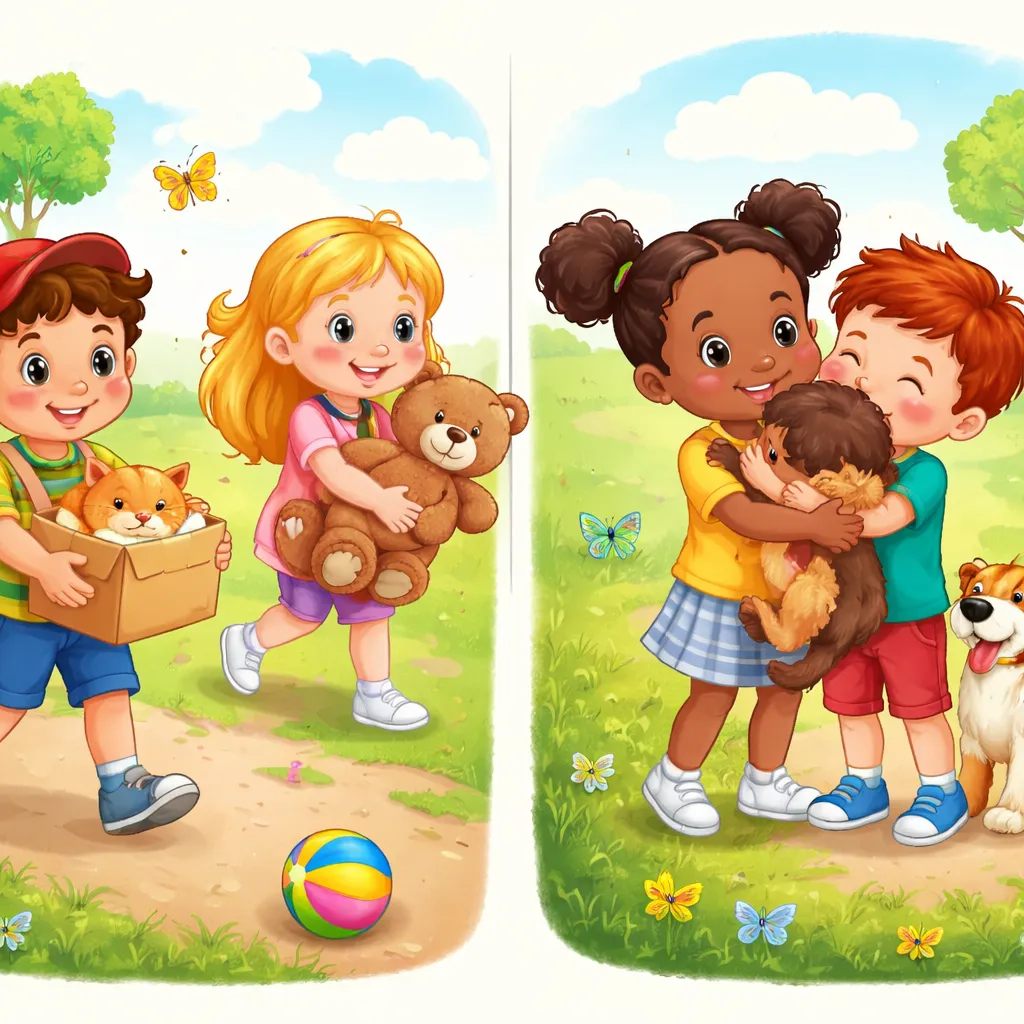

Hello, word explorer! Have you ever brought your backpack to school? Or cradled a baby bird? How do you talk about that? Do you carry your backpack? Or do you hold the bird? They both seem to mean having something in your hands or arms. But are they the same? They are like two different ways to have something. One is a moving van taking things from place to place. One is a shelf keeping something in one spot. Let's find out! Today, we explore the word friends "carry" and "hold". Knowing their secret is a superpower. It makes you a master of moving and keeping. Let's start our lifting adventure!
First, let's be Action Detectives. Listen at home. Here are two sentences. "Can you help me carry these grocery bags from the car to the kitchen?" "Please hold this fragile ornament carefully so it doesn't fall." They both talk about having something. Grocery bags. An ornament. Do they sound the same? One feels like moving something from one place to another. One feels like keeping something in your hands, in one place. Can you sense it? Great observation! Now, let's look at the van and the shelf.
Adventure! Inside the World of Having Things
Welcome to the world of having things! "Carry" and "hold" are two different handlers. Think of "carry" as a moving van. It is all about transportation. Think of "hold" as a stationary shelf. It is all about support in one place. Both involve having something. But they have different purposes. Let's learn about each handler.
The Moving Van vs. The Stationary Shelf Think about the word "carry". "Carry" feels like a moving van. It means to support and move someone or something from one place to another. The focus is on movement. I carry my books. The wind carries seeds. This box can carry a lot. It is about transport. Now, think about "hold". "Hold" feels like a stationary shelf. It means to have or keep something in your hands, arms, or an object. The focus is on grasping or containing. Hold my hand. The cup holds water. Hold that thought. "Carry" is the moving van. "Hold" is the shelf. One is for moving. The other is for keeping.
Moving Something vs. Keeping Something in Place Let's compare their action. "Carry" involves movement. You take something with you. You can carry a tune, carry a child, or carry responsibility. The object changes location. "Hold" is about the state of having or supporting. It doesn't require movement. You can hold a door open, hold a meeting, or hold your breath. The object may stay in the same place. "Carry" is dynamic. "Hold" is often static. One is a journey. The other is a grip.
Their Special Word Partners and Common Uses Words have best friends. "Carry" loves to team up with movement and burden. Carry out. Carry on. Carry the day. It is about taking something forward. "Hold" teams up with keeping and containing. Hold on. Hold back. Hold your horses. Note: We say "carry a suitcase" (take it somewhere). We say "hold a suitcase" (just grasp it, maybe without moving). They are different.
Let's visit a school scene. After library day, you carry a stack of books back to your classroom. This is moving them from one place to another. During reading time, you hold one book in your hands to read it. This is having it in your grasp, likely in one spot. Using "hold" for taking the books back is not precise because the focus is on movement. Using "carry" for reading the book is okay, but "hold" is better for the act of having it in your hands to read.
Now, let's go to the playground. You offer to carry the heavy ball to the field for your team. This is transporting it. When it's your turn to play, you hold the ball before you throw it. The word "carry" paints the action of moving the ball to the field. The word "hold" paints the action of having the ball in your hands before the throw.
Our Little Discovery So, what did we find? "Carry" and "hold" are both about having something. But they describe different actions. "Carry" means to support the weight of something and move it from one place to another. "Hold" means to have or keep something in your hands, arms, or an object, often in one place. You carry groceries home. You hold a pencil. Knowing this helps you describe actions perfectly.
Challenge! Become a Handling Word Champion
Ready for a fun test? Let's try your new skills!
"The Best Choice" Challenge Let's imagine a nature scene. An ant finds a large crumb. It will carry the crumb all the way back to its nest. This is about transporting an object over a distance. A mother koala has a baby. The baby koala will hold onto its mother's back tightly as she moves through the trees. This is about the baby gripping and staying in place on the mother. "Carry" wins for the ant's transportation. "Hold" is the champion for the baby koala's grip.
"My Sentence Show" Your turn to create! Here is your scene: Helping to set up for a picnic in the park. Can you make two sentences? Use "carry" in one. Use "hold" in the other. Try it! Here is an example: "My brother will carry the heavy cooler from the car to our picnic spot." This is about moving it from one place to another. "I will hold the plates steady so they don't blow away in the wind." This is about keeping them in place. Your sentences will show two different actions!
"Eagle Eyes" Search Look at this sentence. Can you find the word that could be better? Let's check a home context. "I had to hold all the way to the car with my arms full of shopping bags." Hmm. The phrase "all the way to the car" indicates movement over a distance. The word "carry" is the correct choice for moving something from one place to another. "I had to carry the shopping bags all the way to the car." "Hold" would just mean to have them in your hands, not necessarily to move with them. Did you spot it? Excellent word work!
Harvest and Action! Turn Knowledge Into Your Superpower
Great exploring! We started thinking "carry" and "hold" were the same. Now we know they are two different handlers. We can use the moving van of "carry" for transportation. We can use the stationary shelf of "hold" for keeping things in place. You can now talk about handling objects with perfect accuracy. This is a great skill for helping and playing.
What you can learn from this article: You can now feel that "carry" means to support and move something or someone from one place to another, like carrying a backpack or carrying a message. You can feel that "hold" means to have or keep something in your hands, arms, or an object, often without moving it, like holding a cup or holding a door. You know that you "carry" your books to school, but you "hold" a book to read it. You learned to match the word to the action: "carry" for moving something, "hold" for having or keeping something in place.
Life practice application: Try your new skill today! If you move something from room to room, you carry it. If you keep something in your hand, you hold it. Help a family member. Can you carry something for them? Can you hold something for them? You are now a master of handling words! Keep being helpful and clear in your actions.