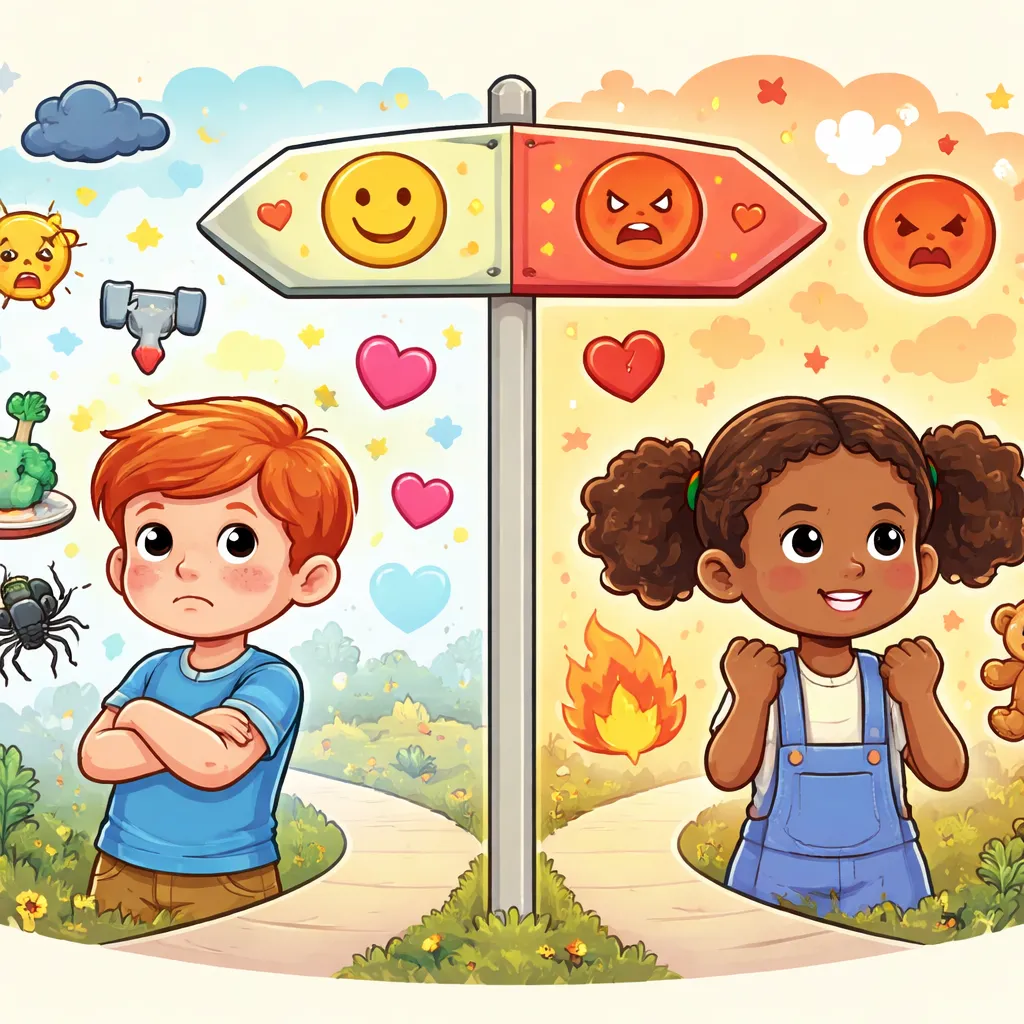

Hey there, word explorer! Have you ever tried a food you didn't want? Or seen a movie that bored you? How do you talk about that? Do you hate that food? Or do you just dislike the movie? They both seem to mean not liking something. But are they the same? They are like two different storm levels. One is a scary, roaring thunderstorm. One is a light, drizzly rain. Let's find out! Today, we explore the word friends "hate" and "dislike". Knowing their secret is a superpower. It makes your feelings clear and kind. Let's start our emotional weather adventure!
First, let's be Feeling Detectives. Listen at home. Here are two sentences. "I really dislike the smell of burnt toast in the morning." "I absolutely hate it when people are mean to others." They both talk about negative feelings. Burnt toast. Meanness. Do they sound the same? One feels like a mild annoyance. One feels like a strong, angry feeling. Can you sense it? Great observation! Now, let's check the emotional weather forecast.
Adventure! Inside the World of Negative Feelings
Welcome to the world of negative feelings! "Hate" and "dislike" are two different storms. Think of "hate" as a scary, roaring thunderstorm. It is powerful, loud, and full of strong emotion. Think of "dislike" as a light, drizzly rain. It is gentler, quieter, and easier to handle. Both are about not liking. But they have very different strengths. Let's learn about each storm.
The Thunderstorm vs. The Drizzle Think about the word "hate". "Hate" feels like a roaring thunderstorm. It is a very strong word. It means to have an intense or passionate dislike for something. It is for very serious, awful things. I hate injustice. They hate lies. It is a powerful emotional word. Now, think about "dislike". "Dislike" feels like a light drizzle. It is a milder, more polite word. It means to not like something, to find it unpleasant. I dislike loud noises. She dislikes getting up early. "Hate" is the thunderstorm. "Dislike" is the drizzle. One is extreme. The other is mild.
The Intense Feeling vs. The Mild Preference Let's compare their strength. "Hate" is a heavy word. It carries anger, disgust, or deep aversion. You should use it carefully. People hate war. I hate being sick. It is for the worst things. "Dislike" is a lighter word. It shows a simple preference against something. It is more casual. I dislike spinach. He dislikes that shirt. "Hate" is for serious matters. "Dislike" is for everyday annoyances. One is a yell. The other is a whisper.
Their Special Word Partners and Common Uses Words have best friends. "Hate" teams up with very strong, often serious ideas. Hate crime. Hate mail. Pet hate (a big annoyance). It is a strong word. "Dislike" has milder friends. It is often used in formal or polite contexts. Take a dislike to. A strong dislike. Mutual dislike. Note: We say "love and hate" (strong opposites). We say "like and dislike" (milder opposites). They are different.
Let's visit a school scene. You might say, "I dislike pop quizzes because they make me nervous." This is a mild, reasonable complaint about a school activity. Now, imagine someone is being bullied. You could say, "I hate bullying; it's wrong and hurts people." This expresses a strong moral feeling against a serious issue. Using "hate" for pop quizzes is too strong. Using "dislike" for bullying is too weak. Each word fits its own level.
Now, let's go to the playground. You might dislike the sand in your shoes. It's a small annoyance. But you might hate it when someone cheats in a game and ruins the fun for everyone. The word "dislike" paints a minor bother. The word "hate" paints a strong feeling about unfairness.
Our Little Discovery So, what did we find? "Hate" and "dislike" are both about not liking. But they are worlds apart in strength. "Hate" is a very strong, intense word for deep aversion, often about serious things. "Dislike" is a milder, more polite word for a simple preference against something. You dislike rainy days. You hate cruelty. Knowing this helps you express your feelings accurately and kindly.
Challenge! Become a Feeling Word Champion
Ready for a thoughtful test? Let's try your new skills!
"The Best Choice" Challenge Let's imagine a nature scene. A deer is eating grass. It tastes a bitter, prickly plant. The deer will dislike the taste and move away. This is a mild, sensory preference. Now, imagine that same deer smells a mountain lion. The deer will feel a deep, instinctive fear and hate that dangerous smell. This is a strong, survival-based aversion. "Dislike" wins for the bad taste. "Hate" is the champion for the fear of a predator.
"My Sentence Show" Your turn to create! Here is your scene: Doing household chores. Can you make two sentences? Use "dislike" in one. Use "hate" in the other. Try it! Here is an example: "I dislike taking out the trash because it's boring." This is a mild complaint. "I hate it when my sibling doesn't help with chores at all." This expresses a stronger feeling about unfairness. Your sentences will show two levels of feeling!
"Eagle Eyes" Search Look at this sentence. Can you find the word that could be better? Let's check a home context. "I hate the color of my new lamp; it's just a bit too yellow for my room." Hmm. Not liking a color is a matter of mild taste. The word "hate" is too strong and emotional for this. The word "dislike" is a more appropriate and measured choice. "I dislike the color of my new lamp; it's just a bit too yellow for my room." "Hate" would be for something much worse. Did you spot it? Excellent and thoughtful word work!
Harvest and Action! Turn Knowledge Into Your Superpower
Great exploring! We started thinking "hate" and "dislike" were similar. Now we know they are two different emotional storms. We can describe the drizzle with "dislike". We can describe the thunderstorm with "hate". You can now share your negative feelings with perfect accuracy and care. This is a great skill for your heart.
What you can learn from this article: You can now feel that "dislike" is a mild, polite word for not liking something, used for everyday preferences and minor annoyances. You can feel that "hate" is a very strong, intense word for a deep and passionate aversion, often reserved for serious issues or things you feel very strongly about. You know that it's okay to "dislike" a food, but we should save "hate" for much more serious things. You learned to match the word to the strength of your feeling.
Life practice application: Try your new skill today! Think of a small annoyance. Do you dislike it? Think of something very unfair. Do you hate that idea? Choose your words with care. Listen to how people use these words. Are they describing a drizzle or a storm? You are now a master of feeling words! Keep expressing yourself clearly and kindly.