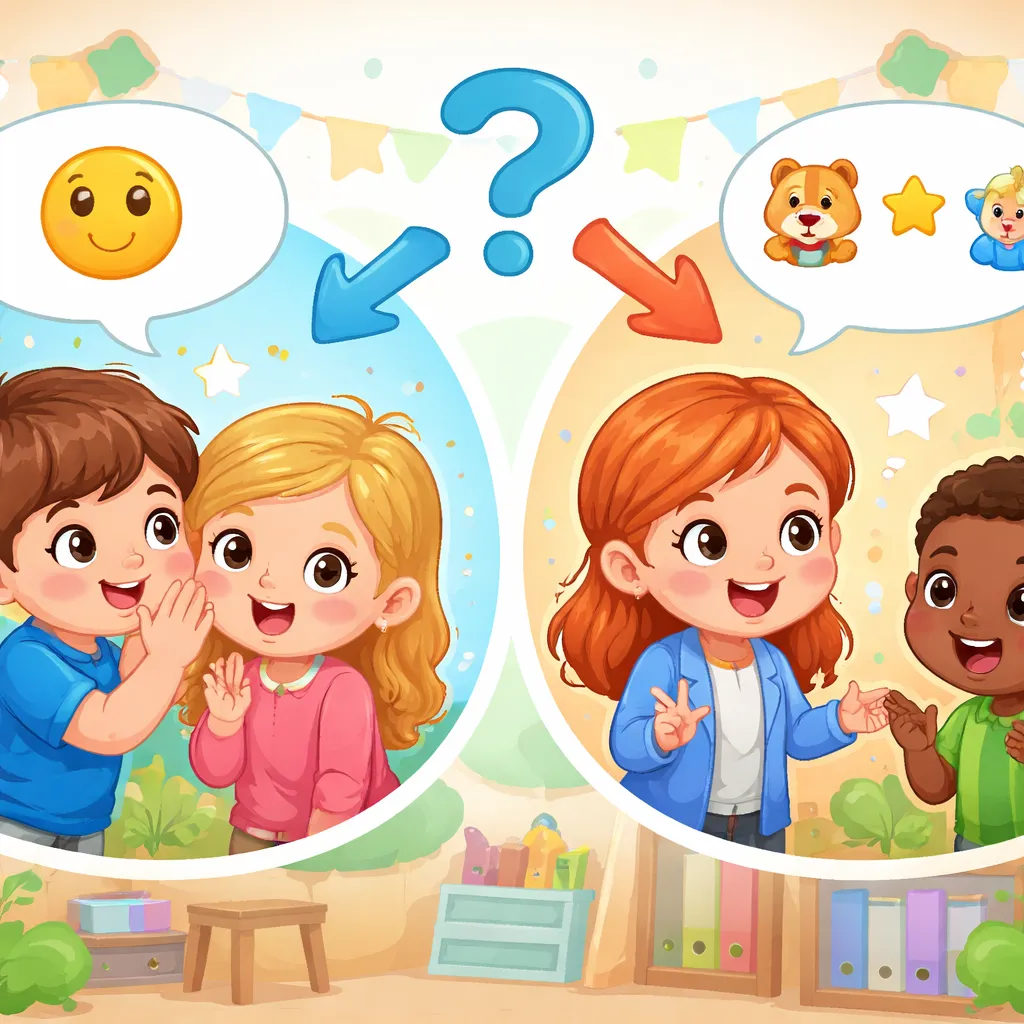

Hey there, word explorer! Have you ever shared a secret? Or repeated what someone said? How do you explain that? Do you say something? Or do you tell someone? They both seem to be about using words. But are they the same? They are like two different ways to send a message. One is like a speech bubble in a comic. One is like a addressed envelope. Let's find out! Today, we explore the word friends "say" and "tell". Knowing their secret is a superpower. It makes your stories and reports super clear. Let's start our word messenger adventure!
First, let's be Message Detectives. Listen at home. Here are two sentences. "My teacher says we have a test tomorrow." "I will tell you a secret." They both involve words. A teacher's announcement. A secret. Do they sound the same? One feels like sharing information. One feels like giving information to a specific person. Can you sense it? Great observation! Now, let's examine the message.
Adventure! Into the World of Sharing Words
Welcome to the world of sharing words! "Say" and "tell" are two different delivery methods. Think of "say" as a speech bubble in a comic. It shows the words that were spoken. Think of "tell" as a addressed envelope. It sends a message to a specific person. Both are about communication. But they deliver the words differently. Let's learn about each one.
The Speech Bubble vs. The Addressed Envelope Think about the word "say". "Say" feels like a speech bubble. It focuses on the words that come out of someone's mouth. It often doesn't specify who is listening. He said "hello". What did you say? It is about the spoken words themselves. Now, think about "tell". "Tell" feels like an addressed envelope. It focuses on giving information to a specific person. You must have a listener in mind. Tell me a story. She told him the news. "Say" is the speech bubble. "Tell" is the envelope to someone. One is about the words. The other is about informing someone.
Reporting Words vs. Informing Someone Let's compare their focus. "Say" is great for reporting the exact words someone used. It is often followed by the words in quotation marks. She said, "I'm happy." It answers "What did they speak?" "Tell" is great for reporting that information was given to someone. It is almost always followed by a person (like me, him, us, a story, a lie). He told me the truth. It answers "What did they inform someone?" You can say something without telling anyone specific. You tell someone by using words.
Their Special Word Partners and Grammar Rules Words have best friends. "Say" loves to team up with the actual words spoken. It is often used with "that" (he said that...) or direct speech. It is also used in phrases like "I dare say". "Tell" must have a listener or a type of information. Tell a lie. Tell a story. Tell the time. Tell someone (to do something). Note: We say "say sorry". We say "tell the truth". They are different teams.
Let's visit a school scene. The principal makes an announcement. "School ends early today," she says. This reports the words she spoke. Then, your friend turns to you. She tells you the good news. This shows she is giving the information to you, the listener. Using "tell" for the principal's exact words is less common. Using "say" for your friend sharing with you is okay, but "tell" highlights that you are the receiver.
Now, let's go to the playground. A kid yells, "Watch out!" He says it loudly. This reports his words. Later, you tell your little brother the rules of the game. You are giving him the information. The word "say" paints the shouted words. The word "tell" paints the act of instructing your brother.
Our Little Discovery So, what did we find? "Say" and "tell" are both about communicating with words. But they are used in different ways. "Say" focuses on the words that are spoken. It reports speech. "Tell" focuses on giving information or a story to a specific person. It requires a listener. You say "hello". You tell your mom about your day. Knowing this helps you report conversations perfectly.
Challenge! Become a Word Messenger Champion
Ready for a fun test? Let's try your new skills!
"The Best Choice" Challenge Let's imagine a nature scene. A mother bird makes a specific call to her chicks. The bird says "chirp chirp". This is the sound she makes. Then, the mother bird tells her chicks about a nearby worm. She is communicating important information to them. "Say" wins for the specific sound. "Tell" is the champion for the act of informing the chicks.
"My Sentence Show" Your turn to create! Here is your scene: After school, you have news. Can you make two sentences? Use "say" in one. Use "tell" in the other. Try it! Here is an example: "My friend said, 'I got a new bike!'" This reports her exact words. "I can't wait to tell my dad about my good grade." This focuses on giving the information to my dad. Your sentences will show two ways of sharing!
"Eagle Eyes" Search Look at this sentence. Can you find the word that could be better? Let's check a home context. "My grandma told, 'Dinner is ready, everyone!'" Hmm. The sentence reports the exact words Grandma spoke. The word "say" is the correct choice for reporting direct speech, especially without a specific listener right after the verb. "My grandma said, 'Dinner is ready, everyone!'" "Told" would need a person, like "told us". Did you spot it? Excellent word work!
Harvest and Action! Turn Knowledge Into Your Superpower
Great exploring! We started thinking "say" and "tell" were the same. Now we know they are two different word messengers. We can use the speech bubble of "say". We can use the addressed envelope of "tell". You can now report stories and share news with perfect accuracy. This is a great skill for writing and talking.
What you can learn from this article: You can now feel that "say" is used to report the exact words someone speaks, often without a specific listener mentioned right after. You can feel that "tell" is used to show that information is given to a specific person, like "tell me" or "tell a story". You know that you say "ouch!" but you tell a friend what happened. You learned the rule: you say something, but you tell someone something.
Life practice application: Try your new skill today! Listen to what a family member says. Then, tell someone else about it. Read a comic. Look for "said" in the speech bubbles. When you have a story, remember to tell it to someone. You are now a master of reporting words! Keep sharing your world with wonderful words.