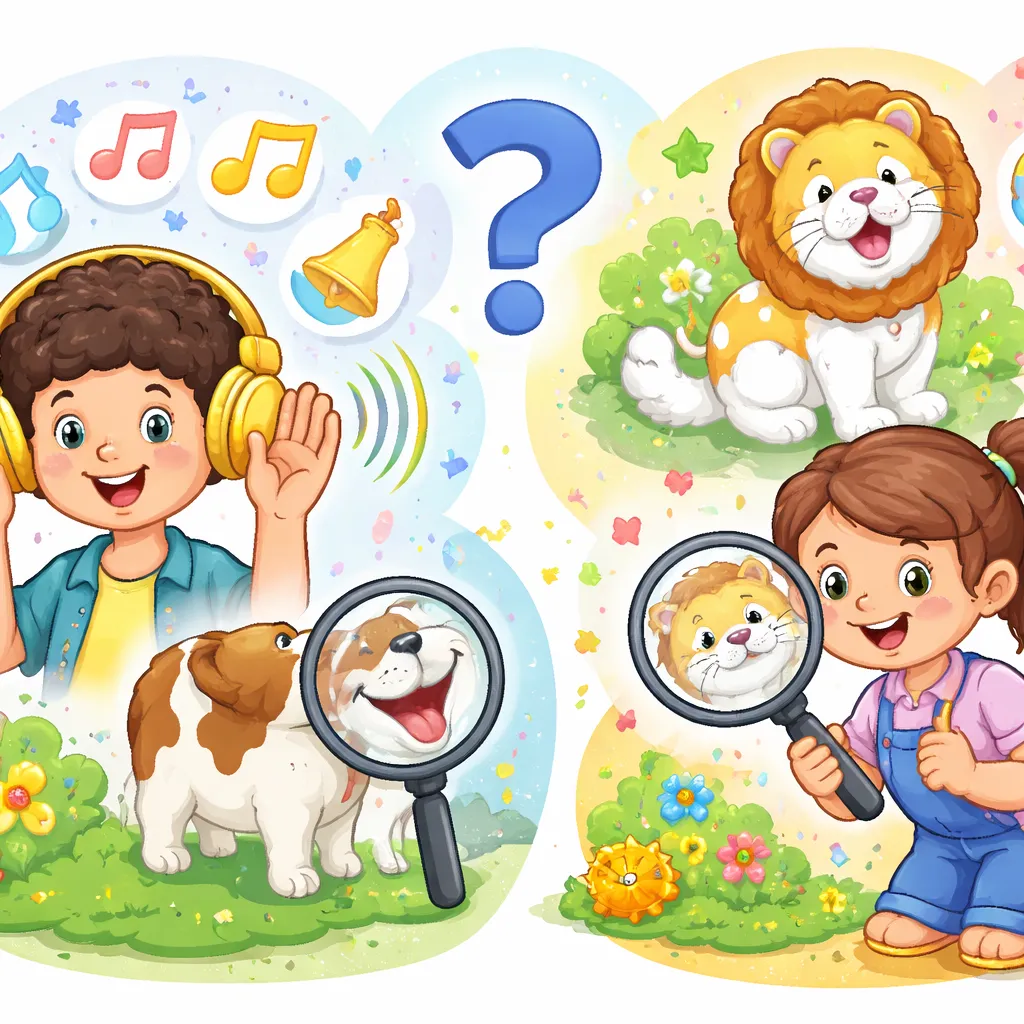

Hello, word explorer! Have you ever listened to a story? Or had a feeling about a situation? How do you talk about that? Does the story sound exciting? Or does the plan seem like a good idea? They both are about your impression. But are they the same? They are like two different doors to your mind. One is the ear door. One is the mind door. Let's find out! Today, we explore the word friends "sound" and "seem". Knowing their secret is a superpower. It makes you a master of sharing your impressions. Let's start our sensory adventure!
First, let's be Impression Detectives. Listen at home. Here are two sentences. "Your idea for a treasure hunt sounds like a lot of fun!" "This empty house seems a little spooky at night." They both talk about an impression. A treasure hunt. An empty house. Do they sound the same? One feels like an impression from listening. One feels like a general feeling from clues. Can you sense it? Great observation! Now, let's listen closely.
Adventure! Inside the World of Impressions
Welcome to the world of impressions! "Sound" and "seem" are two different doors. Think of "sound" as the ear door to your mind. Impressions come in through what you hear. Think of "seem" as the mind's own door. Impressions come from all your senses and thoughts. Both share your impression. But they use different paths. Let's learn about each door.
The Ear Door vs. The Mind's Door Think about the word "sound". "Sound" feels like the ear door. It is about the impression you get from hearing something. It is about noise, words, or descriptions. Your voice sounds hoarse. That sounds like a great plan! It is connected to your sense of hearing. Now, think about "seem". "Seem" feels like the mind's door. It is about the general impression you get from various clues. It can come from sight, feeling, or intuition. You seem tired. This seems wrong. It is a more general feeling. "Sound" is the ear door. "Seem" is the mind's door. One is for hearing. The other is for a broader feeling.
Impressions from Hearing vs. General Impressions Let's compare their source. "Sound" is specific. It is used when your impression comes from something you heard or from how something is described. The music sounds loud. His excuse sounds fake. "Seem" is general. It is used when your impression comes from observation, a situation, or a gut feeling. The sky seems dark. I seem to have lost my key. "Sound" answers "How does it hear?" "Seem" answers "What is the overall feeling?" One is auditory. The other is holistic.
Their Special Word Partners and Grammar Words have best friends. "Sound" loves to team up with adjectives and "like". Sound good. Sound like a bird. Sound asleep. It is about auditory quality. "Seem" teams up with adjectives, "to be", and "like". Seem happy. Seem to be lost. Seem like a long time. Note: We say "It sounds quiet." (from hearing). We say "It seems quiet." (from the overall feeling). They are close but different.
Let's visit a school scene. Your friend describes their vacation. Their story sounds amazing! This impression comes from hearing their words. You look at a long, complicated word problem. It seems very difficult. This impression comes from looking at it and thinking. Using "seem" for the story is okay, but "sound" highlights that you heard it. Using "sound" for the math problem is odd because it's not about hearing.
Now, let's go to the playground. You hear loud laughter from a group. It sounds like they are having a blast! This is an impression from the noise. You see a friend sitting alone, looking at the ground. They seem sad. This is a general impression from their appearance. The word "sound" paints the impression from the laughter. The word "seem" paints the impression from the visual clues.
Our Little Discovery So, what did we find? "Sound" and "seem" both share your impression. But they get their information from different places. "Sound" is about the impression you get from hearing something or from a description. "Seem" is about the general impression you get from observation, feeling, or the situation. The alarm sounds loud. The teacher seems pleased. Knowing this helps you share exactly how you got your impression.
Challenge! Become an Impression Word Champion
Ready for a fun test? Let's try your new skills!
"The Best Choice" Challenge Let's imagine a nature scene. You are in a forest. You hear a low, rumbling growl from the bushes. The growl sounds deep and threatening. This impression comes directly from the sound you hear. You notice the birds have stopped singing. The whole forest seems suddenly still and watchful. This is a general impression from the change in the environment. "Sound" wins for the impression from the growl. "Seem" is the champion for the overall feeling of the forest.
"My Sentence Show" Your turn to create! Here is your scene: Your friend is telling you about a new game they invented. Can you make two sentences? Use "sound" in one. Use "seem" in the other. Try it! Here is an example: "The way you explain the rules sounds really fun and easy to follow." This is from hearing the explanation. "The game seems like it could become our new favorite!" This is your overall feeling about the idea. Your sentences will show two types of impressions!
"Eagle Eyes" Search Look at this sentence. Can you find the word that could be better? Let's check a home context. "From the way the room is so tidy and clean, it sounds like your sister already had her friends over." Hmm. The impression comes from looking at the room (sight), not from hearing a sound. The word "seems" is the correct choice for an impression from visual clues. "From the way the room is so tidy and clean, it seems like your sister already had her friends over." "Sounds" would be used if someone told you that. Did you spot it? Excellent word work!
Harvest and Action! Turn Knowledge Into Your Superpower
Great exploring! We started thinking "sound" and "seem" were the same. Now we know they are two different doors. We can use the ear door of "sound" for impressions from hearing. We can use the mind's door of "seem" for general feelings. You can now share your impressions with perfect accuracy. This is a great skill for being a good friend and listener.
What you can learn from this article: You can now feel that "sound" is used when your impression comes from something you hear, like a noise, someone's voice, or a description, as in "That sounds great!" or "You sound happy." You can feel that "seem" is used for a more general impression that comes from what you see, know, or feel about a situation, as in "You seem tired" or "This seems like a good spot." You know that a story can sound exciting, but a person can seem kind. You learned to match the word to the sense: "sound" for hearing, "seem" for a broader feeling.
Life practice application: Try your new skill today! Listen to a song. How does it sound? Look at a cloudy sky. What does the weather seem like? Tell a family member one thing that sounds good and one thing that seems true. You are now a master of impression words! Keep using your senses and sharing your thoughts.