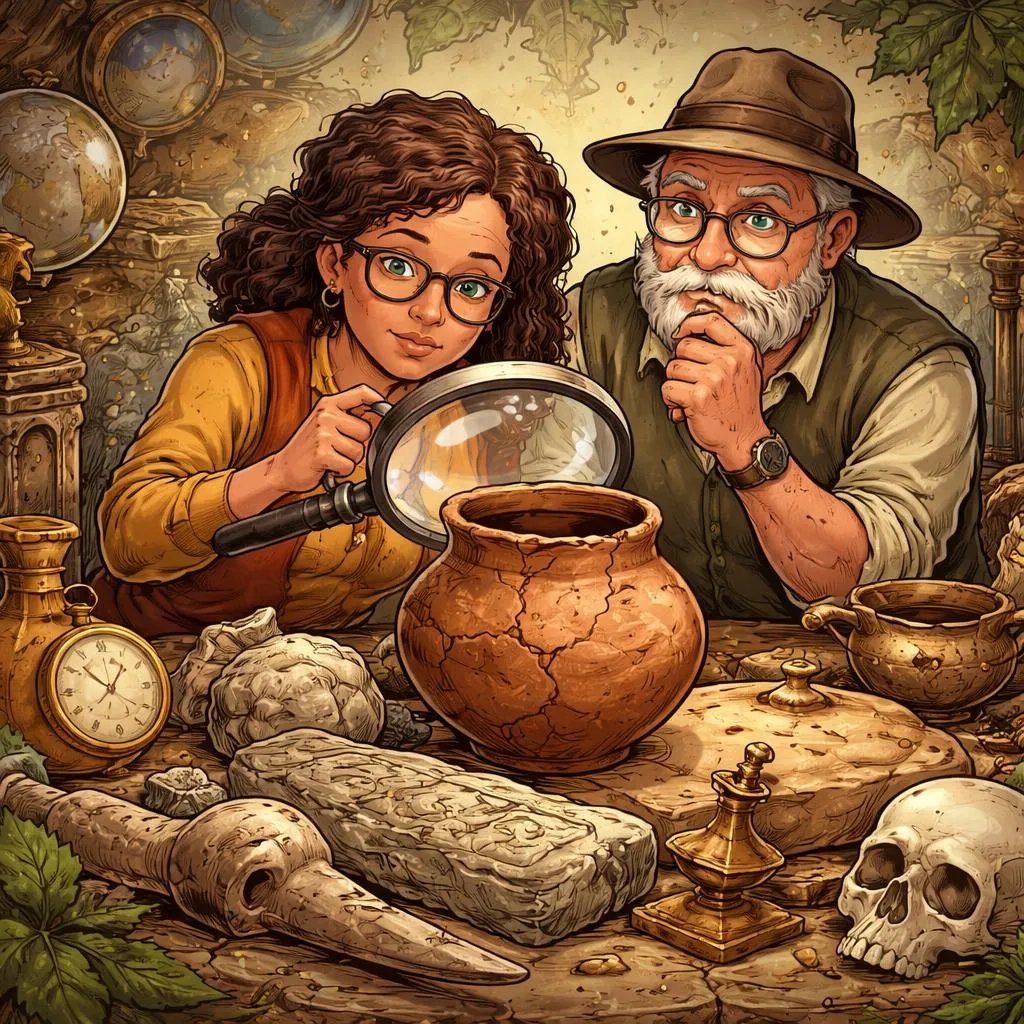

Every family has old things. A favorite stuffed animal from baby days. A worn wooden table. A black and white photograph.
Children ask questions about these items. “How old is this toy?” “Was Grandma a kid then?”
Two words answer these questions. “Old” and “Ancient” both talk about age. But they describe very different spans of time.
This article helps families understand both words. You will learn when to call something old. You will also learn when to call something ancient. Let us journey through time together.
What Do These Expressions Mean?
“Old” means something has existed for a long time. An old thing is not new anymore. It shows some wear. Old can mean ten years or one hundred years. The word changes depending on what you describe.
For a child, explain it this way. “Old means something lived or existed long ago. Your grandpa is old. A ten-year-old shirt is old. Old means not young anymore.”
“Ancient” means extremely old from a very distant time. Ancient things come from thousands of years ago. People long dead made or used ancient objects. Ancient means older than any person alive today.
Tell your child this. “Ancient means so old that no one remembers when it started. Dinosaurs are ancient. Pyramids are ancient. Your great-great-grandparents are not ancient. They are just old.”
Both words describe age. Neither word means bad or useless. Both can show respect and wonder.
Why do they seem similar? Because both contrast with new or young. An old car and an ancient coin both have age. But one is decades old while the other is millennia old.
What’s the Difference?
The main difference lies in the scale of time.
“Old” describes things within human memory or family history. An old house might be one hundred years old. An old tree might be two hundred years old. People remember when these things were newer.
“Ancient” describes things from before written history or from very early civilization. Ancient objects are thousands of years old. No living person saw them when they were new.
One is more about living memory or recent centuries. The other is about prehistoric or early historic times.
Another difference involves feeling. Old things often feel familiar and worn. An old blanket feels soft from use. An old story feels known.
Ancient things feel mysterious and distant. An ancient tool makes you wonder. An ancient ruin feels like a puzzle from another world.
Tone also differs. “Old” sounds ordinary and everyday. “Ancient” sounds dramatic and awe-inspiring.
Use this simple comparison with your child. “Old is like your parents’ toys from when they were kids. Ancient is like a dinosaur bone from sixty million years ago.”
When Do We Use Each One?
We use “old” for people, pets, clothes, toys, and houses within a few generations. Think of an old sweater that fits just right. Think of an old dog that sleeps all day. Think of an old friend from preschool.
At school, an old textbook has worn corners. An old rule has been there for years. An old building on campus has history.
At home, old photos show family from decades past. Old furniture creaks. Old recipes come from grandparents.
With friends, an old joke still makes everyone laugh. An old game brings back memories. An old hiding spot no one remembers.
We use “ancient” for dinosaurs, pyramids, fossils, cave paintings, and early civilizations. Think of ancient Rome. Think of ancient Egyptian hieroglyphs. Think of ancient forests with trees thousands of years old.
At school, ancient history class covers events from thousands of years ago. Ancient maps show different shapes of continents.
At home, you might see ancient coins in a museum. An ancient legend appears in a storybook.
With friends, an ancient secret feels exciting. An ancient creature like a woolly mammoth sparks imagination.
Natural usage tip. Use “old” for anything within the last few hundred years. Use “ancient” for anything from more than two thousand years ago.
Example Sentences for Kids
Here are simple sentences for your child to learn.
Old to:
“This old teddy bear belonged to my daddy when he was little. His ear is missing.”
“The old oak tree in our yard has seen one hundred summers.”
“Grandma showed us her old wedding dress. The white fabric turned yellow.”
Ancient to:
“The ancient dinosaur bones sat in the museum. They were sixty-five million years old.”
“Egypt has ancient pyramids. People built them four thousand years ago.”
“We found an ancient arrowhead in the creek. Someone made it before written history.”
Read these sentences together. Ask your child. “What is the oldest thing in our home? What is the most ancient thing you know about?”
Common Mistakes to Avoid
Many children mix up these words. Here are the most common errors.
Mistake 1: Calling old things ancient.
Incorrect: “My ancient sneakers have holes in them.”
Correct: “My old sneakers have holes in them.”
Why? Sneakers from last year are not ancient. Ancient means thousands of years.
Mistake 2: Calling ancient things old without respect.
Incorrect: “Those old pyramids are interesting.”
Correct: “Those ancient pyramids are amazing.”
Why? Ancient shows proper wonder and scale. Old sounds too casual for something so historic.
Mistake 3: Using both words for the same age.
Incorrect: “A fifty-year-old toy is ancient.”
Correct: “A fifty-year-old toy is old. A five-thousand-year-old toy is ancient.”
Tell your child this. “Old means lived longer than you. Ancient means lived longer than any person ever.”
Easy Memory Tips
Help your child remember the difference with these fun tricks.
Tip 1: The Grandparent and the Dinosaur
Draw a grandparent. That person is old. They have maybe eighty or ninety years.
Draw a dinosaur skeleton. That dinosaur is ancient. It has sixty million years.
Ask your child. “Does this feel like a grandparent or a dinosaur?”
Tip 2: The Hundred-Year Line
Draw a timeline. Mark this year. Go back one hundred years. Everything before that line can be old.
Go back two thousand years. Everything before that line is ancient.
Your child can see the big gap between old and ancient.
Tip 3: The Question Test
Teach your child to ask one question. “Could my great-grandparents have seen this when they were young?”
If yes, it is old. If no, it might be ancient.
Great-grandparents lived about one hundred years ago. Ancient things are much older.
Tip 4: The Sound Game
Old sounds like “sigh” — familiar and worn.
Ancient sounds like “whoa” — amazed and curious.
Make the sounds together. Laugh while learning.
Quick Practice Time
Try these simple exercises with your child.
Exercise 1: Multiple Choice
Read each sentence. Choose old or ancient.
“My _____ bike has a rusty chain. I got it five years ago.”
Answer: old
“Scientists found _____ fossils in the desert. The bones were from a creature that lived three million years ago.”
Answer: ancient
“We have an _____ family photograph from 1920. Everyone wears funny clothes.”
Answer: old
“The _____ Greeks built temples two thousand five hundred years ago.”
Answer: ancient
Exercise 2: Fill in the Blank
Use old or ancient to complete each sentence.
“This _____ sweater belonged to my older cousin. Now it fits me perfectly.”
Answer: old
“The _____ city of Petra was carved into red rock cliffs thousands of years ago.”
Answer: ancient
“My dog is getting _____. He sleeps most of the day now.”
Answer: old
“_____ trees in California have lived for more than four thousand years.”
Answer: ancient
Check answers together. Praise every effort. If your child makes a mistake, say this. “Good try. Let us remember the grandparent and the dinosaur.”
Wrap-up
The key difference is simple. Old means existing for a long time within memory or recent centuries. Ancient means existing for thousands of years from a distant forgotten world. Now you and your child can describe age with accuracy. Respect old things for their memories. Wonder at ancient things for their mysteries. Time flows forward. Words help us understand where we stand. Keep exploring history together. Every old and ancient thing tells a story.