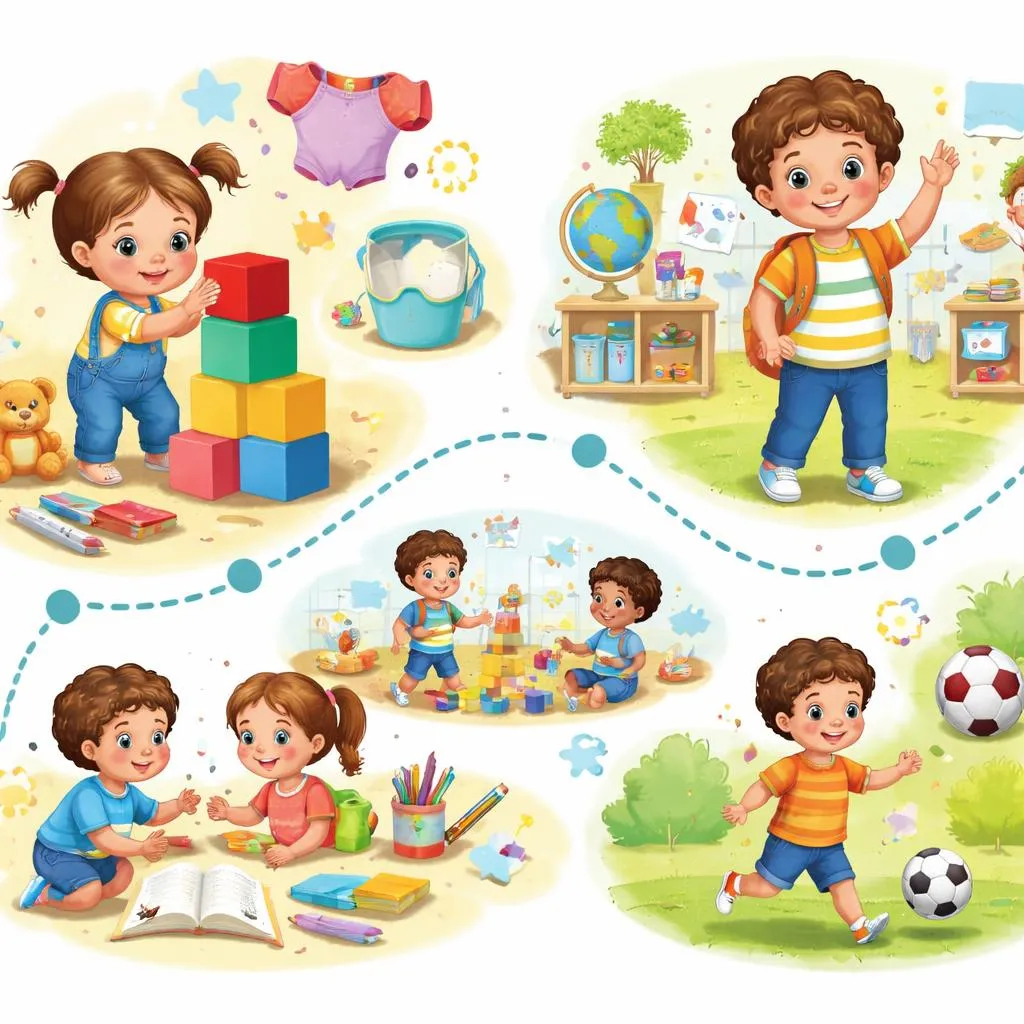

Every parent watches their child grow. One day they wobble and fall. The next day they run across the yard.
These early years bring so many changes. Two words describe these wonderful stages. "Toddler" and "Preschooler" both mean young children. But they mark different times.
This article helps families understand each stage. You will learn what makes a toddler special. You will also learn when a child becomes a preschooler. Let us celebrate these amazing growing years together.
What Do These Expressions Mean?
"Toddler" means a child between one and three years old. Toddlers learn to walk. They toddle instead of walking smoothly. The word comes from the way they move. Toddlers explore everything.
For a child, explain it this way. "Toddler means you are learning to walk and run. You fall down a lot. You get back up. You want to touch everything in the room."
"Preschooler" means a child between three and five years old. Preschoolers get ready for real school. They learn letters and numbers. They play with other children. Preschoolers ask many questions.
Tell your child this. "Preschooler means you are almost ready for kindergarten. You can count to ten. You know your colors. You sing the ABC song."
Both words describe children after babyhood. Neither word means difficult or easy. Both show amazing growth.
Why do they seem similar? Because both describe children who are not babies anymore. A toddler and a preschooler both walk and talk. But one is just starting while the other is preparing for big school.
What's the Difference?
The main difference lies in skills and independence.
"Toddlers" are just discovering movement. They walk unsteadily. They use simple words. They need help with eating and dressing. Toddlers test limits constantly.
"Preschoolers" have mastered basic movement. They run and jump confidently. They speak in full sentences. They dress themselves. Preschoolers follow rules better.
One is more about learning to control their body. The other is about learning to control their mind and social skills.
Another difference involves play. Toddlers play next to other children, not with them. This is called parallel play. A toddler builds blocks alone near a friend.
Preschoolers play together. They share. They take turns. They pretend together. They create games with rules.
Tone also differs. "Toddler" sounds cute and chaotic. "Preschooler" sounds curious and capable.
Use this simple comparison with your child. "Toddler is like a wobbly top learning to spin. Preschooler is like a top that spins steady and makes shapes."
When Do We Use Each One?
We use "toddler" for ages one to three. Think of a child taking first steps. Think of a child who says "mine" all the time. Think of a child who throws food from the high chair.
At home, toddlers need gates on stairs. They put everything in their mouths. They throw tantrums when tired.
At the park, toddlers stay close to parents. They climb small structures. They fall in the sand.
With friends, toddlers watch other kids play. They might grab a toy. They learn to share slowly.
We use "preschooler" for ages three to five. Think of a child who asks "why" constantly. Think of a child who draws people with circles and lines. Think of a child who counts fingers.
At home, preschoolers help set the table. They brush their own teeth. They remember song lyrics.
At school, preschoolers sit for circle time. They cut with safety scissors. They tell stories about their weekend.
With friends, preschoolers play house or doctor. They argue then make up. They invite friends to birthday parties.
Natural usage tip. Use "toddler" for the wobbly, exploring years. Use "preschooler" for the curious, preparing years.
Example Sentences for Kids
Here are simple sentences for your child to learn.
Toddler to:
"The toddler took three wobbly steps and then fell on his padded bottom."
"My little sister is a toddler. She says 'no' to everything, even cookies."
"Toddlers love to empty drawers. They make big messes very fast."
Preschooler to:
"The preschooler raised her hand and waited for the teacher to call on her."
"Preschoolers can write their names. The letters might be big and bumpy."
"My brother is a preschooler now. He knows all his dinosaur names."
Read these sentences together. Ask your child. "Were you ever a toddler? Are you a preschooler now?"
Common Mistakes to Avoid
Many parents mix up these stages. Here are the most common errors.
Mistake 1: Calling a one-year-old a preschooler.
Incorrect: "My twelve-month-old preschooler loves to color."
Correct: "My twelve-month-old toddler loves to color."
Why? One-year-olds are toddlers. Preschool starts at three.
Mistake 2: Calling a four-year-old a toddler.
Incorrect: "My four-year-old toddler rides a bike with no training wheels."
Correct: "My four-year-old preschooler rides a bike with no training wheels."
Why? Four-year-olds have moved past toddler skills. They are preschoolers.
Mistake 3: Using the terms interchangeably.
Incorrect: "Toddlers and preschoolers are the same thing."
Correct: "Toddlers are one to three. Preschoolers are three to five. They are different stages."
Tell your child this. "Toddlers learn to walk. Preschoolers learn to write. Both are wonderful. Both grow so fast."
Easy Memory Tips
Help your child remember the difference with these fun tricks.
Tip 1: The Wobbly Duck and the Ready Rabbit
Draw a wobbly duck learning to walk. That duck is a toddler. Unsteady. Cute. Falls a lot.
Draw a rabbit sitting at a tiny desk. That rabbit is a preschooler. Ready to learn. Asks questions. Sits still longer.
Ask your child. "Do you wobble or do you sit for stories?"
Tip 2: The One and the Three
Remember the numbers. Toddler starts at one year old. One word has one syllable? No. But think: Toddler has "odd" in it. One is odd. Toddler starts at age one.
Preschooler has "pre" meaning before. Before school. Age three to five.
Your child can say "toddler one, preschooler three."
Tip 3: The Question Test
Teach your child to ask two questions. "Can you walk without falling much? Can you share toys with a friend?"
If no to walking, they are a toddler. If yes to sharing, they are a preschooler.
These questions mark the big changes.
Tip 4: The Sound Game
Toddler sounds like "tumble" — falling down.
Preschooler sounds like "ready" — prepared to learn.
Make the sounds together. Laugh while learning.
Quick Practice Time
Try these simple exercises with your child.
Exercise 1: Multiple Choice
Read each sentence. Choose toddler or preschooler.
"The _____ took her first steps yesterday. The whole family clapped."
Answer: toddler
"The _____ counted to twenty and then said the alphabet. She felt very proud."
Answer: preschooler
"That _____ refuses to wear matching socks. He picks his own clothes now."
Answer: toddler
"The _____ wrote a letter to Grandma. It said 'I love you' in wobbly letters."
Answer: preschooler
Exercise 2: Fill in the Blank
Use toddler or preschooler to complete each sentence.
"The _____ threw his cup on the floor for the fifth time. He thought it was funny."
Answer: toddler
"The _____ cut out a heart shape for Valentine's Day. She gave it to her dad."
Answer: preschooler
"My _____ cousin still sleeps in a crib. She calls bananas 'nanas.'"
Answer: toddler
"The _____ class practiced writing the letter B. Most made it perfect."
Answer: preschooler
Check answers together. Praise every effort. If your child makes a mistake, say this. "Good try. Let us remember the wobbly duck and the ready rabbit."
Wrap-up
The key difference is simple. Toddlers are ages one to three, learning to walk and talk. Preschoolers are ages three to five, learning letters and how to play with friends. Now you and your child understand these wonderful stages. Celebrate toddler tumbles. Cheer preschooler questions. Each stage brings new gifts. Watch your child grow from wobbly steps to ready writing. Every day holds a new discovery. Keep learning together.