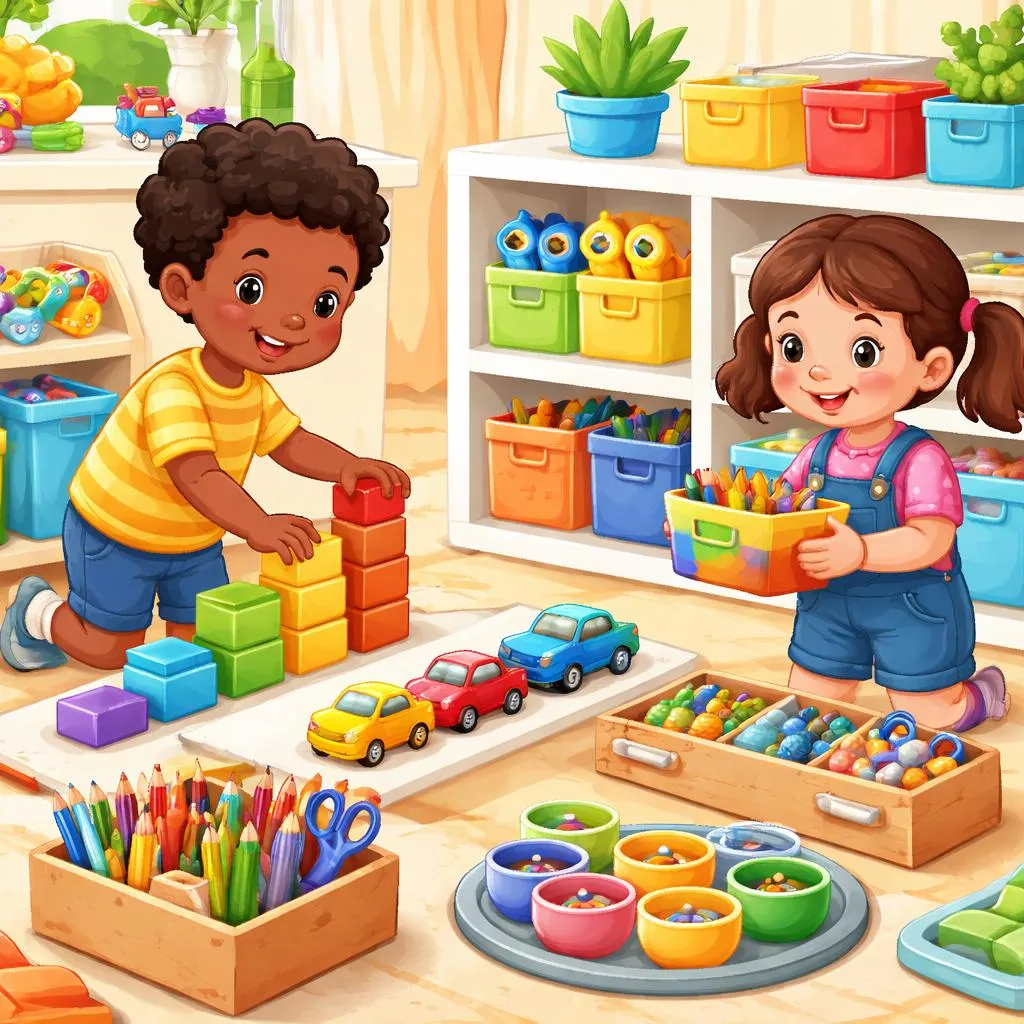

A child puts books on a shelf. "I arranged them by size," they say. Another child plans a birthday party. "I organized the games and food," they say. Two words. Both mean "put things in order or plan something." But one is about physical placement. One is about coordinating multiple things.
Children arrange and organize every day. Understanding the difference helps them describe how they put things in order.
This article helps families explore these ordering phrases. Your child will learn when they arrange and when they organize.
What Do These Expressions Mean?
"Arranged to" means "put things in a particular order or position." The word suggests physical placement. It says "I decided where each thing goes."
For a child, think of flowers in a vase. You put the tall ones in the back. You put the short ones in the front. You arranged the flowers. The focus is on position.
"Organized to" means "planned or coordinated multiple things to work together efficiently." The word suggests a system. It says "I made a plan so everything fits together."
For a child, think of a school binder. You put dividers for math, science, and reading. You put papers in the right sections. You organized your binder. The focus is on categories and systems.
These two expressions seem similar because both involve putting things in order.
But one is about physical placement. One is about systems and planning.
What's the Difference?
The main difference lies in what is being ordered. "Arranged to" orders physical items in space. "Organized to" orders activities, information, or systems.
One is about where things go. One is about how things work together.
"Arranged to" sounds like decorating or positioning. You arrange furniture. You arrange books. You arrange pictures. The items are physical. You can see them.
"Organized to" sounds like planning or categorizing. You organize a schedule. You organize a closet by categories. You organize an event. The focus is on function and efficiency.
Another difference involves complexity. Arranging can be simple. Organizing often involves multiple parts.
Also, you arrange items. You organize events, time, or information.
So remember: arranged to = physical placement of objects. organized to = planning systems or coordinating activities.
When Do We Use Each One?
Use "arranged to" for physical placement. Use it for furniture. Use it for decorations. Use it for items on a shelf. Use it for people in a line.
For example, a child sets the table for dinner. "She arranged the plates in a row." The plates are placed physically.
Use "arranged to" for flowers, books, or pictures. "He arranged the photos on the wall."
Use "organized to" for planning events. Use it for schedules. Use it for systems. Use it for categories.
For example, a child plans a playdate. "She organized the games and snacks." She coordinated multiple activities.
Use "organized to" for information. "He organized his notes by subject."
Also use "organized to" for spaces with categories. "She organized her closet into shirts, pants, and shoes."
Remember: physical placement = "arranged to." planning systems or coordinating = "organized to."
Example Sentences for Kids
Here are simple sentences for "arranged to":
She arranged the chairs in a circle for the meeting.
(Physical placement of furniture.)
He arranged his toys by size on the shelf.
(Physical ordering of objects.)
They arranged the flowers from tallest to shortest.
(Physical placement by height.)
Here are simple sentences for "organized to":
She organized her school binder with tabs for each subject.
(Creating a system for information.)
He organized the team into different roles for the project.
(Coordinating people into a system.)
They organized the party schedule to have games first, then cake.
(Planning a sequence of events.)
Notice how "arranged to" is for physical placement. "Organized to" is for systems, plans, and coordination.
Common Mistakes to Avoid
Many people say "organized to" for simple physical placement. This sounds too complex. A child puts books on a shelf. You say "he organized the books."
Incorrect: Not wrong, but less precise.
Better: "He arranged the books on the shelf."
Simple physical placement uses "arranged."
Another mistake: using "arranged to" for complex planning. This sounds too simple. A child plans a party with games, food, and guests. You say "she arranged the party."
Incorrect: Party planning. "Arranged."
Correct: "She organized the party."
Complex planning with multiple parts uses "organized."
A third mistake: forgetting that "arrange" can also mean "make plans." "We arranged to meet at 3 PM" means you planned a meeting. That is different from arranging flowers. Teach your child the two meanings.
Easy Memory Tips
Here is a fun trick for kids. Think of a shelf and a calendar.
"Arranged to" = a shelf. You put a red book here. A blue book there. The shelf is for physical placement. Arranging puts things in spots.
"Organized to" = a calendar with appointments. You write "10 AM soccer" and "12 PM lunch." The calendar organizes time. Organizing coordinates activities.
Another memory tip: look at the first letters. "Arranged" starts with A like "A place." "Organized" starts with O like "Operations" (a system that works).
Draw a simple picture. Draw a shelf with books arranged by size next to "arranged to." Draw a calendar with activities written in different time slots next to "organized to." The images help children feel the difference.
Also try this question: "Is this about physical placement or about planning a system?" If physical placement, say "arranged to." If planning a system, say "organized to."
Quick Practice Time
Try these easy exercises with your child. Fill in the blank with "arranged" or "organized."
She ________________ the desks in rows for the test.
He ________________ the field trip, including the bus, lunch, and activities.
They ________________ the crayons by color in the box.
The teacher ________________ the reading groups by skill level.
Answers:
Arranged (physical placement of desks)
Organized (planning multiple parts of a field trip)
Arranged (physical ordering of crayons by color)
Organized (creating a system for grouping students)
Now practice using both phrases at home. When your child puts physical objects in order, say "you arranged." When your child plans an event or creates a system, say "you organized." Your child will learn the difference between putting things in place and making a plan.
Wrap-up
Use "arranged to" for the physical placement or ordering of objects in a particular position. Use "organized to" for planning systems, coordinating multiple activities, or creating categories that work together efficiently. Both put things in order, but one works on a shelf while one works on a calendar.