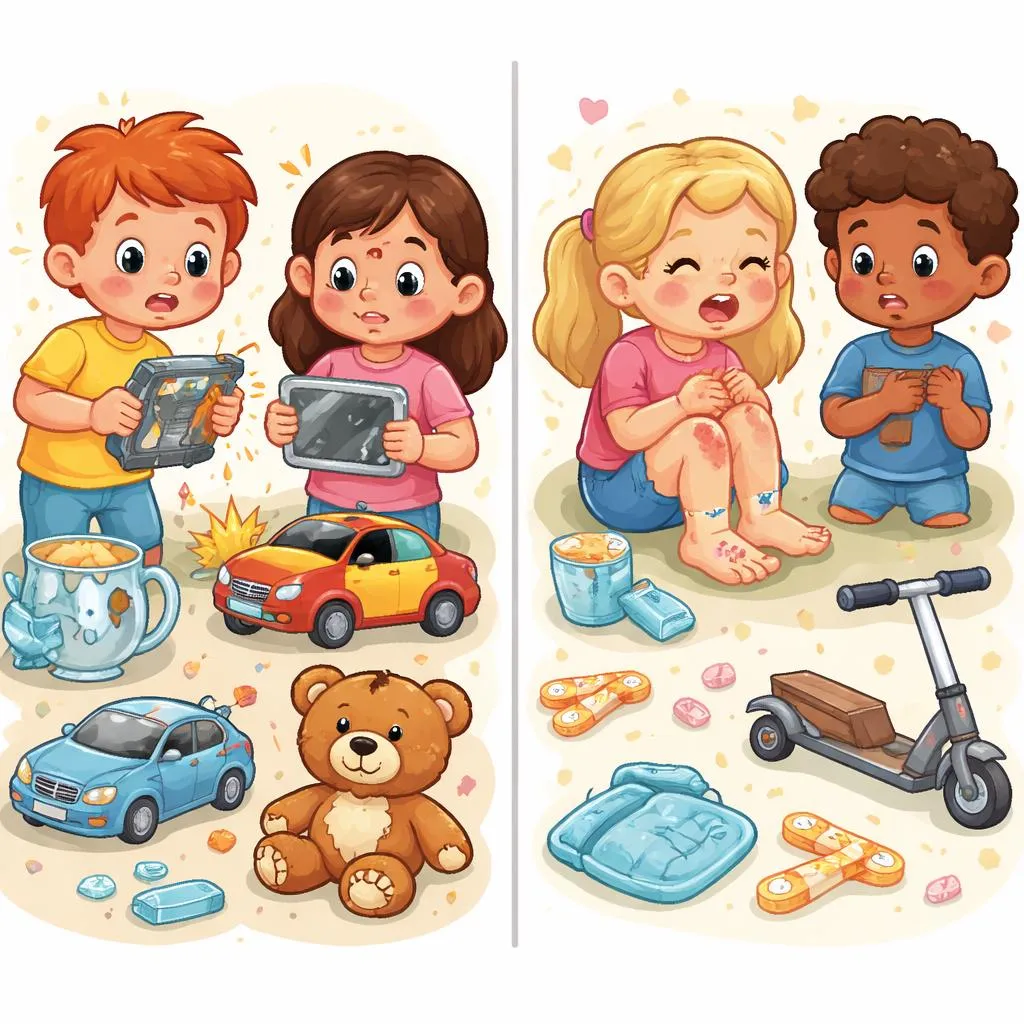

A child drops a toy. The wheel comes off. "The toy was damaged," they say. Another child falls off a bike. They scrape their knee. "I hurt my knee," they say. Two words. Both mean "harmed." But one is about objects. One is about living things.
Children damage and hurt things every day. Understanding the difference helps them describe what happened correctly.
This article helps families explore these harm phrases. Your child will learn when to say "damaged" and when to say "hurt."
What Do These Expressions Mean?
"Damaged to" means "harmed or injured an object so it does not work or look right." The word is for things. It says "this thing is not in perfect condition anymore."
For a child, think of a book. The cover gets torn. The book is damaged. It still exists, but it is not perfect. Damage is for objects.
"Hurt to" means "caused pain or injury to a living thing." The word is for people and animals. It says "someone or something feels pain."
For a child, think of a scraped knee. You fell down. Your knee hurts. You are hurt. Hurt is for living beings.
These two expressions seem similar because both mean "harm."
But one is for objects. One is for living things.
What's the Difference?
The main difference lies in what can be harmed. "Damaged to" is for objects. "Hurt to" is for people and animals.
One is about things. One is about beings.
"Damaged to" sounds like a scratch, a dent, a tear, or a crack. The object still exists but is less perfect. You damage a car, a phone, or a book.
"Hurt to" sounds like pain. A person hurts their arm. A dog hurts its paw. The feeling is physical suffering.
Another difference involves repair. Damaged objects can often be fixed. Hurt living things can often heal.
Also, you cannot hurt an object. You cannot damage a person (in the same way).
So remember: damaged to = harmed an object. hurt to = caused pain to a living thing.
When Do We Use Each One?
Use "damaged to" for objects. Use it for cars. Use it for toys. Use it for furniture. Use it for electronics. Use it for buildings.
For example, a child scratches the table with a toy. "The table was damaged." The object is harmed.
Use "damaged to" for weather harm. "The storm damaged the roof."
Use "hurt to" for people. Use it for bodies. Use it for feelings. Use it for animals.
For example, a child falls and scrapes their elbow. "She hurt her elbow." The living thing feels pain.
Use "hurt to" for emotions. "His feelings were hurt when no one invited him."
Also use "hurt to" for animals. "The dog hurt its paw on the sharp rock."
Remember: objects = "damaged to." people and animals = "hurt to."
Example Sentences for Kids
Here are simple sentences for "damaged to":
The box was damaged during shipping. It had a big dent.
(Physical harm to an object.)
He damaged his toy car when it fell off the table.
(The object was harmed.)
The storm damaged the fence in the backyard.
(Harm to a structure.)
Here are simple sentences for "hurt to":
She hurt her finger when she closed the door on it.
(Physical pain to a person.)
He hurt his friend's feelings by forgetting her birthday.
(Emotional pain to a person.)
The cat hurt its leg when it jumped from the tree.
(Physical pain to an animal.)
Notice how "damaged to" is for objects. "Hurt to" is for living things.
Common Mistakes to Avoid
Many people say "hurt to" for objects. This sounds like the object feels pain. A toy breaks. You say "the toy hurt."
Incorrect: Broken toy. "Hurt."
Correct: "The toy was damaged."
Objects cannot feel pain. Use "damaged" for objects.
Another mistake: using "damaged to" for people. This sounds like a person is an object. A child scrapes a knee. You say "the child damaged his knee."
Incorrect: Scraped knee. "Damaged."
Correct: "The child hurt his knee."
People get hurt, not damaged.
A third mistake: forgetting that "hurt" can also be an adjective meaning injured. "I am hurt" means I feel pain. "I am damaged" would sound strange for a person. Teach your child the difference.
Easy Memory Tips
Here is a fun trick for kids. Think of a broken toy and a bandage.
"Damaged to" = a broken toy. The toy has a crack. It does not feel pain. It is just damaged. The toy is an object.
"Hurt to" = a bandage on a knee. The knee belongs to a person. The person feels pain. The bandage helps it heal.
Another memory tip: look at the first letters. "Damaged" starts with D like "Dead object" (not alive). "Hurt" starts with H like "Heartbeat" (alive).
Draw a simple picture. Draw a scratched and dented toy car next to "damaged to." Draw a child with a bandage on their knee next to "hurt to." The images help children feel the difference.
Also try this question: "Is this an object or a living thing?" If object, say "damaged to." If living thing, say "hurt to."
Quick Practice Time
Try these easy exercises with your child. Fill in the blank with "damaged" or "hurt."
The phone screen was ________________ after it dropped on the floor.
She ________________ her ankle while jumping rope.
The book's cover was ________________ by the spilled water.
He ________________ his friend's feelings by not listening.
Answers:
Damaged (phone is an object)
Hurt (ankle is part of a person)
Damaged (book is an object)
Hurt (feelings are emotional pain to a person)
Now practice using both phrases at home. When an object is harmed, say "damaged." When a person or animal feels pain, say "hurt." Your child will learn the difference between a broken toy and a scraped knee.
Wrap-up
Use "damaged to" for physical harm to objects, structures, or things that do not feel pain. Use "hurt to" for physical or emotional pain to living beings like people and animals. Both describe harm, but one harms a toy while one hurts a knee.