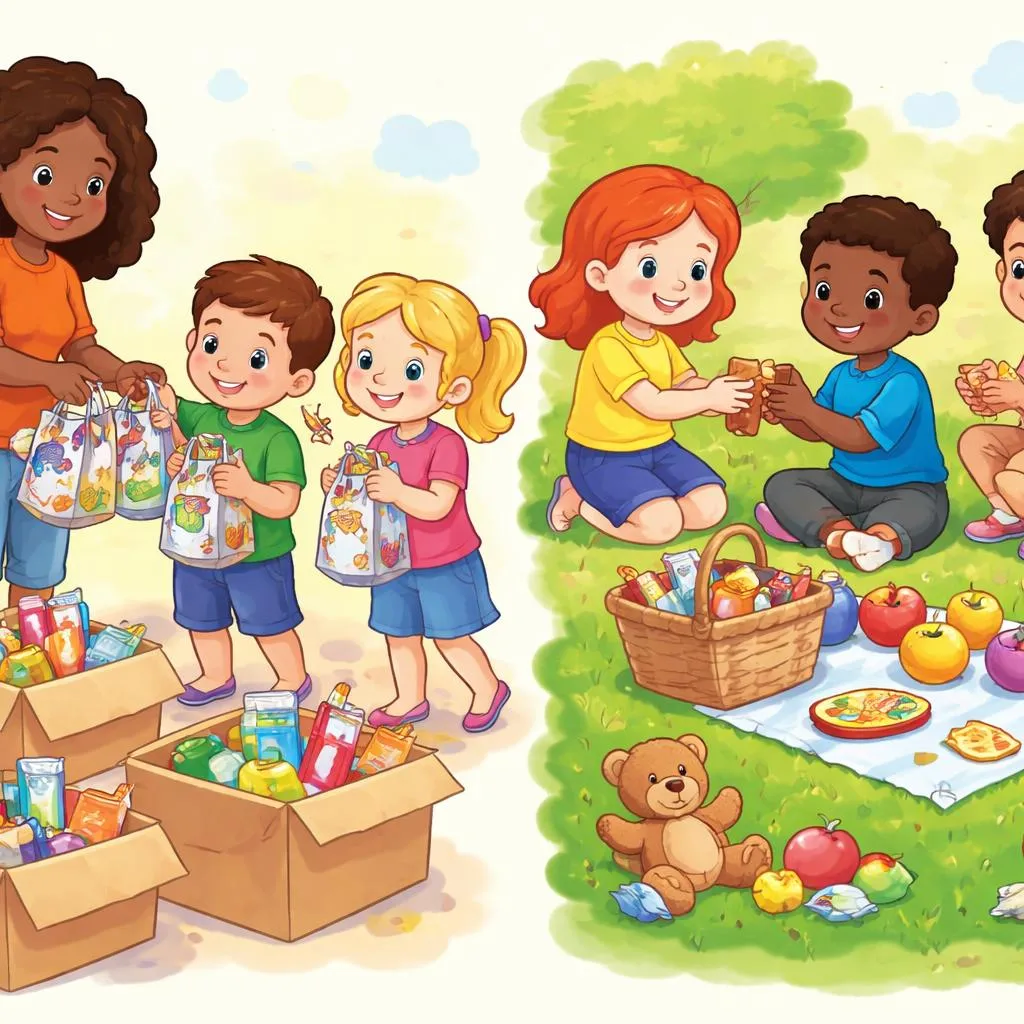

A teacher hands out papers to the class. "The worksheets were distributed to each student," she says. A child offers a snack to a friend. "I shared my crackers with you," they say. Two words. Both mean "gave portions to others." But one is about giving from a central source. One is about giving from what you have.
Children distribute and share things every day. Understanding the difference helps them describe how things are given out.
This article helps families explore these giving phrases. Your child will learn when things are distributed and when they are shared.
What Do These Expressions Mean?
"Distributed to" means "gave out items from a central source to multiple people or places." The word suggests a one-to-many action. It says "one person or place gave these things to many receivers."
For a child, think of a teacher handing out tests. The teacher has a stack of papers. She gives one to each student. She distributes the tests. The distribution goes from one to many.
"Shared to" means "gave a portion of what you have to someone else." The word suggests a many-to-many or one-to-one action. It says "you had something, and you let someone else have some too."
For a child, think of a bag of candy. You have the bag. You give some to a friend. You share the candy. The sharing goes from you to another person.
These two expressions seem similar because both involve giving portions to others.
But one is about a central source giving to many. One is about people giving to each other.
What's the Difference?
The main difference lies in the source and direction. "Distributed to" comes from a central source to many. "Shared to" comes from individuals to others.
One is about official or large-scale giving. One is about personal giving.
"Distributed to" sounds like someone in charge is giving things out. A teacher, a manager, a government. The distribution is planned and organized.
"Shared to" sounds like friendly, personal giving. Friends share snacks. Family members share chores. Sharing is informal and mutual.
Another difference involves expectation. Distribution is often expected or required. Sharing is voluntary and generous.
Also, you distribute things you have many of. You share what you have, even if it is only one thing.
So remember: distributed to = from central source to many. shared to = personal giving between people.
When Do We Use Each One?
Use "distributed to" for official or organized giving. Use it for schools. Use it for workplaces. Use it for large events. Use it for mail.
For example, a teacher has 20 pencils for 20 students. "The pencils were distributed to the students." The teacher gave one to each.
Use "distributed to" for mail. "Letters were distributed to each house."
Use "shared to" for personal, friendly giving. Use it for snacks. Use it for toys. Use it for information. Use it for time.
For example, a child has two cookies. They give one to a friend. "She shared her cookie with her friend." The sharing was personal.
Use "shared to" for feelings. "He shared his excitement with his family."
Also use "shared to" for mutual activities. "They shared the work equally."
Remember: official, organized, one-to-many = "distributed to." personal, friendly, one-to-one or many-to-many = "shared to."
Example Sentences for Kids
Here are simple sentences for "distributed to":
The teacher distributed the test papers to all the students.
(Official, one-to-many giving.)
Food and water were distributed to the families after the storm.
(Organized help from a central source.)
The mail carrier distributed letters to every house on the street.
(Systematic delivery to many.)
Here are simple sentences for "shared to":
She shared her popcorn with her little brother.
(Personal giving from one person to another.)
The children shared the crayons so everyone could draw.
(Mutual sharing among a group.)
He shared his knowledge about dinosaurs with his class.
(Personal giving of information.)
Notice how "distributed to" is official and one-to-many. "Shared to" is personal and mutual.
Common Mistakes to Avoid
Many people say "shared to" for official distribution. This sounds too personal. A teacher gives tests. You say "the teacher shared the tests."
Incorrect: Official distribution. "Shared."
Correct: "The teacher distributed the tests."
Official giving uses "distributed."
Another mistake: using "distributed to" for personal sharing. This sounds too formal. A child gives a friend a cracker. You say "the cracker was distributed to the friend."
Incorrect: Personal sharing. "Distributed."
Correct: "The cracker was shared with the friend."
Personal giving uses "shared."
A third mistake: forgetting the correct preposition. You distribute something TO people. You share something WITH people. "Shared to" is less common than "shared with."
Teach your child: distribute TO, share WITH.
Easy Memory Tips
Here is a fun trick for kids. Think of a mail truck and a picnic blanket.
"Distributed to" = a mail truck. The mail truck carries letters for many houses. It distributes mail to every house. One source, many receivers.
"Shared to" = a picnic blanket. Friends sit on the blanket. They share a basket of food. They give to each other. Sharing is personal and mutual.
Another memory tip: look at the first letters. "Distributed" starts with D like "Delivery" (from a central source). "Shared" starts with S like "Splitting with a friend."
Draw a simple picture. Draw a mail truck giving letters to many houses next to "distributed to." Draw friends on a picnic blanket sharing food next to "shared to." The images help children feel the difference.
Also try this question: "Is this official giving from one source to many, or personal giving between people?" If official one-to-many, say "distributed to." If personal between people, say "shared with."
Quick Practice Time
Try these easy exercises with your child. Fill in the blank with "distributed" or "shared."
The teacher ________________ the art supplies to all the students.
He ________________ his lunch with his friend who forgot theirs.
Blankets were ________________ to the homeless shelter by the donation center.
The siblings ________________ the last piece of cake equally.
Answers:
Distributed (official classroom supply distribution)
Shared (personal giving of lunch)
Distributed (organized help from a donation center)
Shared (mutual sharing between siblings)
Now practice using both phrases at home. When you see official or organized giving from one source to many, say "distributed to." When you see personal giving between people, say "shared with." Your child will learn the difference between a mail truck and a picnic blanket.
Wrap-up
Use "distributed to" when items are given out from a central source or authority to many people in an organized way. Use "shared with" (not "shared to") when people give portions of what they have to others in a personal, friendly, or mutual way. Both give out portions, but one drives a mail truck while one sits on a picnic blanket.