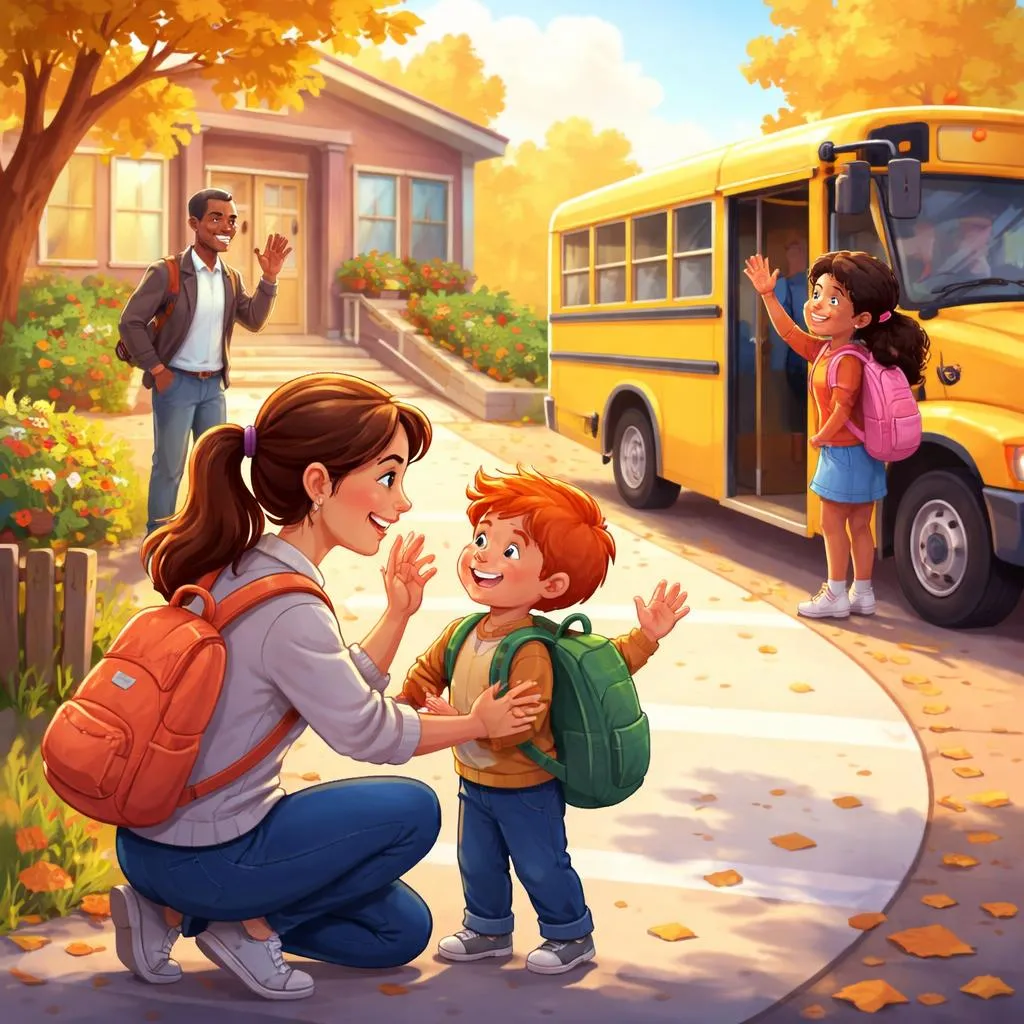

Goodbyes can feel heavy. A child watches a friend walk away. A grandparent gets in a car to drive home. A teacher says goodbye on the last day of school.
But some goodbyes carry a promise. They say "this is not the end." Two phrases do this well. "See you later" and "until next time."
Both mean "we will meet again." Both soften the sadness of parting. But they feel different. One sounds casual and everyday. One sounds special and meaningful.
Parents and teachers use these phrases every day. Understanding the difference helps children feel secure during separations.
What Do These Expressions Mean?
"See you later" means "I expect to see you again at some point in the near future." The phrase is casual and common. It assumes another meeting will happen naturally.
For a child, think of this like saying goodbye to a friend after school. You say "see you later" because you know you will see them tomorrow.
"Until next time" means "I will not see you for a while, but I look forward to our next meeting." The phrase acknowledges a longer gap. It feels more special.
For a child, think of this like saying goodbye to a cousin who lives far away. You say "until next time" because the next visit might be months away.
These two expressions seem similar because both promise a future meeting. Both say "goodbye for now, not forever." Both comfort a child who fears endings.
But one is for short separations. One is for longer gaps.
What's the Difference?
The main difference lies in the length of the separation. "See you later" works for short gaps. "Until next time" works for longer gaps.
One is about soon. One is about someday.
"See you later" sounds casual and certain. You know when you will see the person again. Tomorrow. Next week. Later today. The time is short.
"Until next time" sounds more thoughtful and less certain. You may not know exactly when the next time will be. But you trust it will come. The gap could be weeks or months.
Another difference involves the relationship. "See you later" works for friends, classmates, and everyday relationships. "Until next time" feels warmer and more special. You say it to people you truly treasure.
Also, "see you later" is very common and can be used almost anywhere. "Until next time" is rarer. Using it makes the moment feel important.
So remember: see you later = short separation, casual, certain. until next time = longer separation, special, hopeful.
When Do We Use Each One?
Use "see you later" for everyday goodbyes. Use it at the end of a school day. Use it after a playdate. Use it when a friend leaves your house. Use it for any separation of hours or a few days.
For example, a child finishes a playdate. The friend's mom arrives to pick him up. The child says "see you later at school tomorrow." The separation is one night. The reunion is certain.
Use "see you later" at the end of a phone call. Use it when you leave a family dinner.
Use "until next time" for longer separations. Use it when a relative leaves after a holiday visit. Use it at the end of a summer camp. Use it when a friend moves to another town. Use it for gaps of weeks, months, or longer.
For example, a grandparent visits for a week. The visit ends. The grandparent hugs the child and says "until next time, my dear. I will miss you." The separation could be months. The phrase carries love across the distance.
Use "until next time" at the end of a special event. A family reunion ends. A favorite teacher retires. A coach moves away. The phrase honors the moment.
Also use "until next time" when you do not know exactly when you will meet again. "See you later" suggests you know. "Until next time" trusts that the future will bring you back together.
Remember: short, everyday separations = "see you later." Longer, special separations = "until next time."
Example Sentences for Kids
Here are simple sentences for "see you later":
See you later at the park. I will be there after lunch.
(This marks a short separation of a few hours.)
Goodbye, friend. See you later in class tomorrow.
(This marks an overnight separation with a certain reunion.)
I have to go home now. See you later this weekend at the soccer game.
(This marks a separation of a few days.)
Here are simple sentences for "until next time":
You are leaving your grandmother's house after a week-long visit. She hugs you and says "until next time, sweetheart."
(This marks a longer separation of months.)
The last day of summer camp ends. The camp counselor says "until next time, campers. Have a great year at school."
(This marks a separation until next summer.)
Your favorite librarian is moving to a different state. She says "until next time. Keep reading lots of books."
(This marks an uncertain but hoped-for future meeting.)
Notice how "see you later" works for short, everyday separations. "Until next time" works for longer, more meaningful separations.
Common Mistakes to Avoid
Many people say "until next time" for everyday goodbyes. This sounds too dramatic. A friend leaves after lunch. You say "until next time."
Incorrect: "Until next time" after a casual lunch.
Correct: "See you later. Thanks for coming."
Save the special phrase for special moments.
Another mistake: using "see you later" when you will not see the person for a very long time. This can feel dishonest. A cousin moves to another country for a year. You say "see you later."
Incorrect: "See you later" for a year-long separation.
Correct: "Until next time. I will miss you."
Long separations deserve honest words. The child needs to understand the gap.
A third mistake: forgetting that "see you later" can be too casual for some goodbyes. A parent leaves for a week-long business trip. The parent says "see you later" to a young child. The child may not understand why "later" is taking so long.
For longer separations from young children, use "until next time" or add details. "I will see you in five sleeps. Until next time, my love."
Easy Memory Tips
Here is a fun trick for kids. Think of a clock and a calendar.
"See you later" = a clock. The hands move forward a few hours. The clock shows time passing quickly. Later is measured in hours or a day or two.
"Until next time" = a calendar. You turn the pages. Weeks pass. Months pass. But you mark the next meeting on the calendar. The wait is longer, but the hope is strong.
Another memory tip: look at the words. "Later" has the word "late" in it. Later is soon, just a little bit late. "Next time" has the word "next" like next page of a book. You turn the page to the next chapter.
Draw a simple picture. Draw a clock showing 3:00 and then 5:00 next to "see you later." Draw a calendar with a heart on a future date next to "until next time." The images help children feel the difference.
Also try this question: "Will I see this person in hours or days, or in weeks or months?" If hours or days, say "see you later." If weeks or months, say "until next time."
Quick Practice Time
Try these easy exercises with your child. Fill in the blank with "see you later" or "until next time."
Your friend finishes a video call with you. You will talk again tomorrow. You say "________________. Talk to you then."
Your uncle visits from far away for a long weekend. On Sunday, he hugs you and says "________________. I will come back for the holidays."
Your teacher says goodbye at the end of the school day. She knows she will see you tomorrow. She says "________________, everyone."
Your family moves to a new city. Your best friend stays behind. You promise to visit each summer. You hug and say "________________. I will write you letters."
Answers:
See you later (talk again tomorrow, short separation)
Until next time (long weekend visit ends, next visit at holidays)
See you later (school ends, see you tomorrow)
Until next time (moving to new city, summer visits, long separation)
Now practice using both phrases at home. For everyday goodbyes like school or a friend's house, say "see you later" with a wave. For longer separations like a relative's visit ending or a move, say "until next time" with a long hug. Your child will learn that goodbyes are not forever. Every goodbye carries a promise of hello.
Wrap-up
Use "see you later" for short, everyday separations of hours or days when the next meeting is certain and soon. Use "until next time" for longer separations of weeks or months when the next meeting is hoped for and treasured. Both say "goodbye for now," but one counts hours while one counts memories.