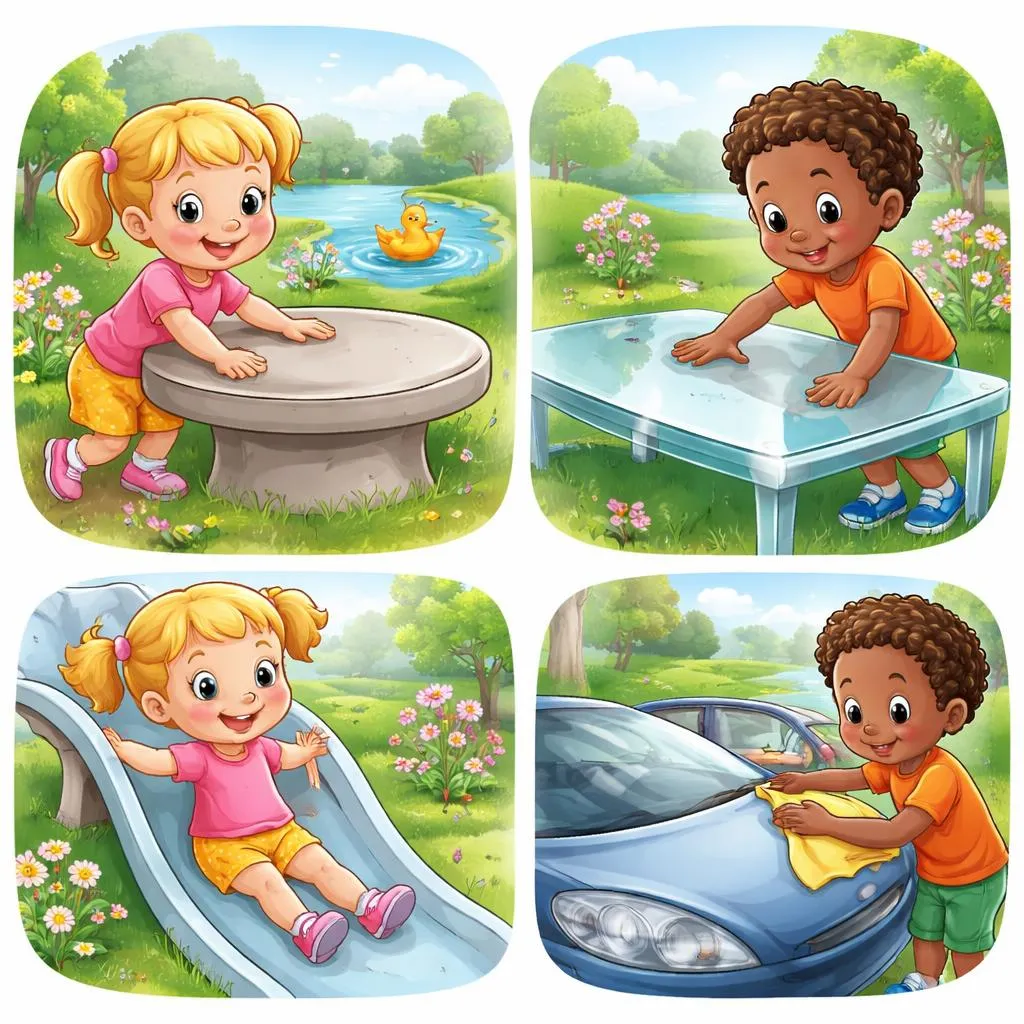

A child runs a hand over a polished table. "The wood feels smooth," they say. Another child looks at a shiny new car. "The design is sleek," they say. Two words. Both mean "even and pleasant to touch." But one is about texture. One is about shape and style.
Children feel smooth and sleek things every day. Understanding the difference helps them describe surfaces and designs.
This article helps families explore these surface words. Your child will learn when something is smooth and when it is sleek.
What Do These Expressions Mean?
"Smooth to" means "has an even surface with no bumps, lumps, or rough spots." The word describes texture. It says "this feels flat and even when you touch it."
For a child, think of a sheet of glass. You run your finger across it. There are no bumps. It is smooth. Smooth is about how something feels.
"Sleek to" means "smooth, shiny, and stylish in appearance, often with a curved shape." The word describes design and look. It says "this looks modern, polished, and elegant."
For a child, think of a race car. It has a shiny, curved body. It looks fast. It is sleek. Sleek is about appearance and style.
These two expressions seem similar because both describe things that are not rough.
But one is about touch. One is about look and design.
What's the Difference?
The main difference lies in what is being described. "Smooth to" describes texture you can feel. "Sleek to" describes appearance, shape, and style.
One is about touch. One is about look.
"Smooth to" sounds like a flat, even surface. A smooth stone. Smooth skin. Smooth ice. You can feel the evenness with your fingers.
"Sleek to" sounds like a stylish, shiny design. A sleek phone. A sleek sports car. A sleek new bicycle. The word suggests modernity and elegance.
Another difference involves the words' uses. "Smooth" is very common. "Sleek" is more specific and less common.
Also, something can be smooth without being sleek. A plain smooth rock is not sleek. Sleek implies stylishness.
So remember: smooth to = even texture, feels flat. sleek to = stylish, shiny, modern design.
When Do We Use Each One?
Use "smooth to" for textures. Use it for surfaces. Use it for skin. Use it for fabrics. Use it for ice.
For example, a child touches a polished stone. "The stone is smooth." The texture is even with no bumps.
Use "smooth to" for calm water. "The lake was smooth as glass."
Use "sleek to" for stylish designs. Use it for cars. Use it for phones. Use it for furniture. Use it for animals.
For example, a child sees a new sports car. "The car has a sleek design." The look is modern, shiny, and aerodynamic.
Use "sleek to" for hair. "Her hair was sleek and shiny after brushing."
Also use "sleek to" for animals. "The panther had a sleek, powerful body."
Remember: even texture you can feel = "smooth to." stylish, shiny modern design = "sleek to."
Example Sentences for Kids
Here are simple sentences for "smooth to":
The surface of the table was smooth, with no rough spots.
(Even texture, no bumps.)
She ran her hand over the smooth glass window.
(Texture feels flat.)
The ice on the pond was smooth and perfect for skating.
(Even, flat texture.)
Here are simple sentences for "sleek to":
The new smartphone had a sleek, shiny design.
(Stylish, modern appearance.)
The race car's sleek body helped it cut through the air.
(Aerodynamic, stylish shape.)
The cat's sleek fur shined in the sunlight.
(Smooth and shiny appearance.)
Notice how "smooth to" is about texture you can feel. "Sleek to" is about stylish, shiny appearance.
Common Mistakes to Avoid
Many people say "sleek to" for simple smooth textures. This sounds too fancy. A smooth rock is not sleek. You say "the rock is sleek."
Incorrect: Plain smooth rock. "Sleek."
Correct: "The rock is smooth."
Simple smooth textures use "smooth."
Another mistake: using "smooth to" for stylish designs. This is not wrong, but "sleek" is more precise for modern, stylish things. A new car looks sleek. You say "the car is smooth."
Incorrect: Not wrong, but less precise.
Better: "The car is sleek."
Stylish designs fit "sleek" better.
A third mistake: forgetting that "smooth" can also describe a process. "The meeting went smoothly" means without problems. "Sleek" does not work that way. Teach your child the different meanings.
Easy Memory Tips
Here is a fun trick for kids. Think of a flat rock and a race car.
"Smooth to" = a flat, even rock. You touch it. No bumps. Smooth is about feel.
"Sleek to" = a shiny race car. It looks fast and stylish. Sleek is about look.
Another memory tip: look at the first letters. "Smooth" starts with S like "Surface feel." "Sleek" starts with S like "Shiny style."
Draw a simple picture. Draw a hand touching a smooth flat rock next to "smooth to." Draw a shiny race car next to "sleek to." The images help children feel the difference.
Also try this question: "Is this about how it feels to touch or how it looks and is designed?" If about touch, say "smooth to." If about stylish look, say "sleek to."
Quick Practice Time
Try these easy exercises with your child. Fill in the blank with "smooth" or "sleek."
The polished marble floor felt ________________ under her feet.
The new sports car had a ________________, aerodynamic shape.
The lake was ________________ as a mirror.
The designer created a ________________ new laptop with a shiny silver finish.
Answers:
Smooth (texture under feet)
Sleek (stylish car shape)
Smooth (even water surface)
Sleek (stylish laptop design)
Now practice using both phrases at home. When you touch an even surface, say "smooth." When you see a stylish, shiny, modern design, say "sleek." Your child will learn the difference between a flat rock and a race car.
Wrap-up
Use "smooth to" for even textures that feel flat and bump-free to the touch, like polished stone, glass, or calm water. Use "sleek to" for stylish, shiny, modern designs that look aerodynamic and elegant, like sports cars, smartphones, or shiny hair. Both describe evenness, but one is about touch while one is about style.