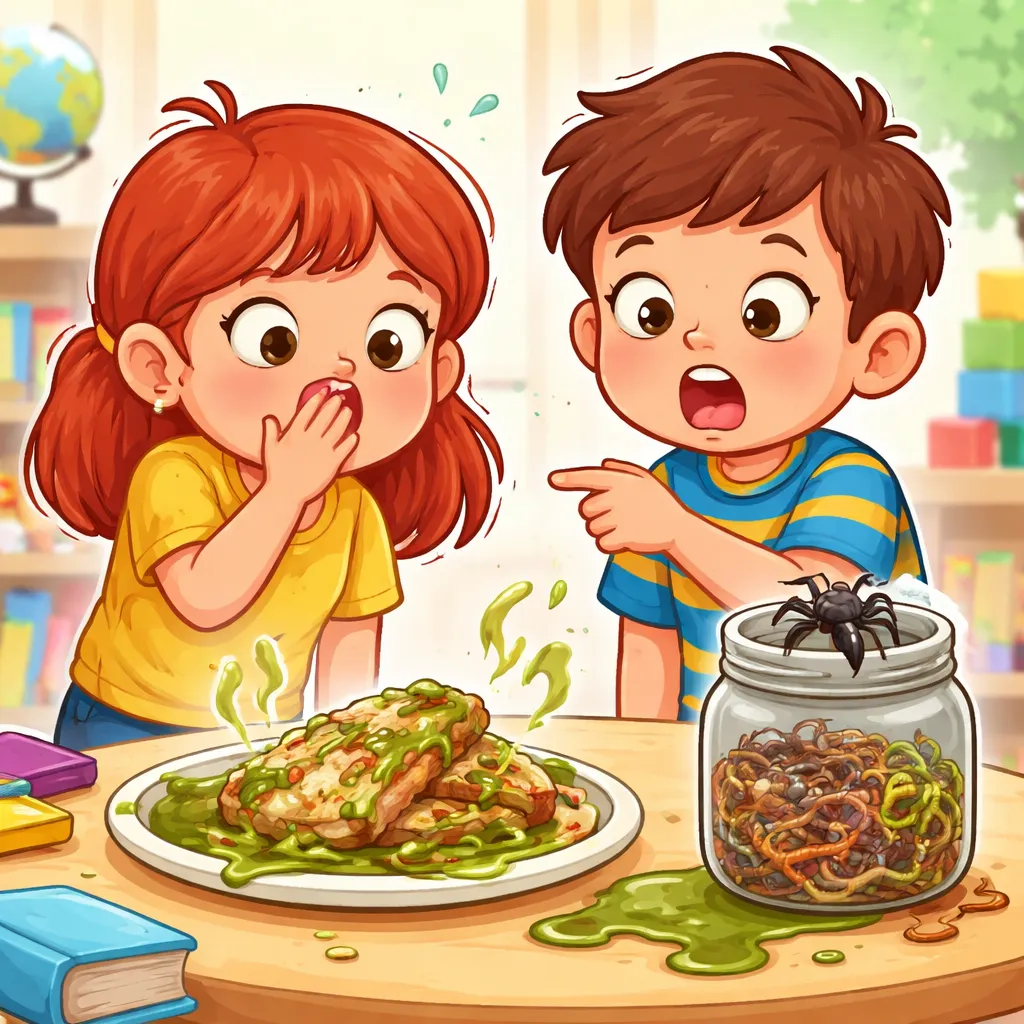

Are Similar Words Really Interchangeable?
Children often learn new words in pairs. Some pairs seem very close in meaning. “Disgusting and gross” is a good example. Both words describe something unpleasant. Both often appear when talking about food, smells, or messy situations.
At first, many learners think these words are exactly the same. However, small differences exist. These differences relate to tone, strength, and context.
“Disgusting” often sounds stronger and more formal. “Gross” feels more casual and emotional.
Understanding these differences helps children communicate clearly. It also helps them choose words that match the situation.
Parents can guide children by discussing real-life examples. This makes learning meaningful and practical.
Set 1: disgusting vs gross — Which One Is More Common?
“Gross” appears more often in everyday speech, especially among children. It is short, simple, and expressive.
For example:
“That is gross!” “This smells gross.”
“Disgusting” is also common, but it appears more often in careful speech or writing. It sounds more formal.
For example:
“This food is disgusting.”
Children often learn “gross” first because it is easy to say. It also appears frequently in daily conversations.
Parents can explain that both words are useful, but “gross” is more casual.
This helps children understand when each word feels natural.
Set 2: disgusting vs gross — Same Meaning, Different Contexts
“Disgusting and gross” often describe the same feeling. Both express strong dislike.
However, context changes how they sound. “Gross” feels more emotional and immediate. Children often use it when reacting quickly.
“Disgusting” feels more thoughtful. It may appear when someone explains their opinion.
For example:
“Ew, that is gross!” (quick reaction) “This smell is disgusting.” (more descriptive)
Both words describe something unpleasant. However, the situation affects which word fits better.
Children can learn to notice when people react quickly versus when they describe carefully.
Set 3: disgusting vs gross — Which Word Is “Bigger” or More Emphatic?
“Disgusting” is usually more emphatic. It expresses a stronger level of dislike.
It often describes something very unpleasant. It can refer to smell, taste, or behavior.
“Gross” also expresses dislike, but it feels lighter. It is often used in casual situations.
For example:
“That garbage smells disgusting.” (very strong feeling) “That bug is gross.” (strong but casual)
Children can think of “disgusting” as more serious. “Gross” feels more playful or informal.
This distinction helps them adjust their tone when speaking.
Set 4: disgusting vs gross — Concrete vs Abstract
Both words can describe real, physical experiences. Food, smells, and messy objects are common examples.
For example:
“The milk is disgusting.” “The floor is gross.”
However, “disgusting” extends more easily into abstract meanings. It can describe behavior or actions.
For example:
“That behavior is disgusting.”
“Gross” can also describe abstract ideas, but it usually keeps a casual tone.
For example:
“That joke is gross.”
Children should first understand the concrete meanings. Once they feel comfortable, they can explore abstract uses.
This gradual approach supports deeper understanding.
Set 5: disgusting vs gross — Verb or Noun? First Understand the Role
“Disgusting” and “gross” are adjectives. They describe nouns.
For example:
“disgusting smell” “gross food”
They answer the question: “What kind?”
“Disgusting” comes from the verb “disgust,” but children do not need to focus on this at first.
“Gross” mainly stays as an adjective in daily use.
Simple sentence patterns help children learn:
“This is disgusting.” “This is gross.”
These clear structures support early language development.
Set 6: disgusting vs gross — American English vs British English
In American English, “gross” is very common. Children and adults use it frequently in casual speech.
“Disgusting” also appears often, especially in more formal situations.
In British English, both words are understood. However, “disgusting” may appear slightly more often in everyday speech compared to “gross.”
“Gross” still appears, especially among younger speakers.
Children benefit from hearing both versions. This helps them understand different accents and styles.
Parents can explain that English changes slightly across regions. This builds awareness and flexibility.
Set 7: disgusting vs gross — Which Fits Formal Situations?
In formal situations, word choice becomes important. Tone should match the context.
“Disgusting” fits formal and informal settings. It sounds clear and descriptive.
For example:
“The conditions were disgusting.”
“Gross” feels informal. It is better suited for casual conversation.
For example:
“That is gross.”
This sentence works in daily speech but may not fit formal writing.
Children can learn that “disgusting” is safer in formal contexts. “Gross” works best with friends and family.
This awareness supports polite and appropriate communication.
Set 8: disgusting vs gross — Which One Is Easier for Kids to Remember?
“Gross” is easier for young learners. It is short and simple. Children can say it quickly.
It also connects strongly to emotion. Children often use it when reacting to something unpleasant.
“Disgusting” is longer. It may take more time to pronounce and remember.
However, its strong meaning makes it memorable. Children remember it when they hear it in clear situations.
Parents can help by repeating both words in daily life.
For example: “Is this gross or disgusting?”
This simple question builds understanding and memory.
Mini Exercise: Can You Spot the Differences Between These Similar Words?
Try these short activities together.
Choose the correct word: “That rotten food smells ___.” Answer: disgusting Choose the correct word: “The slime feels ___.” Answer: gross Fill in the blank: “I think that behavior is ___.” Answer: disgusting True or False: “Gross” is more formal than “disgusting.” Answer: False True or False: Both words describe something unpleasant. Answer: True
These exercises help children compare meanings.
They also make learning active and enjoyable.
Parent Tips: How to Help Kids Learn and Remember Similar Words
Children learn best through real experiences. Everyday life offers many chances to practice.
When children react to something unpleasant, guide their language gently. Ask: “Is it gross or disgusting?”
Encourage them to explain their choice. This builds both vocabulary and thinking skills.
Use repetition in natural settings. Talk about smells, tastes, and situations.
Read books together. Pause when similar words appear. Discuss their meaning calmly.
Use facial expressions and tone. Show how “gross” sounds quick and emotional. Show how “disgusting” sounds stronger and more serious.
Create small games. For example, sorting examples into “gross” or “disgusting.”
Avoid strong correction. Instead, guide with questions. This keeps learning positive.
Celebrate effort and improvement. Confidence grows step by step.
With time, children begin to notice subtle differences. “Disgusting and gross” become useful tools for expressing feelings clearly and thoughtfully.