
Are Similar Words Really Interchangeable?
Children often meet words that seem to mean the same thing. This can feel confusing. Words like “sour and tart” both describe taste. They often appear together in food descriptions.
However, they are not always interchangeable. Each word carries a slightly different feeling. Learning these differences helps children describe the world more clearly.
Taste words are especially important. They connect language with real experiences. When children taste food and use the right word, learning becomes meaningful.
Parents can support this process. Simple comparisons and daily examples help children notice subtle differences.
Set 1: sour vs tart — Which One Is More Common?
“Sour” is more common in everyday English. Children hear it early. It appears in daily conversations and simple books.
Kids often say “sour lemon” or “sour candy.” The word is easy to understand. It has a clear and strong meaning.
“Tart” is less common. It appears more in descriptive language. It is often used in cooking or food discussions.
Because of this, children usually learn “sour” first. “Tart” becomes useful as their vocabulary grows.
Parents can introduce “tart” after children feel confident with “sour.”
Set 2: sour vs tart — Same Meaning, Different Contexts
Both “sour” and “tart” describe a sharp taste. Yet their contexts differ.
“Sour” often describes a strong, sometimes unpleasant taste. It can refer to spoiled food or very acidic flavors.
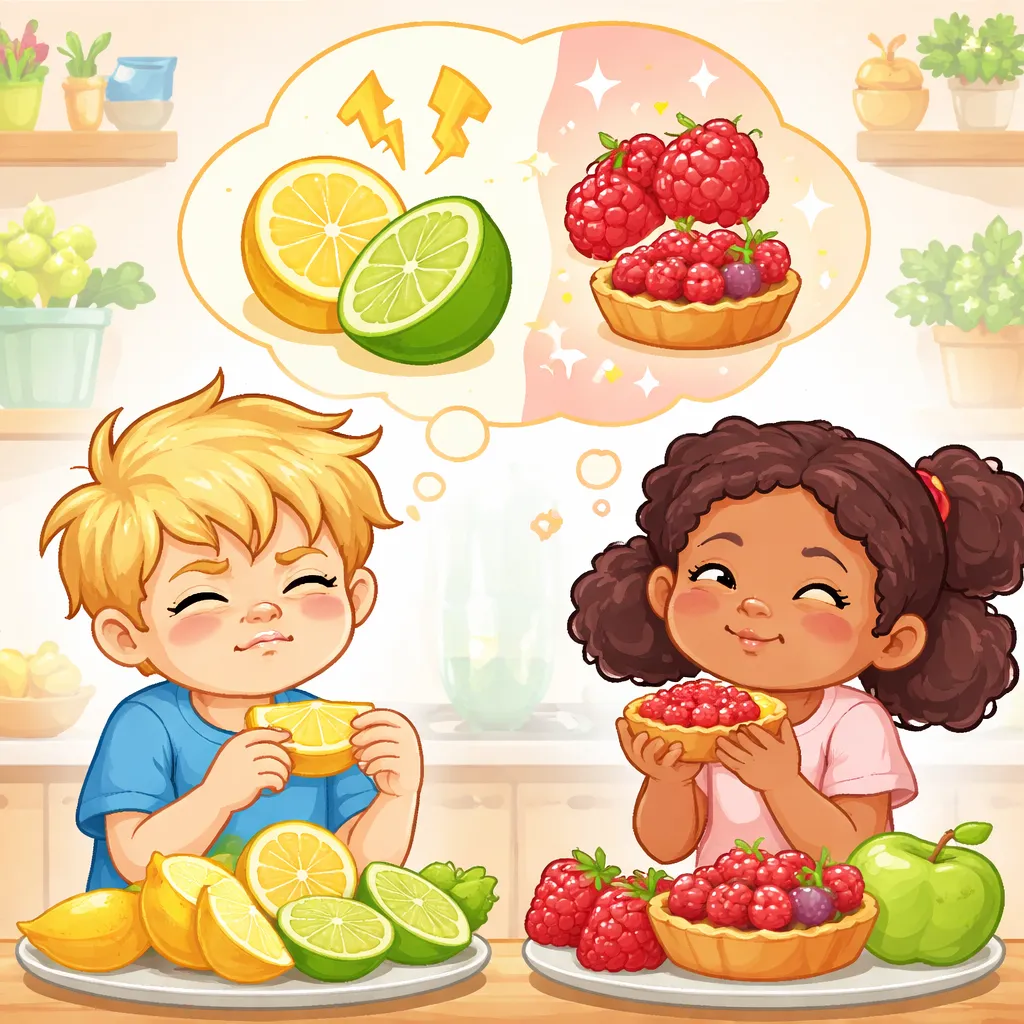
“Tart” usually describes a pleasant sharpness. It often appears in fruits like apples or berries.
For example:
“This milk is sour.” “This apple is tart.”
The milk example suggests something is not good. The apple example suggests a fresh, crisp taste.
Helping children notice this difference builds better understanding.
Set 3: sour vs tart — Which Word Is “Bigger” or More Emphatic?
“Sour” is stronger and more direct. It often expresses a more intense reaction.
“Tart” feels softer. It describes a lighter, more balanced taste.
In many cases, “sour” can sound negative. “Tart” often sounds more positive or neutral.
For example:
“A sour smell” feels unpleasant. “A tart flavor” can feel refreshing.
This difference helps children express feelings about food more clearly.
Set 4: sour vs tart — Concrete vs Abstract
“Sour” works in both concrete and abstract ways. It can describe taste, like “sour juice.” It can also describe mood, like “a sour attitude.”
“Tart” is mostly concrete. It usually describes food and taste. It rarely describes emotions in daily language.
This makes “sour” more flexible. Children can use it in more situations.
Understanding this helps children expand their vocabulary naturally.
Set 5: sour vs tart — Verb or Noun? First Understand the Role
Both “sour” and “tart” are mainly adjectives. They describe nouns.
For example:
“sour candy” “tart lemon pie”
However, “sour” can also act as a verb. For example, “The milk will sour.”
“Tart” can be a noun, but with a different meaning. It can refer to a type of dessert.
These differences show how words can change roles. Learning this helps children build stronger sentence skills.
Set 6: sour vs tart — American English vs British English
Both words appear in American and British English. Their meanings stay mostly the same.
“Sour” is widely used in both regions. It keeps a consistent meaning.
“Tart” also appears in both, but it is more common in food descriptions, especially in recipes.
In British English, “tart” as a dessert is more common in daily language. Children may hear it in food contexts more often.
These small differences help children understand how English varies across regions.
Set 7: sour vs tart — Which Fits Formal Situations?
“Sour” works in both informal and formal situations. It is simple and direct.
“Tart” often appears in more descriptive or formal writing. It is common in food reviews or recipes.
For example:
“The sauce tastes sour.” “The dish has a tart flavor.”
“Tart” can sound more refined. It helps describe taste with more detail.
Teaching this difference supports better writing as children grow.
Set 8: sour vs tart — Which One Is Easier for Kids to Remember?
“Sour” is easier for children. It is short and widely used. Kids quickly connect it with strong taste experiences.
“Tart” is less familiar. It may take more time to remember.
Parents can use real food examples. Let children taste a lemon and a green apple. Compare the flavors.
These sensory experiences make learning more memorable.
Simple connections help children build lasting vocabulary.
Mini Exercise: Can You Spot the Differences Between These Similar Words?
Try these simple activities.
Choose the correct word: The lemon tastes ______ (sour / tart). The milk smells ______ (sour / tart). Fill in the blanks: This berry has a ______ flavor. The juice is too ______ for me. Match the words: sour → strong / sometimes unpleasant tart → light / often pleasant Create your own sentences: Ask children to use both words in different sentences.
These exercises make learning active and engaging.
Parent Tips: How to Help Kids Learn and Remember Similar Words
Use daily experiences. Food is a great teaching tool. Let children taste and describe flavors.
Ask simple questions. For example, “Is this sour or tart?” This encourages thinking.
Use comparison often. Say both words together. Highlight the difference gently.
Read books that describe food and taste. Pause and discuss new words.
Encourage children to speak freely. Do not worry about mistakes. Learning takes time.
Repeat words in different situations. This helps build strong memory.
Most importantly, keep the learning process enjoyable. With support and practice, children will confidently use words like “sour and tart” in everyday English.