
Are Similar Words Really Interchangeable?
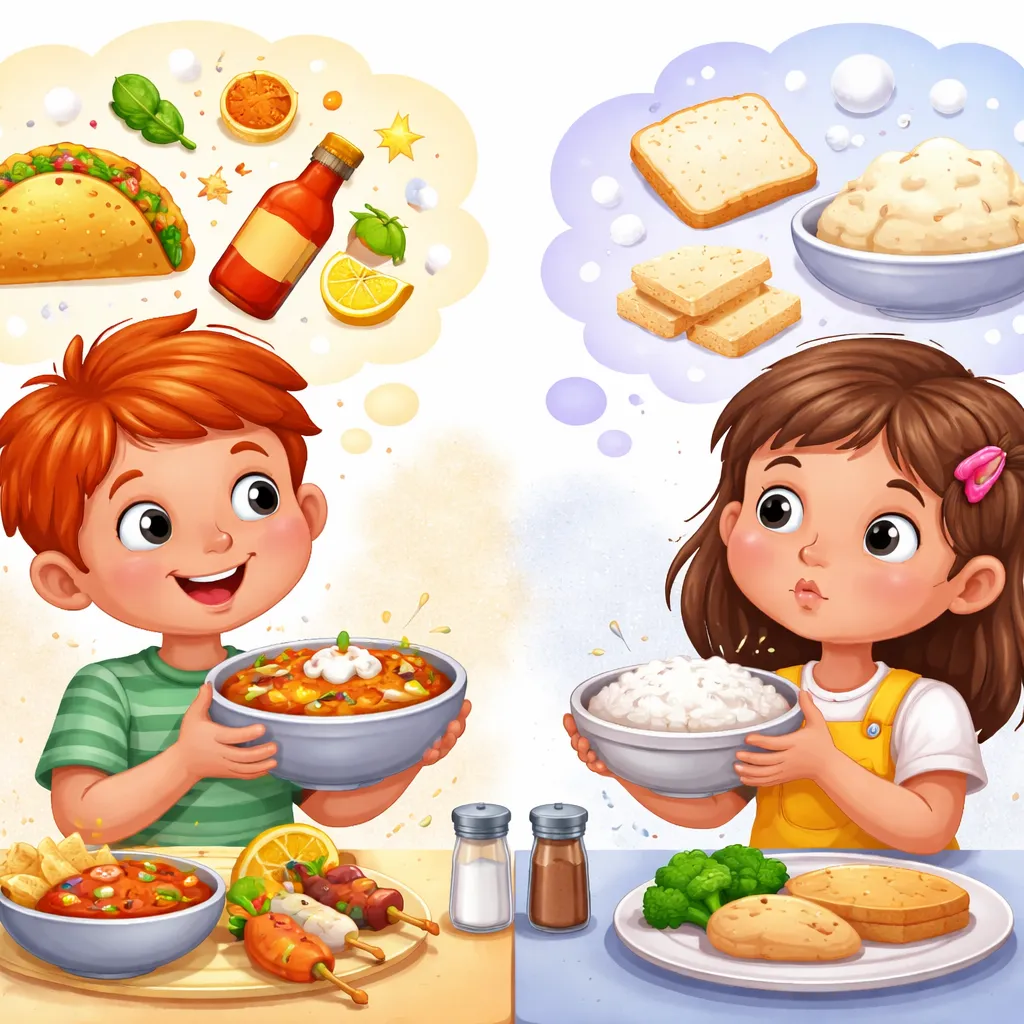
Children often meet pairs of words that seem similar. “Mild and bland” is one such pair. Both words describe taste. Both often appear in conversations about food.
At first glance, they look interchangeable. Many learners assume they mean the same thing. However, small differences exist. These differences affect how people understand meaning.
“Mild” usually suggests a gentle or soft flavor. It often carries a positive or neutral tone. “Bland,” on the other hand, often suggests a lack of flavor. It may sound negative.
Understanding this difference helps children use English more clearly. It also helps them express opinions more accurately.
Parents can support this learning by guiding children to notice tone and context. Over time, children begin to choose words more carefully.
Set 1: mild vs bland — Which One Is More Common?
“Mild” appears more frequently in everyday English. People use it in many situations. It describes food, weather, and even personality.
For example:
“This cheese is mild.” “The weather is mild today.”
“Bland” is less common in daily speech. It mainly appears when talking about food. Sometimes it describes things like writing or personality, but less often.
Children hear “mild” more often in conversations. It feels familiar and easy to use.
Parents can point out that “mild” fits more situations. “Bland” is more limited.
This helps children understand frequency and natural usage.
Set 2: mild vs bland — Same Meaning, Different Contexts
“Mild and bland” can both describe food with little strong flavor. However, they do not always feel the same.
“Mild” suggests a gentle taste. It often means the food is easy to eat. Many children prefer mild food because it is not strong.
“Bland” suggests something lacks flavor. It may feel boring or plain.
For example:
“This soup is mild.” (pleasant and gentle) “This soup is bland.” (needs more flavor)
Context changes meaning. The speaker’s feeling also matters.
Children can learn to ask: Does the speaker like the food or not?
This simple question helps them choose the right word.
Set 3: mild vs bland — Which Word Is “Bigger” or More Emphatic?
“Bland” often carries a stronger emotional tone. It usually expresses dissatisfaction.
“Mild” feels softer. It does not express strong emotion. It often sounds neutral or even positive.
For example:
“The curry is mild.” (acceptable, maybe enjoyable) “The curry is bland.” (not enjoyable)
In this sense, “bland” feels more emphatic. It clearly shows that something is missing.
“Mild” simply describes a level of flavor. It does not judge strongly.
Children benefit from understanding tone. It helps them avoid sounding negative when they do not mean to.
Set 4: mild vs bland — Concrete vs Abstract
Both “mild” and “bland” can describe real, physical experiences. Food is the most common example.
However, “mild” extends into abstract meanings more easily. It can describe behavior, weather, or reactions.
For example:
“He has a mild personality.” “The weather is mild.”
“Bland” can also be abstract, but it often keeps a negative tone.
For example:
“The story is bland.”
Here, “bland” means boring or lacking excitement.
For children, it is helpful to start with concrete meanings. Focus on food first. Then slowly introduce abstract uses.
This step-by-step approach builds strong understanding.
Set 5: mild vs bland — Verb or Noun? First Understand the Role
“Mild” and “bland” are adjectives. They describe nouns.
For example:
“mild sauce” “bland rice”
They answer the question: “What kind?”
Neither word acts as a verb. Children should first learn their role as describing words.
“Mild” sometimes appears in related forms. For example, “mildness.” However, this is less common for beginners.
“Bland” also has a noun form, “blandness,” but children rarely use it early on.
Focus on simple sentence patterns: “This food is mild.” “This food is bland.”
Clear structure supports early language development.
Set 6: mild vs bland — American English vs British English
Both “mild and bland” appear in American and British English. Their meanings remain the same across regions.
In American English, “mild” often describes food that is not spicy. It appears on menus and food packaging.
In British English, “mild” also describes gentle flavors. It can even describe certain types of drinks, such as mild beer.
“Bland” carries a similar meaning in both varieties. It usually suggests a lack of flavor.
Children do not need to worry about major regional differences here. However, exposure to both styles helps them become flexible learners.
Parents can mention that English varies slightly across countries. This builds awareness and curiosity.
Set 7: mild vs bland — Which Fits Formal Situations?
In formal contexts, word choice matters. Tone becomes important.
“Mild” works well in both formal and informal settings. It sounds neutral and polite.
For example:
“The dish has a mild flavor.”
“Bland” can sound critical. In formal writing, it may feel too negative unless the context requires evaluation.
For example:
“The meal lacks seasoning and tastes bland.”
This sentence works in a review but may sound harsh in general description.
Children can learn that “mild” is safer in polite conversation. “Bland” should be used carefully.
This awareness supports respectful communication.
Set 8: mild vs bland — Which One Is Easier for Kids to Remember?
“Mild” is easier for most children to remember. It is shorter and appears more often.
It also connects to many situations, not just food. This repetition helps memory.
“Bland” may feel less familiar. It appears less often in early learning materials.
However, “bland” becomes easier to remember when linked to emotion. Children remember it as “boring food.”
Parents can create simple associations:
Mild = gentle, easy Bland = no taste, boring
These connections help children recall meaning quickly.
Practice through daily conversation strengthens memory.
Mini Exercise: Can You Spot the Differences Between These Similar Words?
Try these simple activities together.
Choose the correct word: “This chicken is very ___ and easy to eat.” Answer: mild Choose the correct word: “The rice is too ___ and needs salt.” Answer: bland Fill in the blank: “I like ___ flavors, not strong ones.” Answer: mild True or False: “Bland” usually has a positive meaning. Answer: False True or False: “Mild” can describe weather. Answer: True
These exercises encourage thinking and comparison.
They also help children apply what they learn.
Parent Tips: How to Help Kids Learn and Remember Similar Words
Children learn vocabulary best through real experience. Food provides a perfect opportunity.
During meals, describe flavors together. Use “mild and bland” in natural conversation. Ask simple questions.
For example: “Is this mild or bland?”
Encourage children to explain their answers. This builds both vocabulary and thinking skills.
Use repetition across different situations. Talk about food, stories, and even weather.
Read books and pause when similar words appear. Discuss their meaning gently.
Use visuals and examples. Show foods with different flavors. Let children connect words to taste.
Avoid strong correction. Instead, guide children with questions. This keeps learning positive and relaxed.
Create small games. Sorting activities or guessing games work well.
Celebrate effort, not just correct answers. Confidence grows when children feel supported.
With time and practice, children begin to notice subtle differences. “Mild and bland” will no longer feel confusing. Instead, they become useful tools for clear and thoughtful expression.