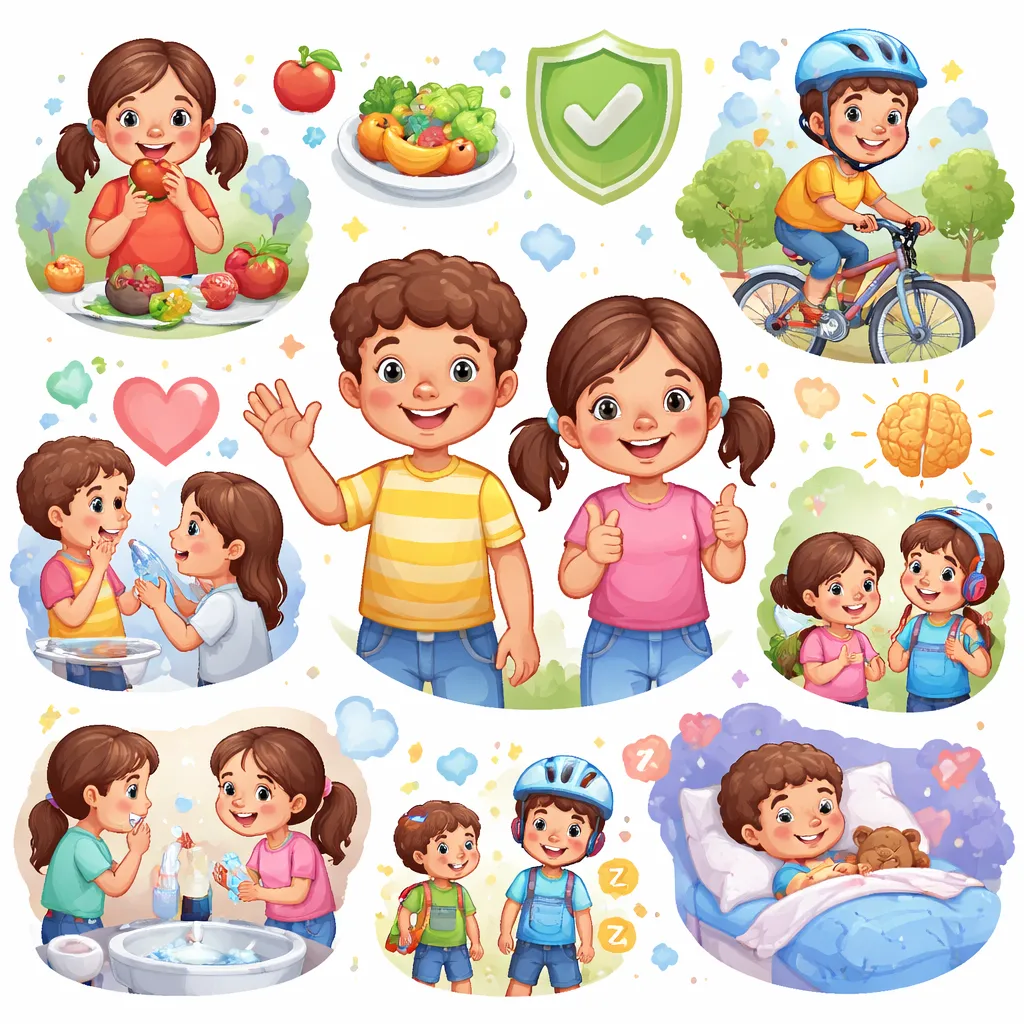

Are Similar Words Really Interchangeable?
Many English words look similar in meaning. This often creates confusion for young learners. Words like healthy and sound seem close at first glance.
However, they are not always interchangeable. Each word carries its own meaning and usage.
Understanding the difference helps children express ideas more clearly. It also supports better thinking and communication.
Learning these small differences builds strong language skills over time.
Set 1: healthy and sound — Which One Is More Common?
The word healthy is very common in daily life. Children hear it when talking about food, exercise, and the body.
For example:
Eating vegetables is healthy. She is a healthy child.
Sound appears less often in this meaning. It is more common in formal or specific contexts.
For example:
That is a sound decision.
Because of this, healthy is easier and more familiar for children. It becomes part of early vocabulary learning.
Set 2: healthy and sound — Same Meaning, Different Contexts
Both healthy and sound can relate to well-being or good condition. But they appear in different contexts.
Healthy usually refers to physical or mental well-being:
healthy food healthy habits healthy mind
Sound often refers to something reliable, strong, or correct:
sound advice sound judgment sound system
Children should learn that healthy connects to living things. Sound often connects to ideas or structures.
Set 3: healthy and sound — Which Word Is “Bigger” or More Emphatic?
The word healthy is direct and clear. It describes a good state of the body or mind.
Sound feels more formal and sometimes stronger in reasoning. It suggests something is solid and well thought out.
For example:
A healthy child grows well. A sound plan works well over time.
The difference lies in focus. Healthy focuses on condition. Sound focuses on strength and correctness.
Set 4: healthy and sound — Concrete vs Abstract
Healthy is often concrete. Children can see or feel it:
a healthy body healthy food
It connects to real-life experiences.
Sound is more abstract:
sound logic sound reasoning
It describes ideas, not physical things.
This difference helps children understand when to use each word.
Set 5: healthy and sound — Verb or Noun? First Understand the Role
Both healthy and sound are adjectives. They describe nouns.
Examples:
a healthy lifestyle a sound argument
They connect to different nouns:
Healthy relates to:
health (noun)
Sound relates to:
soundness (noun, meaning strength or reliability)
Children should learn these word families. It helps them build stronger vocabulary connections.
Set 6: healthy and sound — American English vs British English
Both words are widely used in American and British English.
Healthy appears often in both regions. It is part of everyday speech.
Sound also appears in both. However, its meaning as “reasonable” or “reliable” may appear more in formal contexts.
There is no major difference in spelling or meaning between regions.
Children can use both words confidently in global English.
Set 7: healthy and sound — Which Fits Formal Situations?
In formal writing, word choice becomes important.
Healthy works well in general contexts:
“A healthy environment supports growth.”
Sound fits better in formal or academic contexts:
“This is a sound conclusion.”
Sound often appears in discussions about ideas, plans, or arguments.
Teaching this helps children adjust their language for different situations.
Set 8: healthy and sound — Which One Is Easier for Kids to Remember?
Healthy is easier for children to learn:
It connects to daily life. It appears in simple sentences. It links to visible examples like food and exercise.
Sound is more abstract. It may take more time to understand fully.
Parents can use simple examples:
Healthy food helps your body. A sound idea works well and makes sense.
This approach makes both words easier to remember.
Mini Exercise: Can You Spot the Differences Between These Similar Words?
Choose the correct word: healthy or sound.
Eating fruit is ______. That is a ______ plan. She has a ______ body and mind. The teacher gave ______ advice.
Answers:
healthy sound healthy sound
Encourage children to explain why they chose each word.
Parent Tips: How to Help Kids Learn and Remember Similar Words
Parents play an important role in vocabulary learning.
Start with healthy. Use it in daily conversations. Talk about food, exercise, and habits.
Then introduce sound in simple ways. Focus on ideas and decisions.
Ask questions like:
Is this about the body or about a plan? Is this something we can see, or something we think about?
Use real-life examples:
Vegetables are healthy. A good rule is a sound rule.
Encourage children to create their own sentences. Practice helps them remember.
Keep the learning process calm and positive. When children understand words like healthy and sound, they build both language skills and thinking skills.