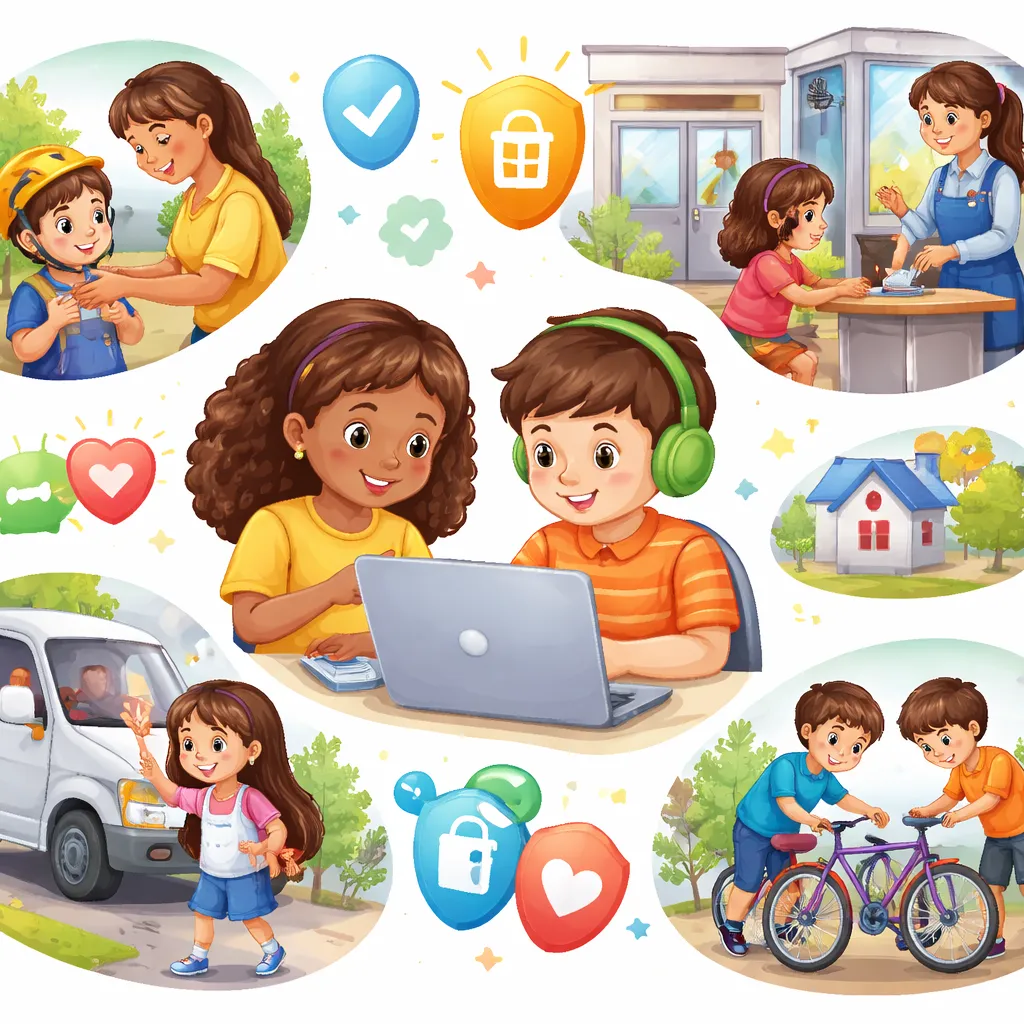

Are Similar Words Really Interchangeable?
Many English words seem very similar. This can make learning confusing for children. Words like safe and secure both relate to protection and freedom from danger.
At first, they look interchangeable. However, they are not always used in the same way. Small differences affect meaning and usage.
When children understand these differences, they improve both communication and thinking skills. They learn to describe situations more clearly and accurately.
Set 1: safe and secure — Which One Is More Common?
The word safe is very common in daily English. Children hear it often at home and school. For example, “You are safe here.”
Secure appears less often in everyday speech. It sounds slightly more formal. For example, “The building is secure.”
Because of this, safe becomes part of early vocabulary. Children use it naturally in many situations.
Parents can introduce safe first. Then they can add secure to expand understanding.
Set 2: safe and secure — Same Meaning, Different Contexts
Both words relate to protection. Yet they appear in different contexts.
Safe focuses on being free from harm:
The child is safe. This place is safe.
It describes a general condition.
Secure focuses on protection through systems or actions:
The door is secure. The information is secure.
It often suggests protection that has been created or maintained.
Children should learn that safe is a state. Secure is often about protection methods.
Set 3: safe and secure — Which Word Is “Bigger” or More Emphatic?
When comparing meaning, both words show protection. However, secure can sound stronger in certain contexts.
Safe describes a feeling or condition of no danger.
Secure suggests strong protection, often with effort or systems.
For example:
The house is safe. The house is secure with locks and alarms.
The second sentence shows stronger and more active protection.
This helps children understand deeper meanings of safety.
Set 4: safe and secure — Concrete vs Abstract
Both safe and secure can describe concrete and abstract ideas.
Safe often describes people or places:
safe children a safe place
It is easy to imagine.
Secure often describes systems or conditions:
secure network secure building
It can feel more abstract.
This shows that safe is more direct. Secure often connects to systems or protection methods.
Set 5: safe and secure — Verb or Noun? First Understand the Role
Understanding word roles helps children use words correctly.
Safe is an adjective:
a safe place stay safe
It also appears in expressions:
Keep it safe.
Secure is an adjective:
a secure door a secure system
It can also act as a verb:
They secure the building.
It connects to the noun security:
Security is important.
Learning these forms helps children expand vocabulary step by step.
Set 6: safe and secure — American English vs British English
Both words appear in American and British English. Their meanings remain the same.
Safe is very common in both regions. It appears in daily speech.
Secure also appears in both, especially in formal or technical contexts.
Children can use safe in most situations. Learning secure helps them express more precise ideas.
Set 7: safe and secure — Which Fits Formal Situations?
Word choice matters in formal communication.
Safe works in both informal and formal contexts:
“The area is safe” sounds clear and simple.
Secure fits formal situations better:
“The system is secure” sounds professional.
In technical or official settings, secure is often preferred.
Teaching this difference helps children adjust their tone.
Set 8: safe and secure — Which One Is Easier for Kids to Remember?
Children learn best with simple and familiar words.
Safe is easier because:
it appears often it is short and clear it connects to daily life
Secure is longer and slightly more complex. It may take more time to learn.
However, once children understand protection systems, they can use secure more naturally.
Parents can use simple examples to explain both words.
Mini Exercise: Can You Spot the Differences Between These Similar Words?
Try these exercises together.
Choose the correct word: safe or secure.
The child feels ______ at home. The door is ______ with a lock. This is a ______ place to play. The data is ______ on the computer.
Answers:
safe secure safe secure
Encourage children to explain their choices. This builds deeper understanding.
Parent Tips: How to Help Kids Learn and Remember Similar Words
Parents can support vocabulary learning with simple steps.
Start with safe. Use it in daily conversations. Talk about places and feelings.
Then introduce secure. Explain that it describes strong protection, often with tools or systems.
Ask guiding questions:
Is this about feeling safe or being protected by something? Is there a system or action that makes it secure?
Use real-life examples. A child feels safe with family. A house becomes secure with locks.
Encourage children to use both words in speaking and writing. Practice builds confidence.
Keep learning positive and meaningful. When children understand words like safe and secure, they gain stronger tools to describe protection, think clearly, and communicate with confidence.