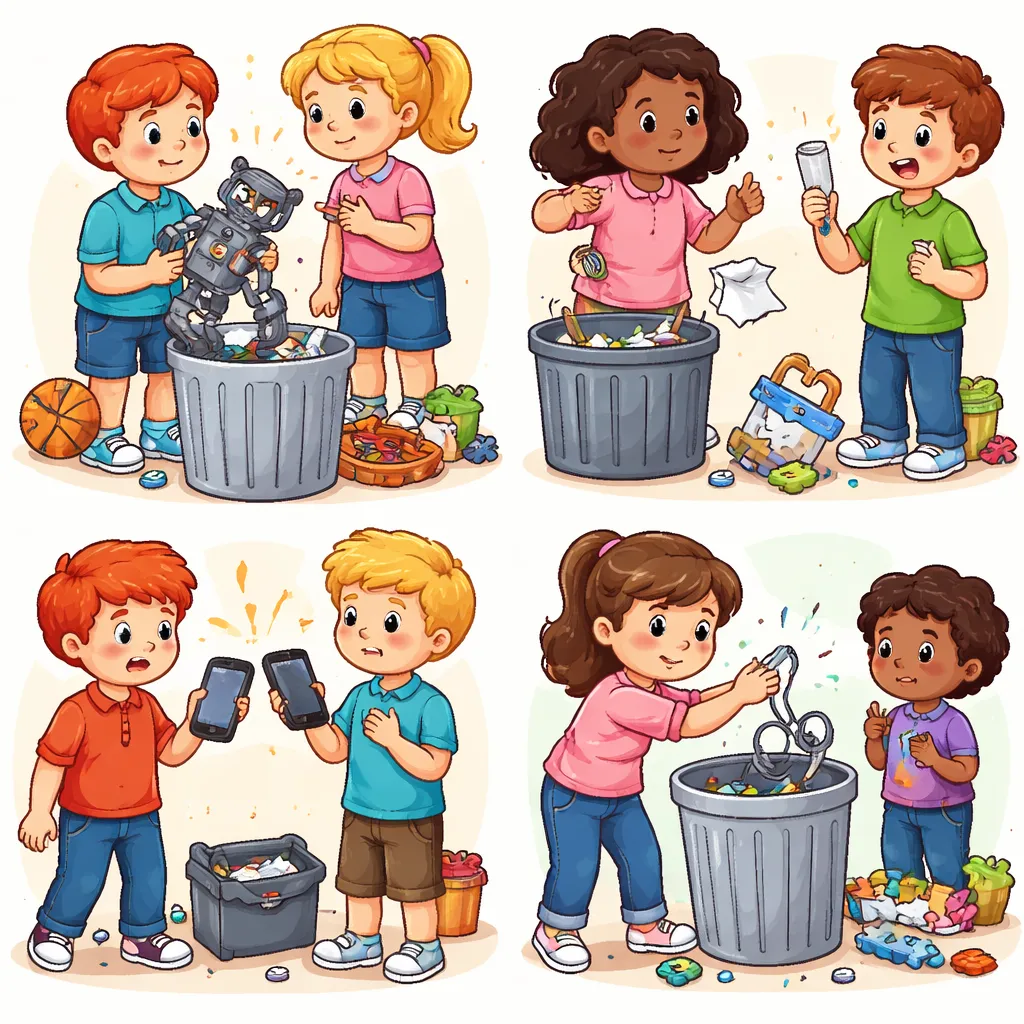

Are Similar Words Really Interchangeable?
Many English words share similar meanings. This can make learning both exciting and challenging. “Worthless and useless” are two such words. Both suggest that something has little or no value. However, they are not always interchangeable.
“Useless” often focuses on function. It describes something that cannot help or work. “Worthless” focuses on value. It suggests something has no importance or worth.
These differences may seem small. Yet they matter in real communication. Children who understand them can express ideas more clearly.
Learning similar words builds strong vocabulary. It also improves reading and listening skills. Careful word choice helps children communicate with confidence.
Set 1: worthless vs useless — Which One Is More Common?
“Useless” appears more often in everyday speech. Children hear it in daily conversations. It is simple and easy to understand.
Examples:
This tool is useless. The broken toy is useless.
These examples focus on function.
“Worthless” appears less often in casual speech. It is more common in emotional or serious contexts.
Examples:
The paper is worthless. The item became worthless.
These examples focus on value.
Because “useless” is more common, children usually learn it first. “Worthless” often comes later as vocabulary expands.
Set 2: worthless vs useless — Same Meaning, Different Contexts
Both words suggest something is not helpful. However, they differ in context.
“Useless” describes lack of function. It answers: Can it be used?
Example:
This pen is useless. It does not write.
“Worthless” describes lack of value. It answers: Does it have value?
Example:
This coin is worthless.
If a child says “a useless coin,” it sounds less natural. Coins are not tools, so value matters more than function.
Context helps children choose the correct word. Real-life examples support understanding.
Set 3: worthless vs useless — Which Word Is “Bigger” or More Emphatic?
Both words can sound strong. However, “worthless” often feels more emotional.
“Useless” is more neutral. It simply states that something does not work or help.
“Worthless” can sound harsher. It suggests that something has no value at all. It may even express disappointment.
Compare:
a useless tool a worthless object
The first focuses on function. The second focuses on value and feeling.
Children should learn this difference. It helps them avoid sounding too negative in certain situations.
Set 4: worthless vs useless — Concrete vs Abstract
“Useless” often describes concrete objects. These are things children can see and touch.
Examples:
a useless gadget a useless toy
These objects do not work or help.
“Worthless” can describe both concrete and abstract things.
Concrete examples:
worthless coins worthless items
Abstract examples:
worthless effort worthless results
This flexibility makes “worthless” more complex.
Children usually understand concrete ideas first. Adults can help by giving clear examples.
Set 5: worthless vs useless — Verb or Noun? First Understand the Role
Both “worthless” and “useless” are adjectives. They describe nouns.
Examples:
a useless tool a worthless object
Their related noun forms include:
worth use
Example sentences:
The worth of the item is low. The use of the tool is clear.
Children may not need these forms at first. However, they help expand vocabulary over time.
Understanding word families supports grammar development.
Set 6: worthless vs useless — American English vs British English
Both words appear in American and British English. There are no spelling differences.
“Useless” is common in both regions. It appears in daily conversation and informal speech.
“Worthless” also appears in both varieties. It is often used in emotional or descriptive contexts.
Usage patterns are similar. Learners can use both words in either variety of English.
The main difference lies in meaning, not location.
Set 7: worthless vs useless — Which Fits Formal Situations?
“Useless” fits neutral or casual situations. It is simple and direct.
Examples:
This method is useless. The tool is useless.
“Worthless” can sound more emotional. It may not fit formal writing in all cases.
Examples:
The item is worthless. The result seems worthless.
In formal contexts, softer expressions may be better. For example:
not effective low value
Teaching children tone awareness is important. It helps them choose words carefully.
Set 8: worthless vs useless — Which One Is Easier for Kids to Remember?
“Useless” is easier for children. It connects to simple ideas about function.
Children understand when something does not work. This makes the word easy to learn.
“Worthless” requires understanding value. This idea is more abstract.
Adults can explain: “Useless means it cannot help.” “Worthless means it has no value.”
Using simple comparisons helps memory. Repetition in daily life also supports learning.
Mini Exercise: Can You Spot the Differences Between These Similar Words?
Practice helps children understand word differences.
Exercise 1: Choose the correct word
This broken phone is _____. (worthless / useless) The coin has no value. It is _____. (worthless / useless) This tool does not work. It is _____. (worthless / useless)
Answers:
useless worthless useless
Exercise 2: Match the meaning
A. useless tool B. worthless object
has no value cannot be used
Answers: A → 2 B → 1
Exercise 3: Create your own sentences
Ask children to write:
one sentence with “useless” one sentence with “worthless”
Encourage simple and clear ideas.
Parent Tips: How to Help Kids Learn and Remember Similar Words
Parents can support vocabulary learning through daily interaction. Simple actions make a big difference.
Use real-life examples. Show children objects that do not work and describe them as “useless.” Then explain “worthless” through value.
For example: “This toy is useless because it is broken.” “This coin is worthless because it has no value.”
Keep explanations short and clear. Avoid complex definitions.
Read together often. Books provide natural examples of both words.
Encourage questions. Children learn more when they feel curious.
Repeat words in daily conversation. Repetition strengthens memory.
Use games and simple exercises. Matching and sentence building make learning fun.
Stay patient. Language learning takes time. Each new word builds confidence.
As children continue to learn, they begin to understand the difference between “worthless and useless.” They learn to choose words based on meaning and context. This awareness helps them communicate clearly and thoughtfully in English.