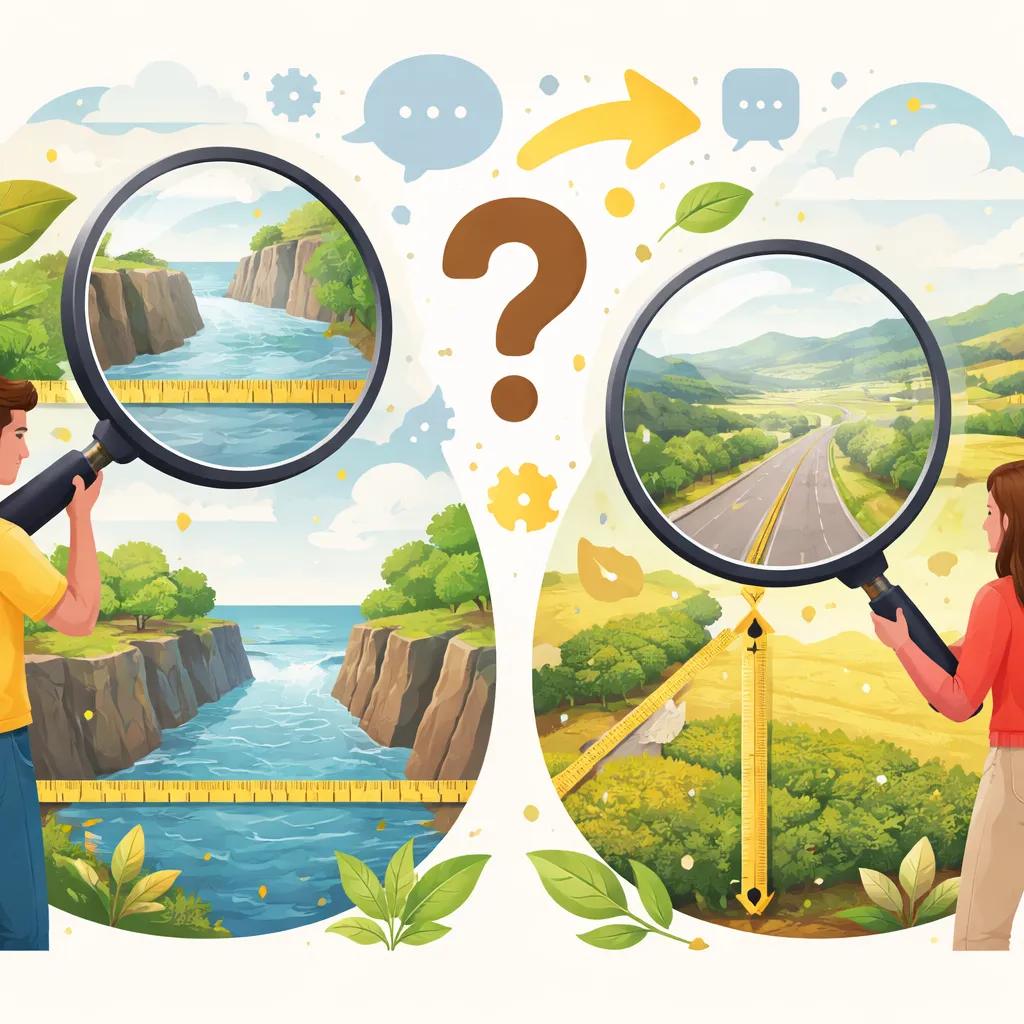

Children learn “wide” early. They use it for roads, rivers, and smiles. Then they meet “broad”. This word sounds similar but feels different. Many parents ask if “wide and broad” are the same. They are not exactly the same. One word measures distance. The other adds a sense of scale and sometimes dignity. Kids need clear examples. Parents can guide them through everyday objects. This article gives you simple rules. You will find friendly explanations. Let’s explore “wide and broad” together.
Are Similar Words Really Interchangeable? Similar words often cause confusion. “Wide and broad” seem like perfect twins. Both describe something large from side to side. But you cannot always swap them. A wide road is common. A broad road sounds older or more poetic. A broad smile works. A wide smile also works but feels different. Language gives us shades of meaning. Children benefit from knowing these shades. Parents can point out both words in stories and signs. This article focuses only on “wide and broad”. We will compare them in clear steps.
Set 1: Wide vs Broad — Which One Is More Common? “Wide” appears much more often. We say wide door. We say wide screen. We say wide selection. “Broad” appears less often in daily talk. We say broad shoulders. We say broad daylight. We say broad category. For everyday use, “wide” wins easily. Children hear “wide” on the playground, in stores, and at home. “Broad” sounds more formal or literary. A wide river is normal. A broad river sounds like a storybook. Parents can teach this by using “wide” for most situations. Save “broad” for special moments or fixed phrases.
Set 2: Wide vs Broad — Same Meaning, Different Contexts Sometimes “wide and broad” describe the same object. A street can be wide or broad. But the context changes the feeling. “Wide street” just states the measurement. “Broad street” suggests a grand, impressive street. Consider a smile. A wide smile shows happiness. A broad smile shows warmth and maybe pride. Consider a knowledge area. A wide range of topics means many topics. A broad range of topics also means many topics, but it feels more complete. For children, explain it this way. “Wide” is a tape measure. “Broad” is a tape measure with a feeling of bigness and completeness.
Set 3: Wide vs Broad — Which Word Is “Bigger” or More Emphatic? “Broad” feels bigger and more emphatic. It carries a sense of sweep and importance. A broad understanding sounds deep and complete. A wide understanding sounds basic. A broad category includes many items. A wide category also includes many items but feels less organized. “Broad” adds dignity. “Wide” adds neutrality. For children, this difference appears in compliments. “You have broad knowledge” sounds very impressive. “You have wide knowledge” sounds nice but simpler. Parents can practice by describing a family member. “Grandpa has broad shoulders” sounds strong. “Grandpa has wide shoulders” sounds factual.
Set 4: Wide vs Broad — Concrete vs Abstract “Wide” works for concrete and abstract things easily. A wide table is concrete. A wide difference is abstract. “Broad” also works for both but prefers abstract or human-related things. Broad smile (human). Broad accent (abstract). Broad agreement (abstract). You can say broad river (concrete) but it sounds poetic. For children, this is a helpful guide. Use “wide” for most concrete objects. Use “broad” for body parts, faces, ideas, and categories. A broad back. A broad forehead. A broad topic. A broad outline. Parents can make two columns. One column for wide concrete things (hallway, bridge, ribbon). One column for broad abstract or body things (shoulders, knowledge, daylight).
Set 5: Wide vs Broad — Verb or Noun? First Understand the Role Both “wide and broad” are adjectives. They describe nouns. But “wide” also works as a noun and adverb. “The ball went wide” uses “wide” as an adverb. “The wide of the goal” uses “wide” as a noun in sports. “Broad” works as a noun too. “The broad of the back” is rare but possible. Children do not need these advanced uses. Focus on adjectives. A wide path. A broad smile. A useful tip: use “wide” for openings and spaces. A wide gap. A wide window. Use “broad” for surfaces and features. A broad forehead. A broad leaf. Teach your child to ask: Am I describing an opening or a surface? If opening, prefer “wide”. If surface or feature, consider “broad”.
Set 6: Wide vs Broad — American English vs British English American and British English treat “wide and broad” almost the same. One small difference: British English uses “broad” more often in place names. Broad Street, Broad Lane. American English uses “Broad” too but also uses “Wide” in names like Widefield. Another difference: accents. British English says “broad accent” meaning strong regional accent. American English says “thick accent” more often. For children, these differences do not matter. Teach international English. Say “wide road” and “broad category”. Both dialects accept these. Parents only need to mention “broad accent” if the child watches British shows.
Set 7: Wide vs Broad — Which Fits Formal Situations? Formal English prefers “broad” for abstract and professional contexts. A business report says “broad overview” to sound complete. An academic paper says “broad implications” to sound significant. “Wide” works in formal settings too but feels less sophisticated. A wide range is fine. A broad range sounds more thorough. For children, school writing benefits from “broad” in certain phrases. When your child writes about a topic, say “Give a broad summary” to encourage completeness. When your child describes a door, say “wide door” because physical objects take “wide”. This builds style awareness.
Set 8: Wide vs Broad — Which One Is Easier for Kids to Remember? “Wide” is easier for children. It has four letters. It sounds like “ride” with a W. Children see wide things daily. Wide beds. Wide screens. Wide streets. “Broad” has five letters. It sounds like “brought” without the T. The “oa” spelling can confuse young readers. Start with “wide”. Use “wide” for several weeks. Then introduce “broad”. Connect “broad” to “broadcast”. A broadcast sends information far and wide. That image helps memory. Also use hand gestures. Spread your hands wide for “wide”. Then stretch your arms broadly for “broad”. Wide is side to side. Broad is side to side plus a feeling of span. Parents can play a body game. Point to wide things in the room (door, shelf). Then point to broad things on your body (shoulders, chest). This physical connection builds memory.
Mini Exercise: Can You Spot the Differences Between These Similar Words? Let’s practice with ten sentences. Choose “wide” or “broad”. Answers are below.
The river is very __________ at this point.
He has __________ shoulders from swimming.
We need a __________ range of colors for the project.
The __________ smile on her face lit up the room.
This hallway is too __________ for the sofa.
The professor has a __________ knowledge of history.
She opened her eyes __________ in surprise.
The __________ daylight made it hard to sleep.
They walked down a __________ avenue with old trees.
The __________ category includes all mammals.
Answers: 1 wide, 2 broad, 3 wide or broad (wide is more common, broad sounds thorough), 4 broad, 5 wide, 6 broad, 7 wide, 8 broad (fixed phrase: broad daylight), 9 wide or broad (broad sounds more grand), 10 broad.
Count the correct answers. For sentences where both work, accept either. 8-10 correct means your child understands “wide and broad” well. 5-7 correct means review the concrete vs abstract section. Below 5 correct means focus only on “wide” for two weeks. Then add “broad” back.
Parent Tips: How to Help Kids Learn and Remember Similar Words You do not need lesson plans. You just need daily observation. Every day has chances to use “wide and broad”. At breakfast: “This bowl is wide. Look at my broad hand holding it.” At the park: “The path is wide. The tree has a broad trunk.” At the store: “The aisle is wide. The store has a broad selection of toys.” Use a light voice. Do not correct harshly. If your child says “The broad door”, you say “Yes, that is a wide door. Broad is for shoulders and ideas.” Keep it friendly. Another tip: create a body map. Draw a person. Label the shoulders as “broad”. Label the smile as “broad” too. Label the eyes as “wide open”. Hang the map in the bedroom. Children learn from seeing words next to pictures. Finally, play the substitution game. Say a sentence with “wide”. Ask your child to try “broad”. Then ask: Does the sentence sound bigger or more formal? If yes, you found a good spot for “broad”. This builds intuition. You and your child will master “wide and broad” through patient practice. Keep exploring. Every word opens a new door to expression.