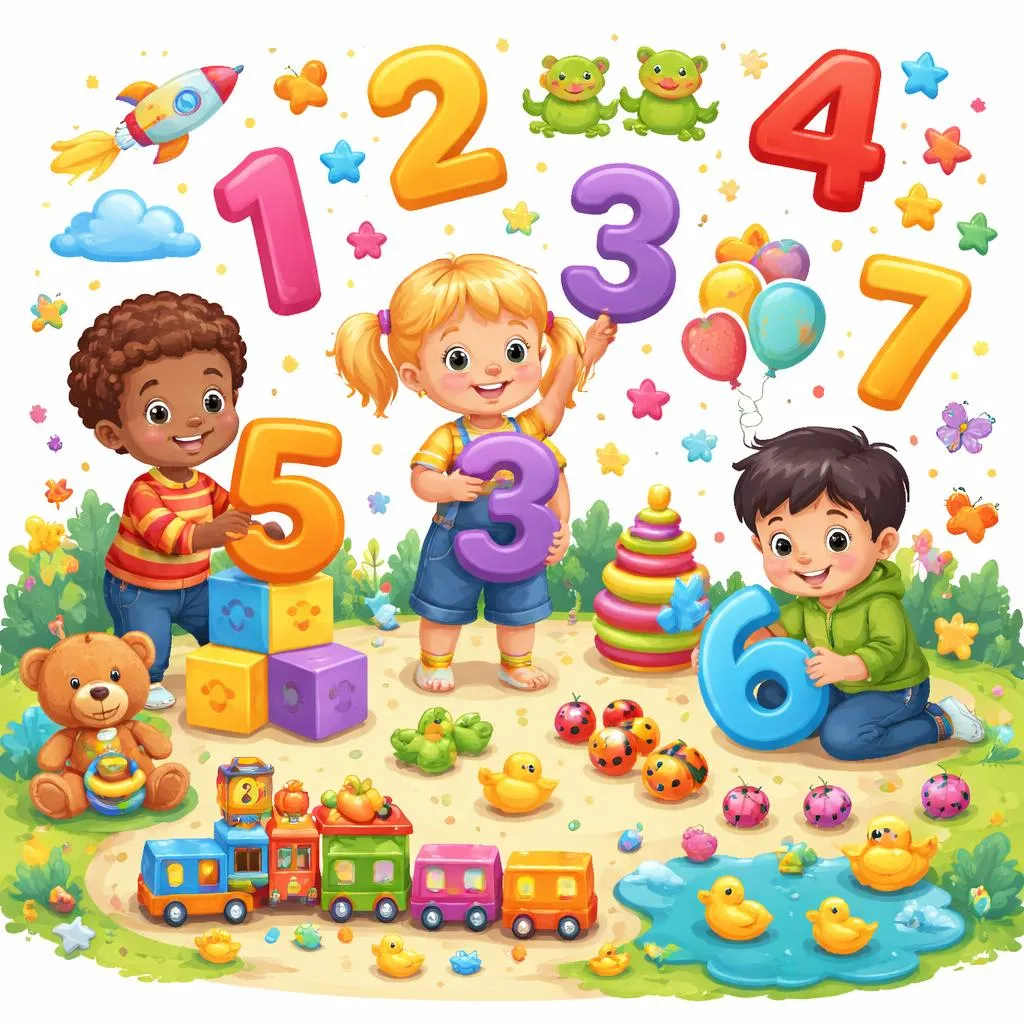

What is Learning the Numbers?
Learning the numbers is the first step in understanding math. Numbers are symbols that show quantity, position, or order. They are part of daily life and appear in toys, books, clocks, and games. Counting objects and recognizing numbers build strong math skills. Learning numbers also helps with reading, writing, and problem-solving.
Numbers are not only digits. They are also words and ideas that describe how many or which position something has. For example, the number “3” shows a quantity. The word “third” shows a position in a line. Understanding both forms makes numbers easier to use.
Meaning and Explanation
Numbers are symbols used to describe quantity or order. Digits from 0 to 9 form the foundation of all numbers. Combining digits creates larger numbers. For example, 10, 25, 100. Learning numbers includes saying them, writing them, and understanding what they represent. Numbers help measure objects, compare amounts, and organize items in order.
Children start with small numbers, usually 1 to 10. Recognizing these first makes it easier to learn larger numbers. Counting aloud strengthens memory and language skills. Using real objects while counting connects numbers to everyday life.
Categories of Numbers
Numbers can be grouped into different types:
Counting numbers: 1, 2, 3, 4… These numbers show how many objects there are.
Even and odd numbers: Even numbers can be divided by 2, like 2, 4, 6. Odd numbers cannot, like 1, 3, 5.
Ordinal numbers: First, second, third… These numbers show position or order.
Zero: Represents none or nothing. Zero is important because it completes the number system.
Learning categories helps children understand numbers in different situations. It also shows patterns, like even numbers forming pairs.
Daily Life Examples
Numbers appear everywhere in daily life. Counting toys: “I have 5 blocks.” Cooking: “Add 2 cups of milk.” Telling time: “It is 3 o’clock.” Money: “This costs 10 dollars.” Bus or train numbers: “Take bus number 7.”
Using numbers in real life makes them meaningful. Children see how numbers help organize the world. Counting steps, drawing shapes, and measuring ingredients all use numbers.
Printable Flashcards
Flashcards are a useful tool to learn numbers. Each card can have a number and a picture showing that quantity. For example, the number 4 with four apples. Flashcards help recognize numbers quickly. They are easy to use at home or in class.
Flashcards can be used for:
Matching games: Match numbers with objects.
Memory games: Find pairs of numbers or number words.
Ordering: Arrange numbers from smallest to largest.
Using flashcards makes learning interactive and fun.
Learning Activities and Games
Fun activities and games make numbers easier to remember.
Counting objects: Count toys, pencils, or fruits aloud.
Number matching: Match digits with sets of objects.
Number songs: Sing songs that include numbers, like “One, Two, Three, Four, Five.”
Number puzzles: Connect numbers in order to complete pictures.
Hopscotch game: Jump on numbers in sequence to reinforce counting.
Games help children learn without feeling like they are studying. They improve memory, focus, and problem-solving skills.
Vocabulary Learning
Numbers have words as well as digits. Example: 1 is “one,” 2 is “two,” 10 is “ten.” Learning number words improves reading and speaking skills. Children practice saying numbers correctly in sentences. For example: “I have three pencils.” Combining numbers with words strengthens both language and math skills.
Phonics Points
Number words can have tricky sounds. For example, “three” has the “th” sound. “Five” has the “f” sound. “Six” has the “s” sound. Singing number songs helps children practice these sounds naturally. Phonics practice improves reading skills while reinforcing counting.
Grammar Patterns with Numbers
Numbers can appear in many sentence patterns.
With nouns: “I have two books.”
Showing order: “She is first in line.”
Describing quantity: “I have many apples.”
Using zero: “There are zero cookies left.”
Understanding how numbers fit in sentences improves communication. Numbers are used in questions too: “How many pencils do you have?”
Learning Tips
Start with small numbers from 1 to 10. Use objects children can touch to connect numbers with reality. Repeat counting every day in different situations. Combine counting with songs, games, and stories. Encourage saying numbers aloud and writing them on paper. Gradually increase to larger numbers and simple addition or subtraction.
Educational Games
Playing games reinforces number learning.
Number hunt: Find hidden numbers around the room.
Number race: Arrange numbers in order quickly.
Memory game: Match number cards with pictures.
Cooking game: Measure ingredients using numbers.
Dice game: Roll dice and count the dots.
Games make learning numbers active and exciting. They also teach counting, pattern recognition, and problem-solving.
Numbers are everywhere, from toys and blocks to clocks and money. Learning the numbers helps children understand the world around them. Practicing counting, writing, and saying numbers builds a strong foundation for future math skills. Combining songs, games, and real-life examples makes learning numbers fun and natural. Numbers become easier to understand when children see and use them every day.