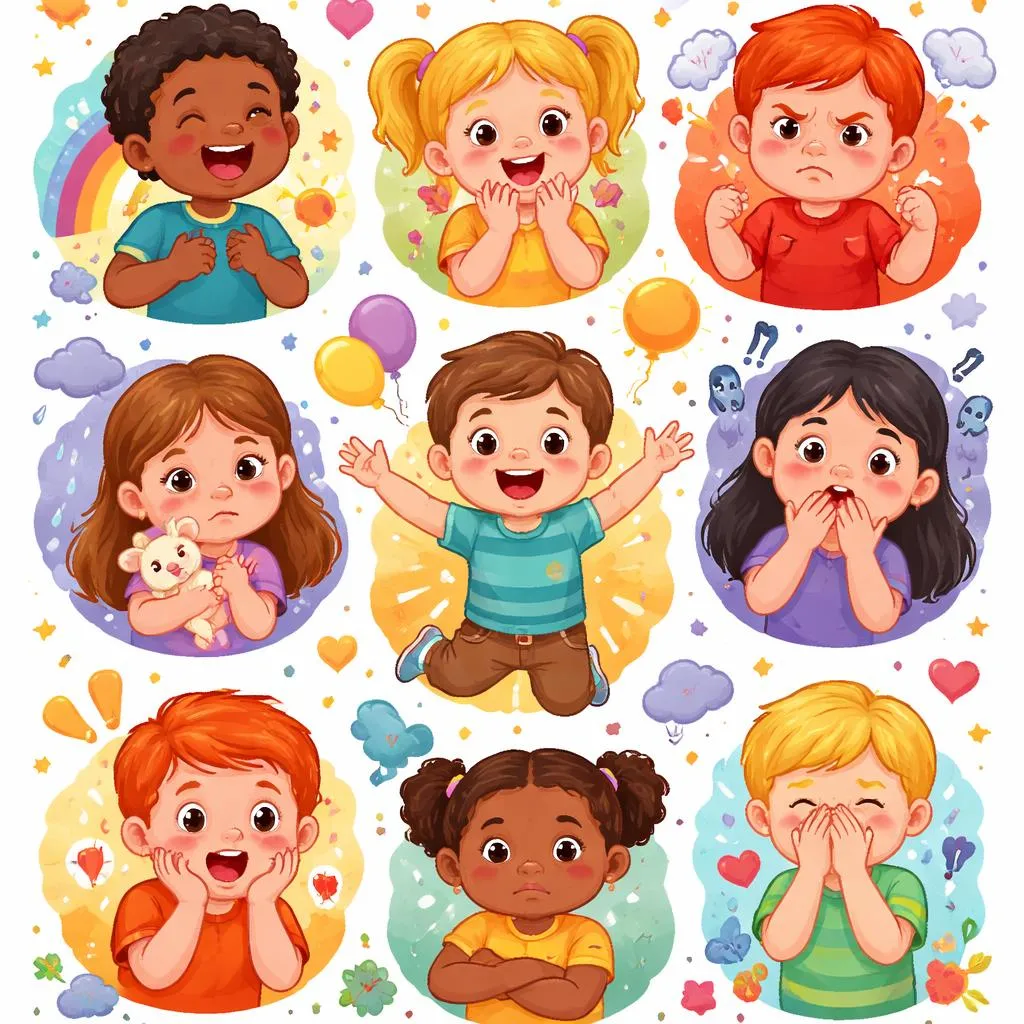

Dear parents and lovely children, today we will learn and practice with this type of English flashcard content: Emotions For Kids – Free Printable PDF
Word list: happy, sad, angry, scared, tired, mad, excited, calm, cry, laugh, worried, brave, kind, upset, lonely, nervous, shy, surprised, thankful, bored, jealous, proud, grumpy, silly, joyful, annoyed, peaceful, embarrassed, disappointed, furious, ashamed, delighted, frustrated, grateful, confused, hungry
Click here to download Emotions For Kids – Free Printable PDF
Understanding the Emotions Flashcard Words
Each word on these flashcards represents a different feeling or emotional state that children often experience. Here is a brief explanation of some key words and example sentences to help children understand and use them:
- Happy: Feeling joyful or pleased.
Example: "I feel happy when I play with my friends." - Sad: Feeling unhappy or sorrowful.
Example: "She was sad because her toy broke." - Angry: Feeling mad or upset.
Example: "He got angry when someone took his book." - Scared: Feeling afraid or frightened.
Example: "I was scared of the dark last night." - Tired: Feeling in need of rest or sleep.
Example: "After running, I felt tired." - Excited: Feeling very happy and eager.
Example: "She was excited to go to the zoo." - Calm: Feeling peaceful and relaxed.
Example: "Take deep breaths to feel calm." - Cry: To shed tears because of sadness or pain.
Example: "The baby began to cry when he was hungry." - Laugh: To make sounds expressing happiness.
Example: "We laugh when we hear a funny joke." - Worried: Feeling anxious or concerned.
Example: "He was worried about the test." - Brave: Showing courage and not afraid.
Example: "The firefighter was brave during the rescue." - Kind: Being nice and caring to others.
Example: "She is kind to her classmates." - Upset: Feeling unhappy or disturbed.
Example: "He was upset because he lost his toy." - Lonely: Feeling alone and sad.
Example: "Sometimes I feel lonely when no one plays with me." - Nervous: Feeling worried or uneasy.
Example: "I was nervous before my piano recital." - Shy: Feeling uncomfortable around others.
Example: "She is shy when meeting new people." - Surprised: Feeling shocked or amazed.
Example: "He was surprised by the birthday party." - Thankful: Feeling grateful or appreciative.
Example: "I am thankful for my family." - Bored: Feeling uninterested or tired of something.
Example: "I was bored during the long car ride." - Jealous: Feeling unhappy because someone else has something you want.
Example: "She was jealous of her brother’s new toy." - Proud: Feeling pleased about an achievement.
Example: "I am proud of my drawing." - Grumpy: Feeling irritable or bad-tempered.
Example: "He was grumpy because he didn’t sleep well." - Silly: Acting in a funny or playful way.
Example: "We made silly faces at each other." - Joyful: Feeling great happiness.
Example: "She felt joyful on her birthday." - Annoyed: Feeling slightly angry or irritated.
Example: "I was annoyed when the noise was too loud." - Peaceful: Feeling calm and quiet.
Example: "The garden was peaceful in the morning." - Embarrassed: Feeling shy or ashamed about something.
Example: "He was embarrassed when he tripped." - Disappointed: Feeling sad because something did not happen as hoped.
Example: "She was disappointed when the trip was canceled." - Furious: Feeling very angry.
Example: "He was furious when his bike was stolen." - Ashamed: Feeling guilty or embarrassed about something.
Example: "She felt ashamed for breaking the vase." - Delighted: Feeling very pleased or happy.
Example: "They were delighted to see the puppies." - Frustrated: Feeling upset because of difficulties.
Example: "I felt frustrated when I couldn’t solve the puzzle." - Grateful: Feeling thankful.
Example: "We are grateful for our teachers." - Confused: Feeling unsure or unclear.
Example: "He was confused by the tricky question." - Hungry: Feeling the need to eat.
Example: "I am hungry after playing outside."
How to Teach Emotions For Kids with Flashcards
Using these flashcards is a wonderful way for parents and teachers to help children recognize and express their feelings. Begin by showing each card and saying the word clearly. Encourage children to repeat the word and talk about times they have felt that emotion. Use facial expressions and body language to demonstrate the feelings, making the learning experience more interactive and memorable. Parents can incorporate these flashcards into daily conversations, asking children how they feel and helping them identify the correct emotion word. This practice builds emotional vocabulary and promotes emotional intelligence from an early age.
Fun Emotions For Kids Flashcard Games
To reinforce learning, play engaging games with the flashcards:
- Emotion Charades: Children pick a card and act out the emotion without speaking while others guess the word.
- Matching Game: Match flashcards with pictures or situations that represent the same emotion.
- Emotion Storytelling: Use flashcards to create short stories where children describe characters’ feelings.
- Feelings Bingo: Create bingo cards with emotion words and call them out for children to mark.
These games make learning emotions enjoyable and help children remember the words better.
Example Sentences with Emotions Vocabulary
Practicing sentences helps children use new words in context:
- "I feel happy when I get a hug."
- "She was nervous before her school play."
- "He is proud of his painting."
- "Sometimes I feel lonely when I am by myself."
- "We were excited to visit the amusement park."
Encourage children to create their own sentences using the flashcard words to deepen their understanding.
Free Emotions For Kids Flashcards PDF Download
Parents and educators can easily access and print the free Emotions For Kids flashcards PDF. This printable resource is perfect for classroom use, homeschooling, or at-home practice. Simply download the PDF, print the cards on sturdy paper, and cut them out. Having physical flashcards allows children to handle and interact with the words, enhancing tactile learning. The free download ensures that everyone can benefit from this valuable educational tool without any cost.
FAQ about Emotions For Kids Flashcards
Q: At what age can children start using these flashcards?
A: These flashcards are suitable for preschoolers and early elementary children, typically ages 3 to 8.
Q: How often should children practice with the flashcards?
A: Short daily sessions of 5-10 minutes are effective for steady learning without overwhelming the child.
Q: Can these flashcards help children with emotional regulation?
A: Yes, by recognizing and naming emotions, children can better understand and manage their feelings.
Q: Are there any digital versions available?
A: Currently, the flashcards are available as printable PDFs, but some websites may offer interactive digital versions.
Q: How can parents support children who struggle with certain emotions?
A: Parents can talk openly about feelings, model healthy emotional expression, and use the flashcards to discuss coping strategies.
By using these Emotions For Kids flashcards, children not only expand their English vocabulary but also gain important skills in emotional awareness and communication. This foundation supports their social development and helps them navigate their feelings confidently.
