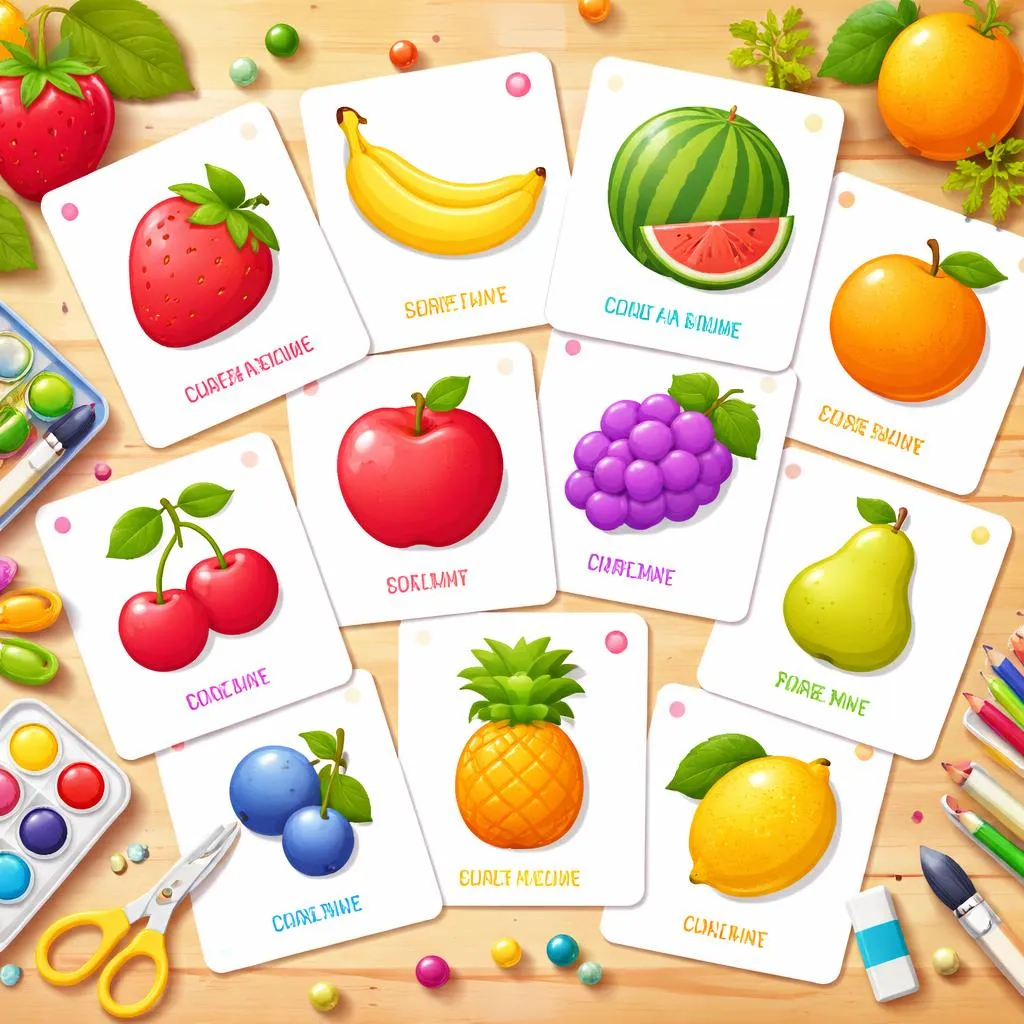

Dear parents and lovely children, today we will learn and practice with this type of English flashcard content: Fruit Flashcards For Kids – Free Printable PDF
Word list: apple, banana, grapes, pear, peach, plum, melon, kiwi, orange, lemon, lime, mango, berry, fig, cherry, date, papaya, apricot, pineapple, pomegranate, blueberry, raspberry, blackberry, watermelon, grapefruit, coconut, cranberry, lychee, durian, strawberry, avocado, fruit
Click here to download Fruit Flashcards For Kids – Free Printable PDF
Understanding the Fruit Flashcard Words
Each flashcard introduces a common fruit name that children can learn to recognize and pronounce. Here is a brief explanation of each word along with example sentences:
-
Apple: A round, sweet fruit that is usually red, green, or yellow.
Example: I like to eat a red apple every day. -
Banana: A long, yellow fruit that is soft and sweet inside.
Example: Bananas are my favorite snack. -
Grapes: Small, round fruits that grow in bunches and can be green, red, or purple.
Example: She picked some grapes from the vine. -
Pear: A sweet fruit with a rounded bottom and a narrow top.
Example: I ate a juicy pear for lunch. -
Peach: A soft, fuzzy fruit with sweet, orange flesh inside.
Example: The peach is ripe and delicious. -
Plum: A small, round fruit with smooth skin and a stone inside.
Example: Plums are tasty in summer. -
Melon: A large, juicy fruit with a hard rind and sweet flesh inside.
Example: Watermelon is a refreshing melon to eat in hot weather. -
Kiwi: A small brown fruit with green flesh and tiny black seeds.
Example: Kiwi is rich in vitamin C. -
Orange: A citrus fruit with a thick orange skin and juicy segments inside.
Example: I drink orange juice every morning. -
Lemon: A sour yellow citrus fruit used to add flavor.
Example: Add lemon to your tea for a fresh taste. -
Lime: A small green citrus fruit similar to lemon but less sour.
Example: Lime juice is great in summer drinks. -
Mango: A tropical fruit with sweet, orange flesh.
Example: Mangoes are delicious in smoothies. -
Berry: A small, juicy fruit such as strawberries or blueberries.
Example: I love eating mixed berries for breakfast. -
Fig: A soft fruit with a thin skin and many tiny seeds inside.
Example: Figs are sweet and healthy. -
Cherry: A small, round fruit that is red or dark purple.
Example: She put a cherry on top of the cake. -
Date: A sweet, brown fruit often eaten dried.
Example: Dates are popular in Middle Eastern desserts. -
Papaya: A tropical fruit with orange flesh and black seeds inside.
Example: Papaya helps with digestion. -
Apricot: A small orange fruit with smooth skin.
Example: Apricots are good for making jams. -
Pineapple: A tropical fruit with rough skin and sweet, yellow flesh.
Example: Pineapple is tasty in fruit salads. -
Pomegranate: A fruit with many juicy seeds inside a thick skin.
Example: Pomegranate seeds are red and crunchy. -
Blueberry: A small blue fruit that is sweet and nutritious.
Example: Blueberries are great in muffins. -
Raspberry: A red or black berry with a sweet and tart flavor.
Example: Raspberries are delicious in desserts. -
Blackberry: A dark purple berry that is juicy and sweet.
Example: We picked blackberries in the garden. -
Watermelon: A large fruit with green rind and sweet, red flesh.
Example: Watermelon is perfect for summer picnics. -
Grapefruit: A large citrus fruit with a slightly bitter taste.
Example: Grapefruit juice is healthy and refreshing. -
Coconut: A large fruit with a hard shell and white flesh inside.
Example: Coconut milk is used in many recipes. -
Cranberry: A small, red, sour berry often used in sauces.
Example: Cranberry sauce is served with turkey. -
Lychee: A small tropical fruit with rough skin and sweet white flesh.
Example: Lychee is popular in Asian desserts. -
Durian: A tropical fruit known for its strong smell and creamy flesh.
Example: Durian is called the "king of fruits" in some countries. -
Strawberry: A bright red, sweet fruit with tiny seeds on the outside.
Example: Strawberries are delicious with cream. -
Avocado: A green fruit with creamy flesh often used in salads.
Example: Avocado is healthy and tasty in sandwiches. -
Fruit: A general term for sweet and edible plant products.
How to Teach Fruit Flashcards with Flashcards
Parents and teachers can use these fruit flashcards to introduce children to new vocabulary in a fun and interactive way. Start by showing each card and pronouncing the fruit name clearly. Encourage children to repeat the word aloud. Use real fruits to connect the flashcard to the actual object, which helps reinforce learning. You can also group flashcards by color, size, or taste to teach categorization skills. Flashcards are portable, so practice can happen anywhere – at home, in the car, or during playtime.
Fun Fruit Flashcard Games
- Fruit Memory Match: Lay the flashcards face down and have children flip two at a time to find matching pairs. This improves memory and word recognition.
- Fruit Bingo: Create bingo cards with fruit pictures or names. Call out fruit names and have children mark their cards.
- Fruit Sorting: Ask children to sort flashcards into groups such as tropical fruits, berries, or citrus fruits.
- I Spy with Fruit: Use the flashcards to play “I spy” by describing a fruit’s color or shape and having children guess.
- Fruit Basket Toss: Place flashcards in a basket and have children toss a soft ball onto a card, then say the fruit’s name.
Example Sentences with Fruit Vocabulary
- I like to eat a juicy watermelon on hot days.
- The banana is yellow and sweet.
- Can you peel the orange, please?
- My favorite fruit is the strawberry because it’s very sweet.
- We made a smoothie with mango, banana, and kiwi.
Practice Exercises
- Match the fruit word to the correct picture.
- Write a sentence using your favorite fruit.
- Count how many fruits you can name in one minute.
- Draw your favorite fruit and label it.
Free Fruit Flashcards PDF Download
You can easily download and print these colorful fruit flashcards for free. They are designed to be kid-friendly with clear images and large text, perfect for young learners. Simply click the link provided to get your printable PDF. Print on cardstock for durability and cut out the cards for repeated use. Having physical flashcards at home or in the classroom makes learning hands-on and engaging.
FAQ about Fruit Flashcards
Q: At what age can children start using fruit flashcards?
A: Children as young as 2 years old can start learning simple fruit names with flashcards.
Q: How often should children practice with flashcards?
A: Short daily sessions of 5-10 minutes are effective for steady vocabulary growth.
Q: Can flashcards help with pronunciation?
A: Yes, repeating words aloud with flashcards improves pronunciation and confidence.
Q: Are these flashcards suitable for ESL learners?
A: Absolutely, fruit flashcards are a great tool for children learning English as a second language.
Q: What if my child loses interest?
A: Try incorporating games, real fruit, or storytelling to make learning more exciting.
Q: Can flashcards be used for writing practice?
A: Yes, children can copy the fruit names or write simple sentences using the words.
Using fruit flashcards is a fun and effective way to build early English vocabulary, encourage healthy eating habits, and develop language skills through interactive learning.
