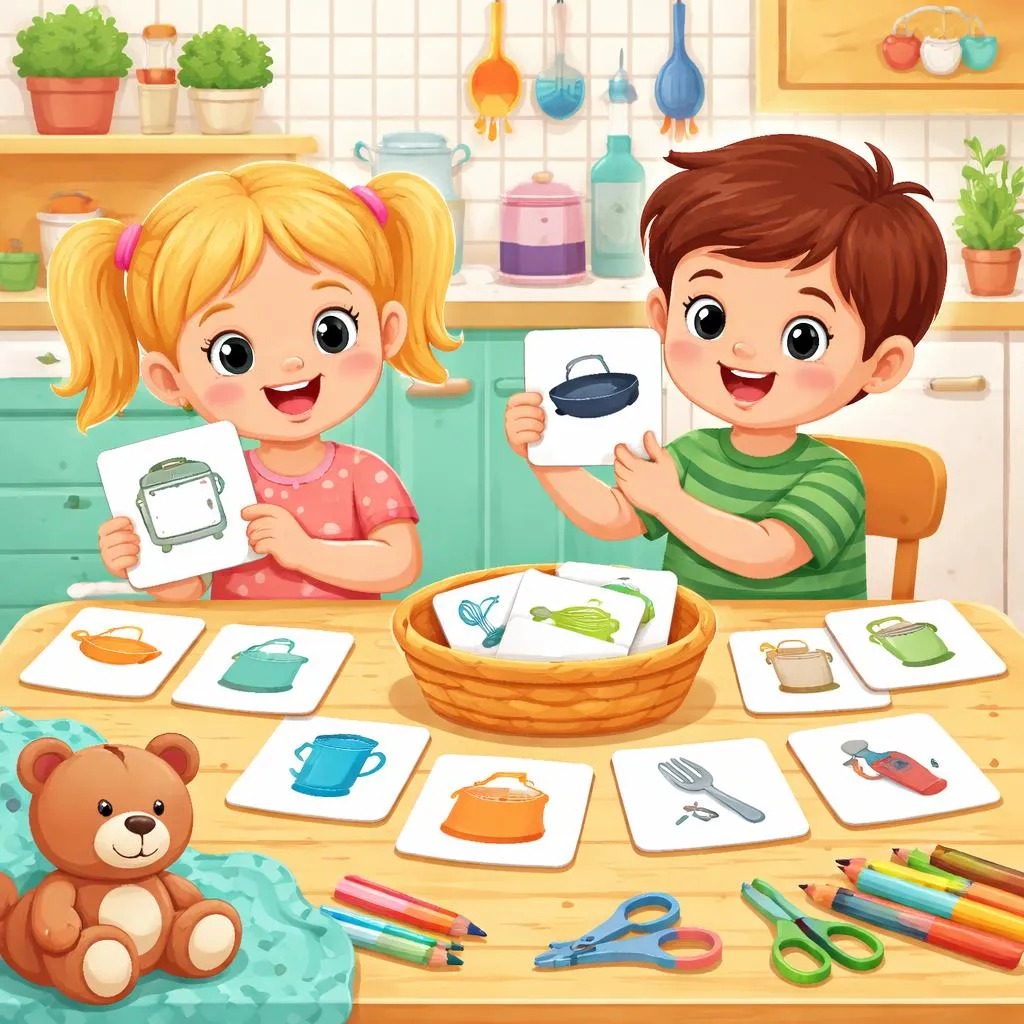

Dear parents and lovely children, today we will learn and practice with this type of English flashcard content: Kitchen Flashcards For Kids – Free Printable PDF
Word list: cup, plate, bowl, fork, spoon, knife, pot, pan, mug, straw, glass, tray, jug, lid, napkin, oven, stove, toaster, kettle, grill, blender, microwave, colander, whisk, tongs, measuring cup, spatula, chopping board, rice cooker, dishwasher, refrigerator, mixer, steamer, grater, wooden spoon, oven mitts, rolling pin, peeler, dish towel, drying rack, strainer, can opener, baking tray, apron, teapot, ice tray, ladle, muffin tin, kitchen scale, wok, chopsticks, water, cupboard, can
Click here to download Kitchen Flashcards For Kids – Free Printable PDF
Meaning and Usage of Kitchen Flashcard Words
- Cup: A small container used for drinking liquids.
Example: "I drink milk from my cup every morning." - Plate: A flat dish where food is served.
Example: "Please put your sandwich on the plate." - Bowl: A round container used for soup or cereal.
Example: "She ate cereal from a blue bowl." - Fork: A utensil with prongs used for eating.
Example: "Use a fork to eat your salad." - Spoon: A utensil used for eating soup or stirring.
Example: "He stirred his tea with a spoon." - Knife: A tool used for cutting food.
Example: "Be careful when using a knife to cut vegetables." - Pot: A deep container used for cooking.
Example: "The soup is boiling in the pot." - Pan: A shallow container for frying or cooking.
Example: "She cooked eggs in the pan." - Mug: A large cup, usually for hot drinks.
Example: "I like to drink hot chocolate from my mug." - Straw: A thin tube used for drinking liquids.
Example: "He drank juice through a straw." - Glass: A transparent container for drinks.
Example: "She filled her glass with water." - Tray: A flat object used to carry food or drinks.
Example: "The waiter carried the food on a tray." - Jug: A large container for holding liquids.
Example: "There is water in the jug." - Lid: A cover for a pot or container.
Example: "Put the lid on the pot to keep the heat in." - Napkin: A piece of cloth or paper used to clean hands or mouth.
Example: "Use a napkin to wipe your mouth." - Oven: A kitchen appliance for baking or roasting.
Example: "The cake is baking in the oven." - Stove: A cooking appliance with burners.
Example: "She boiled water on the stove." - Toaster: A device for toasting bread.
Example: "He made toast using the toaster." - Kettle: A container used to boil water.
Example: "The kettle is whistling, the water is ready." - Grill: A device or surface for cooking food with direct heat.
Example: "We grilled vegetables on the barbecue grill." - Blender: A machine used to mix or puree food.
Example: "She made a smoothie with the blender." - Microwave: An appliance to heat food quickly.
Example: "Heat your lunch in the microwave." - Colander: A bowl with holes used to drain water from food.
Example: "Rinse the pasta in the colander." - Whisk: A tool for beating or mixing ingredients.
Example: "Use a whisk to beat the eggs." - Tongs: A tool used to pick up or hold food.
Example: "Use tongs to turn the meat on the grill." - Measuring cup: A cup used to measure ingredients.
Example: "Pour two cups of flour into the measuring cup." - Spatula: A tool used to flip or spread food.
Example: "Flip the pancake with the spatula." - Chopping board: A flat surface for cutting food.
Example: "Cut the vegetables on the chopping board." - Rice cooker: An appliance to cook rice.
Example: "The rice cooker makes perfect rice every time." - Dishwasher: A machine that washes dishes automatically.
Example: "Put the dirty plates in the dishwasher." - Refrigerator: An appliance to keep food cold.
Example: "Store milk in the refrigerator." - Mixer: A device to mix ingredients.
Example: "Use the mixer to make cake batter." - Steamer: A device to cook food with steam.
Example: "Steam the vegetables in the steamer." - Grater: A tool to shred food like cheese or vegetables.
Example: "Grate the cheese using the grater." - Wooden spoon: A spoon made of wood for cooking.
Example: "Stir the soup with a wooden spoon." - Oven mitts: Gloves to protect hands from heat.
Example: "Use oven mitts to take the hot tray out of the oven." - Rolling pin: A tool to flatten dough.
Example: "Roll the dough with the rolling pin." - Peeler: A tool to remove the skin from fruits or vegetables.
Example: "Peel the carrots with a peeler." - Dish towel: A towel to dry dishes.
Example: "Dry the plates with a dish towel." - Drying rack: A rack to dry washed dishes.
Example: "Place the cups on the drying rack." - Strainer: A tool to separate solids from liquids.
Example: "Strain the juice through the strainer." - Can opener: A tool to open cans.
Example: "Use the can opener to open the soup can." - Baking tray: A flat tray for baking food in the oven.
Example: "Put the cookies on the baking tray." - Apron: A garment worn to protect clothes while cooking.
Example: "Wear an apron when baking." - Teapot: A pot to brew and serve tea.
Example: "Pour tea from the teapot." - Ice tray: A tray to make ice cubes.
Example: "Fill the ice tray with water and freeze it." - Ladle: A large spoon for serving soup or stew.
Example: "Use a ladle to serve the soup." - Muffin tin: A tray with cups for baking muffins.
Example: "Pour the batter into the muffin tin." - Kitchen scale: A device to weigh ingredients.
Example: "Weigh the flour on the kitchen scale." - Wok: A round-bottomed pan used in Asian cooking.
Example: "Stir-fry vegetables in the wok." - Chopsticks: Eating utensils used mainly in Asian cultures.
Example: "She eats noodles with chopsticks." - Water: A liquid essential for drinking and cooking.
Example: "Drink plenty of water every day." - Cupboard: A cabinet for storing kitchen items.
Example: "The plates are in the cupboard." - Can: A metal container for food or drink.
Example: "Open the can of beans for dinner."
How to Teach Kitchen Flashcards with Flashcards
Parents and teachers can use these kitchen flashcards to introduce children to common kitchen items and utensils in a fun and interactive way. Start by showing each flashcard and saying the word clearly. Encourage children to repeat the word after you to practice pronunciation. Use real kitchen items where possible to create a hands-on learning experience. You can also group the flashcards by categories such as cooking tools, eating utensils, or appliances to help children organize their vocabulary. Flashcards can be used during storytime, role-play cooking games, or simple Q&A sessions to reinforce learning.
Fun Kitchen Flashcard Games
- Memory Match: Place flashcards face down and have children flip two at a time to find matching pairs.
- Flashcard Bingo: Create bingo cards with pictures or words from the flashcards and call out words for children to mark.
- What’s Missing?: Show a group of flashcards, then remove one while the child closes their eyes. Ask which card is missing.
- I Spy: Use flashcards to play “I spy” with kitchen items around the house.
- Role Play: Pretend to cook using flashcards as props and practice sentences like “I am using a spatula.”
Example Sentences with Kitchen Vocabulary
- "Can you pass me the spoon, please?"
- "The microwave is very hot."
- "I like to drink tea from my mug."
- "We need a chopping board to cut the vegetables."
- "The oven mitts keep my hands safe."
Practice Exercises
- Match the word to the correct picture.
- Fill in the blanks: “I use a ___ to cut bread.”
- Say the word aloud and spell it.
- Draw your favorite kitchen item and label it.
Free Kitchen Flashcards PDF Download
You can download and print the full set of kitchen flashcards for free from the provided link. These printable flashcards are perfect for home or classroom use. Print on sturdy paper, cut out the cards, and laminate them for durability. Having physical flashcards allows children to touch and interact with the words, making learning more engaging. Use the flashcards anytime to review or introduce new vocabulary related to the kitchen.
FAQ about Kitchen Flashcards
Q: What age group are these flashcards suitable for?
A: These flashcards are ideal for preschoolers and early elementary children aged 3-8 years.
Q: Can these flashcards help with speaking skills?
A: Yes, practicing with flashcards helps children improve pronunciation, vocabulary, and sentence formation.
Q: How often should children practice with flashcards?
A: Short daily sessions of 10-15 minutes are effective for steady progress.
Q: Are there more advanced kitchen vocabulary flashcards?
A: Yes, you can find sets with more complex kitchen tools and cooking terms as children advance.
Q: Can parents use these flashcards for bilingual learning?
A: Absolutely! Parents can write translations on the back to support bilingual education.
Additional Activities
- Cooking together using the flashcard words as a checklist.
- Creating a kitchen vocabulary scrapbook with pictures and words.
- Watching simple cooking videos and identifying items from the flashcards.
Using kitchen flashcards not only builds vocabulary but also encourages curiosity about cooking and healthy eating habits. Enjoy learning and exploring the kitchen world with your children!
