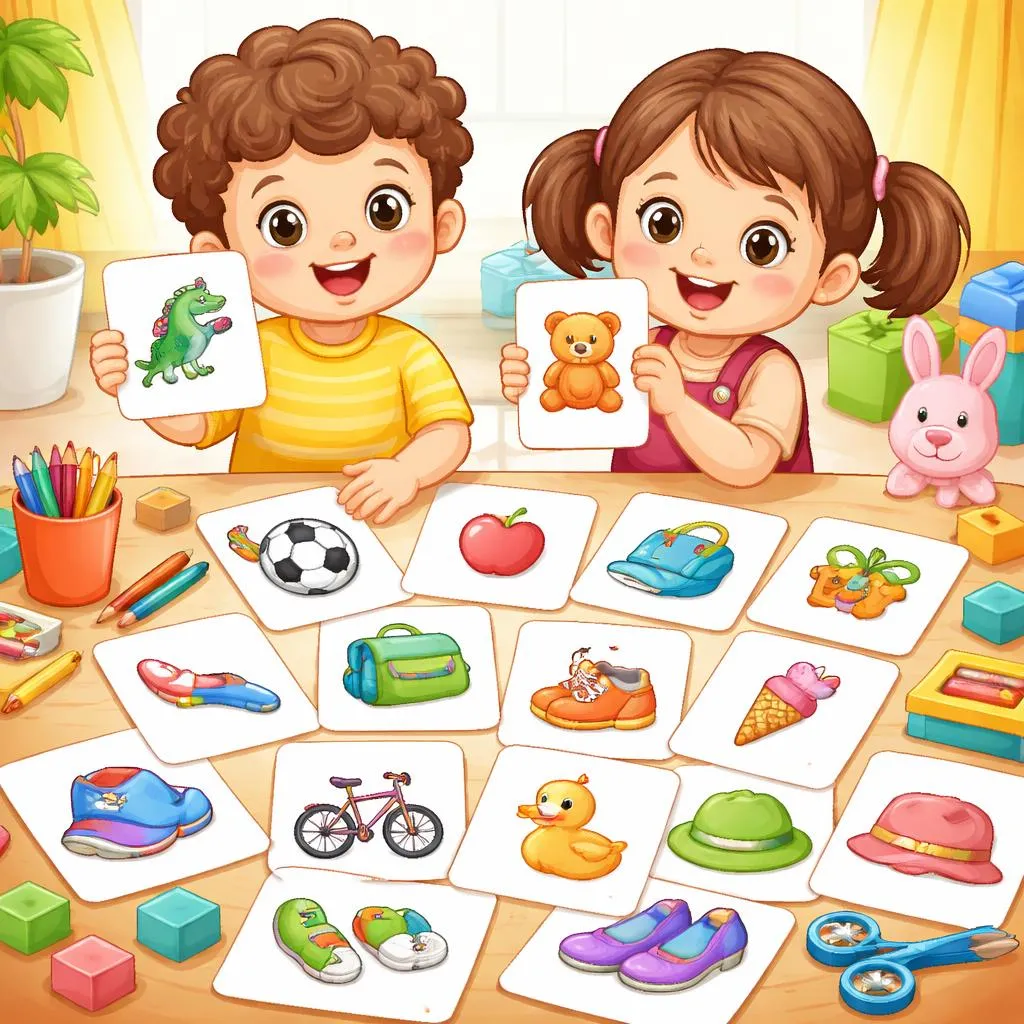

Dear parents and lovely children, today we will learn and practice with this type of English flashcard content: My Things Flashcards For Kids – Free Printable PDF
Word list: toy, book, bag, pen, pencil, crayon, eraser, ruler, scissors, notebook, ball, blocks, doll, game, phone, tablet, laptop, marker, glue, chalk, paint, sticker, clock, camera, puzzle, robot, joystick, remote, keychain, headphones, helmet, watch, badge, wallet, flashlight, binoculars, charger, car, truck, bike, toys, teddy bear, rubber duck, balloon, diaper, crib, spade, bucket, paper, recess, school bag, chess, racket
Click here to download My Things Flashcards For Kids – Free Printable PDF
Meaning and Usage of Each Flashcard Word
- Toy: A plaything for children. Example: "I have a new toy car."
- Book: A set of written or printed pages bound together. Example: "She reads a book every night."
- Bag: A container used to carry things. Example: "He put his lunch in the bag."
- Pen: A tool used for writing with ink. Example: "Please use a pen to sign your name."
- Pencil: A writing instrument with a graphite core. Example: "Draw a picture with your pencil."
- Crayon: A stick of colored wax used for drawing. Example: "Color the rainbow with crayons."
- Eraser: A tool to remove pencil marks. Example: "Use the eraser to fix your mistake."
- Ruler: A tool to measure length. Example: "Measure the table with a ruler."
- Scissors: A tool for cutting paper or fabric. Example: "Cut the paper carefully with scissors."
- Notebook: A book for writing notes. Example: "Write your homework in the notebook."
- Ball: A round object used in games. Example: "Throw the ball to your friend."
- Blocks: Small building pieces for play. Example: "Build a tower with blocks."
- Doll: A toy figure that looks like a person. Example: "She plays with her doll."
- Game: An activity for fun or competition. Example: "Let's play a board game."
- Phone: A device used to talk to others. Example: "He called me on the phone."
- Tablet: A small, flat computer. Example: "Watch videos on the tablet."
- Laptop: A portable computer. Example: "Do your homework on the laptop."
- Marker: A pen with colored ink for drawing. Example: "Write your name with a marker."
- Glue: A sticky substance to join things. Example: "Use glue to stick the paper."
- Chalk: A soft white or colored stick for writing on blackboards. Example: "Draw shapes with chalk."
- Paint: Colored liquid used for art. Example: "Paint a picture of a tree."
- Sticker: A small piece of paper with adhesive. Example: "Put a sticker on your notebook."
- Clock: A device that shows time. Example: "Look at the clock to see the time."
- Camera: A device to take photos. Example: "Take a picture with the camera."
- Puzzle: A game where pieces fit together. Example: "Complete the puzzle together."
- Robot: A machine that can move and do tasks. Example: "The robot can walk and talk."
- Joystick: A control stick for games. Example: "Use the joystick to play the video game."
- Remote: A device to control electronics from a distance. Example: "Change the channel with the remote."
- Keychain: A small chain holding keys. Example: "Keep your keys on the keychain."
- Headphones: Devices worn on ears to listen. Example: "Listen to music with headphones."
- Helmet: Protective headgear. Example: "Wear a helmet when riding a bike."
- Watch: A device to tell time worn on the wrist. Example: "Look at your watch to check the time."
- Badge: A small emblem or sign. Example: "She earned a badge for good behavior."
- Wallet: A small case for money and cards. Example: "Put your money in the wallet."
- Flashlight: A portable light source. Example: "Use a flashlight in the dark."
- Binoculars: A tool to see far away. Example: "Look at birds through binoculars."
- Charger: A device to recharge electronics. Example: "Plug in the charger to charge your tablet."
- Car: A vehicle for transportation. Example: "We drove the car to school."
- Truck: A large vehicle for carrying goods. Example: "The truck delivered the boxes."
- Bike: A two-wheeled vehicle powered by pedaling. Example: "Ride your bike in the park."
- Toys: Objects children play with. Example: "Put your toys away after playing."
- Teddy Bear: A soft toy bear. Example: "She hugs her teddy bear at night."
- Rubber Duck: A toy duck made of rubber. Example: "Bath time is fun with a rubber duck."
- Balloon: A colorful inflatable object. Example: "The balloon flew up in the sky."
- Diaper: A garment for babies. Example: "Change the baby's diaper."
- Crib: A small bed for babies. Example: "The baby sleeps in the crib."
- Spade: A tool for digging. Example: "Dig sand with the spade."
- Bucket: A container for carrying things. Example: "Fill the bucket with water."
- Paper: Thin material for writing or drawing. Example: "Draw a picture on paper."
- Recess: A break time at school. Example: "We play outside during recess."
- School Bag: A bag to carry school supplies. Example: "Pack your books in the school bag."
- Chess: A strategic board game. Example: "Play chess with your friend."
- Racket: A tool to hit balls in sports. Example: "Use a racket to play tennis."
How to Teach My Things Flashcards with Flashcards
Parents and teachers can use these flashcards to introduce children to everyday objects and vocabulary. Start by showing each flashcard and saying the word clearly. Encourage children to repeat after you to practice pronunciation. Use real-life objects when possible to connect the word with the item. For example, hold a pencil when saying "pencil." Make learning interactive by asking children to find the item around them or draw it. Flashcards can also be used to build sentences, such as "I have a red ball," helping children understand word usage in context.
Fun My Things Flashcard Games
- Memory Match: Lay flashcards face down and take turns flipping two cards to find matching pairs.
- Flashcard Bingo: Create bingo cards with pictures or words and call out flashcard words for children to mark.
- I Spy: Use flashcards to play "I spy with my little eye," encouraging children to find objects based on descriptions.
- Sorting Game: Sort flashcards into categories like toys, school supplies, or electronics.
- Flashcard Sentence Building: Use flashcards to create simple sentences, e.g., "The doll is pink."
Example Sentences with My Things Vocabulary
- "Can you pass me the scissors, please?"
- "I lost my eraser; do you have one?"
- "She put her crayons in the bag."
- "We played with blocks during recess."
- "The robot moves when I press the button."
- "He wears a helmet when riding his bike."
- "I use a laptop to do my homework."
- "The clock shows it is time for lunch."
Free My Things Flashcards PDF Download
You can download and print these My Things Flashcards for free from the provided link. Printing them on sturdy paper or cardstock is recommended for durability. Laminating the cards can help them last longer, especially for repeated use in classrooms or at home. Use the printable flashcards for daily practice, games, and interactive learning sessions to help children build their English vocabulary effectively.
FAQ about My Things Flashcards
Q1: What age group are these flashcards suitable for?
A1: These flashcards are ideal for preschoolers and early elementary children aged 3-8 years.
Q2: How often should children practice with flashcards?
A2: Short daily sessions of 10-15 minutes are effective for retention and engagement.
Q3: Can these flashcards be used for group learning?
A3: Yes, they work well in classrooms, playgroups, and family learning environments.
Q4: How can I make learning more fun with these flashcards?
A4: Incorporate games, songs, and real-life object identification to keep children interested.
Q5: Are there digital versions of these flashcards?
A5: Some websites offer digital flashcards and apps that complement printable versions.
Using these My Things Flashcards, children will expand their vocabulary, improve pronunciation, and develop sentence-building skills while having fun. Parents and educators can create a rich learning environment that encourages curiosity and language growth through interactive and playful methods.
