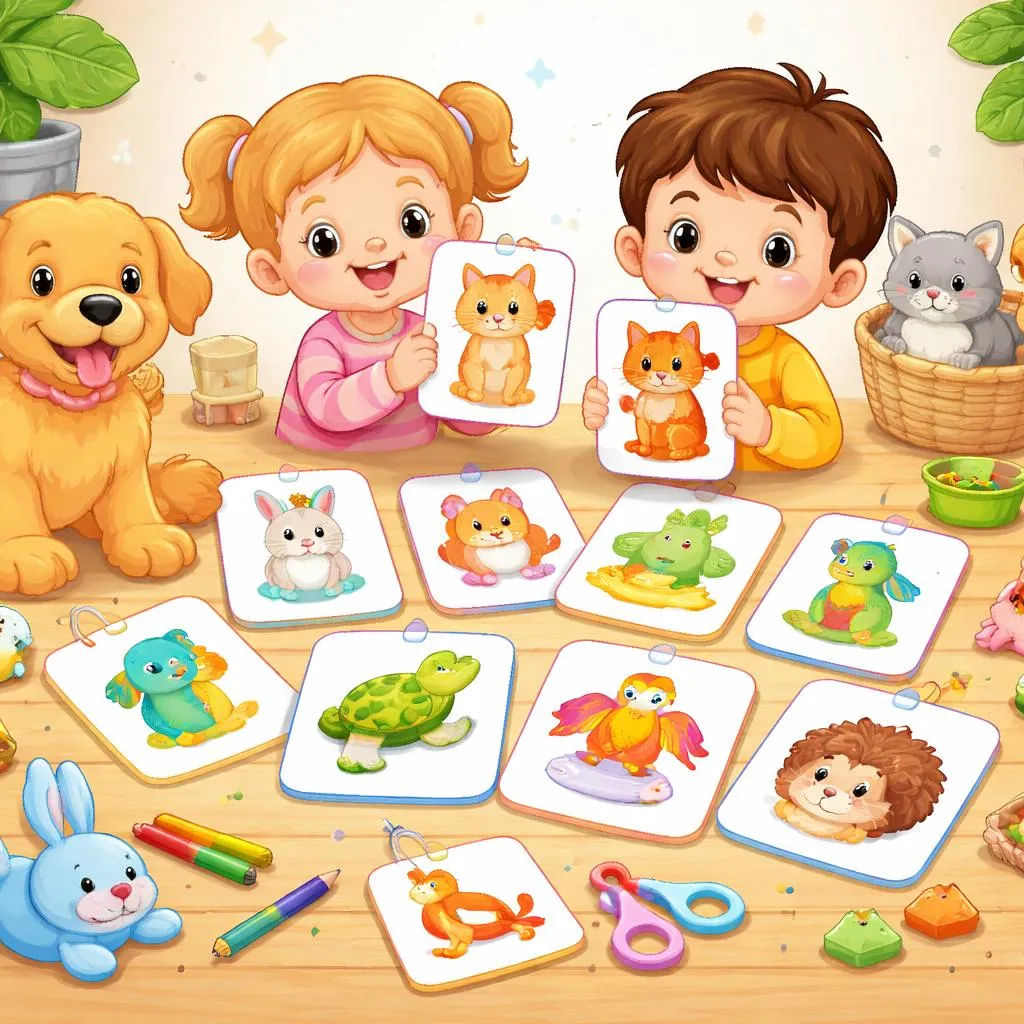

Dear parents and lovely children, today we will learn and practice with this type of English flashcard content: Pets Flashcards For Kids – Free Printable PDF
Word list: dog, cat, fish, bird, hamster, rabbit, turtle, frog, lizard, guinea pig, puppy, kitten, snake, parrot, mouse, rat, chinchilla, hedgehog, gerbil, canary, goldfish, cockatiel, gecko, ferret, budgie, betta, tortoise, caterpillar, snail, iguana, spider
Click here to download Pets Flashcards For Kids – Free Printable PDF
Meaning and Explanation of Each Flashcard Word
- Dog: A common household pet known for loyalty and friendliness.
Example: "The dog is barking loudly in the yard." - Cat: A small, furry animal often kept as a pet, known for being playful and independent.
Example: "My cat likes to sleep on the windowsill." - Fish: An aquatic animal that lives in water and is often kept in aquariums.
Example: "We have a goldfish swimming in the bowl." - Bird: A feathered animal that can fly and often sings.
Example: "The bird is building a nest in the tree." - Hamster: A small rodent pet that loves to run on wheels.
Example: "My hamster is eating some seeds." - Rabbit: A furry animal with long ears that hops around.
Example: "The rabbit is nibbling on a carrot." - Turtle: A reptile with a hard shell that moves slowly.
Example: "The turtle is hiding in its shell." - Frog: An amphibian that can jump and lives near water.
Example: "The frog is croaking by the pond." - Lizard: A small reptile with scaly skin that can climb walls.
Example: "The lizard is sunbathing on the rock." - Guinea Pig: A small, gentle rodent often kept as a pet.
Example: "The guinea pig loves to eat fresh vegetables." - Puppy: A young dog.
Example: "The puppy is learning to sit." - Kitten: A young cat.
Example: "The kitten is playing with a ball of yarn." - Snake: A legless reptile that slithers on the ground.
Example: "The snake is hiding under the leaves." - Parrot: A colorful bird that can mimic sounds.
Example: "The parrot says, ‘Hello!’" - Mouse: A small rodent with a long tail.
Example: "The mouse is running across the floor." - Rat: A larger rodent similar to a mouse.
Example: "The rat is looking for food." - Chinchilla: A small rodent with very soft fur.
Example: "The chinchilla is very fluffy." - Hedgehog: A small animal with spines on its back.
Example: "The hedgehog curls up into a ball." - Gerbil: A small burrowing rodent.
Example: "The gerbil is digging in its cage." - Canary: A small yellow bird known for singing.
Example: "The canary sings every morning." - Goldfish: A popular pet fish with bright orange color.
Example: "The goldfish swims happily in the bowl." - Cockatiel: A small parrot with a crest on its head.
Example: "The cockatiel whistles a tune." - Gecko: A small lizard that can climb walls and ceilings.
Example: "The gecko is hiding behind the curtain." - Ferret: A playful, long-bodied animal related to weasels.
Example: "The ferret loves to explore the house." - Budgie: A small parakeet often kept as a pet.
Example: "The budgie is chirping softly." - Betta: A brightly colored fish known for its flowing fins.
Example: "The betta fish flares its fins when it sees another fish." - Tortoise: A land-dwelling reptile with a hard shell.
Example: "The tortoise moves slowly across the garden." - Caterpillar: The larval stage of a butterfly or moth.
Example: "The caterpillar is crawling on the leaf." - Snail: A slow-moving mollusk with a spiral shell.
Example: "The snail leaves a shiny trail behind." - Iguana: A large green lizard often kept as a pet.
Example: "The iguana basks in the sunlight." - Spider: An eight-legged arachnid that spins webs.
Example: "The spider is spinning a web in the corner."
How to Teach Pets Flashcards with Flashcards
Parents and teachers can use these pets flashcards to introduce children to the names and characteristics of common pets and small animals. Start by showing the flashcards one by one, saying the name clearly, and encouraging children to repeat after you. Use pictures to help children associate the word with the animal’s image. You can also describe simple facts about each pet, such as where it lives or what it likes to eat. This method helps children build vocabulary and improve pronunciation. Flashcards can be used in daily routines, such as during storytime or playtime, to reinforce learning in a fun and interactive way.
Fun Pets Flashcard Games
- Memory Match: Place all flashcards face down and have children flip two at a time to find matching pairs of animals or their baby names (e.g., dog and puppy).
- Guess the Pet: Show a flashcard and give clues about the animal (e.g., "I have a shell and move slowly"). Children guess the pet.
- Animal Sounds: Play sounds of pets and ask children to match the sound with the correct flashcard.
- Flashcard Bingo: Create bingo cards with pictures of pets and call out the animal names for children to mark.
Example Sentences with Pets Vocabulary
- "The puppy is very playful and loves to run."
- "My cat likes to chase the bird in the garden."
- "We feed the goldfish every morning."
- "The turtle moves slowly but steadily."
- "The parrot can say many words."
Practice Exercises
- Ask children to name three pets they see in the flashcards.
- Have children draw their favorite pet and describe it using simple sentences.
- Encourage children to form sentences using flashcard words, e.g., "The rabbit is white."
- Create a story together using five different pets from the flashcards.
Free Pets Flashcards PDF Download
You can easily download and print the free Pets Flashcards PDF to use at home or in the classroom. This printable resource includes colorful, clear images of each pet along with their names, making it perfect for early learners. Printing the flashcards on sturdy paper or laminating them will help them last longer through many fun learning sessions. Access the PDF anytime and share it with friends or family to support children’s English vocabulary development about pets.
FAQ about Pets Flashcards
Q: What age group are these flashcards suitable for?
A: These flashcards are ideal for preschool and early elementary children aged 3-8 years.
Q: How often should children practice with flashcards?
A: Short daily sessions of 5-10 minutes are effective for steady vocabulary improvement.
Q: Can flashcards help with pronunciation?
A: Yes, repeating words aloud while looking at the pictures helps children learn correct pronunciation.
Q: What if my child is shy to speak?
A: Encourage gentle practice by repeating words together or playing games that involve naming pets.
Q: Are there other ways to use these flashcards?
A: Yes, flashcards can be used for storytelling, sorting animals by type, or creating simple quizzes.
Using these pets flashcards regularly will build children’s confidence and expand their English vocabulary in a fun, engaging way!
