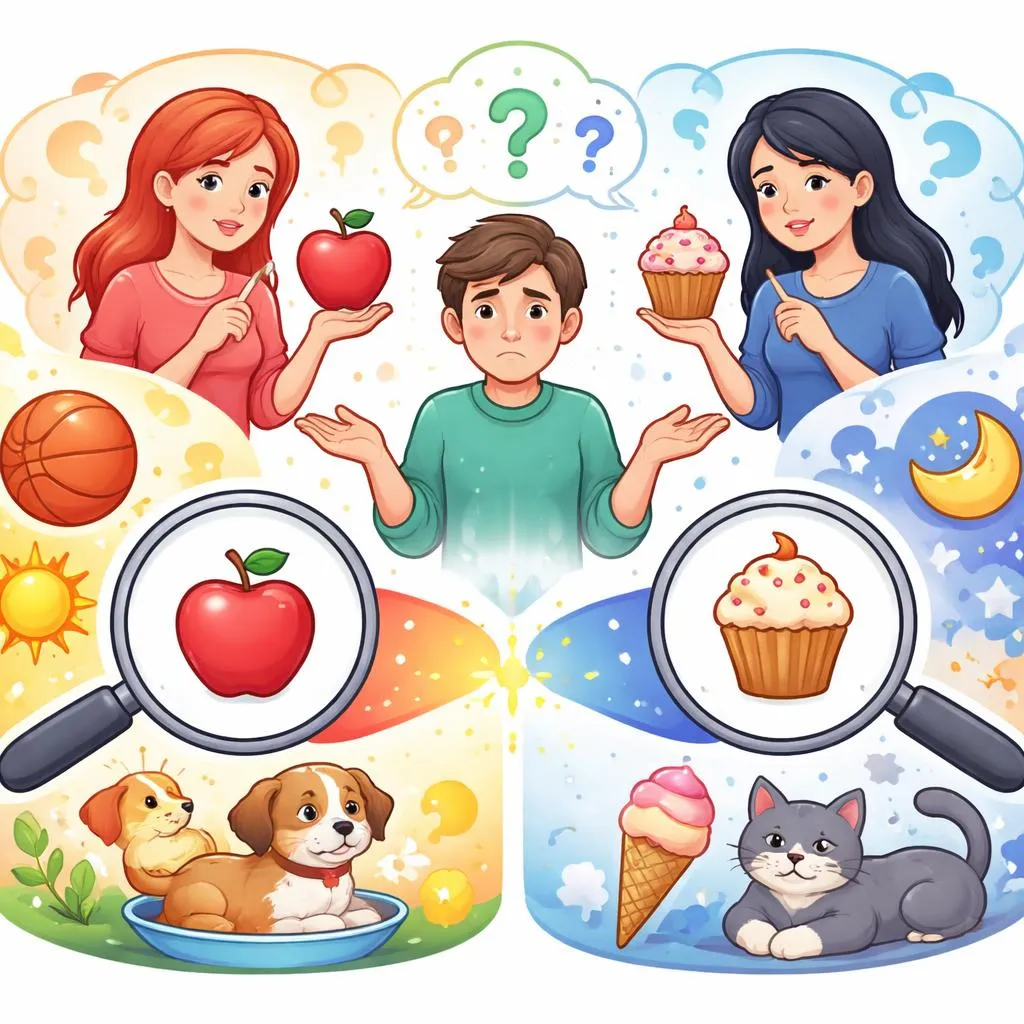

An apple and an orange. One is red. One is orange. They are not the same.
That is difference. Today we learn four words.
“Differ,” “difference,” “different,” and “indifferent.”
Each word shares the idea of not being the same or not caring. Each does a different job.
Parents and children can learn these words together. They help with comparing.
What Does “Same Word, Different Forms” Mean?
One idea takes different shapes. The idea here is being unlike or not caring.
“Differ” is a verb. “Our opinions differ on this topic.” Action.
“Difference” is a noun. “The difference between cats and dogs is big.” Distinction.
“Different” is an adjective. “You have a different hat than mine.” Not the same.
“Indifferent” is an adjective. “I am indifferent about which movie we watch.” Not caring.
Same root. Different endings. Different jobs. The unlikeness or neutrality stays.
Personal Pronouns Change Their Form
Pronouns change for grammar. “I” becomes “me.” “We” becomes “us.”
Our words change for role and description. “These two differ.” Action.
“The difference is clear.” Noun. “That is different.” Describes.
“You seem indifferent.” Describes.
Pronouns help us speak faster. Word families help us talk about choices and comparisons.
When children know these four words, they describe preferences.
From Verb to Noun to Adjective to Adverb – One Family, Many Words
“Differ” is a verb. “Siblings often differ in their tastes.” Action.
“Difference” is a noun. “Spot the difference between these pictures.” Distinction.
“Different” is an adjective. “Different cultures have different foods.” Not the same.
“Indifferent” is an adjective. “He was indifferent to the prize.” Uninterested.
We have adverbs “differently” (from different) and “indifferently.” “She acted indifferently.” Not in keywords.
Four members. Very useful for math and feelings.
One Root, Many Roles – How Words Grow from Actions to Qualities
The root “differ” comes from Latin “differre.” “Dis-” means apart. “Ferret” means to carry. To carry apart.
From that root, we add “-ence” to make a noun. “Difference” means the state of being apart.
We add “-ent” to make an adjective. “Different” means not the same.
We add “in-” as a prefix to make the opposite. “Indifferent” means not caring (literally “not different” – but evolved to mean neutral).
Help your child see this pattern. Differ is the action. Difference is the distinction. Different describes unalike things. Indifferent describes not caring.
Same Meaning, Different Jobs – Is It a Verb or a Noun?
Look at “differ.” Always a verb. “My answer differs from yours.” Action.
“Difference” is always a noun. “The difference is two inches.” Distinction.
“Different” is always an adjective. “We have different shoes.” Describes.
“Indifferent” is always an adjective. “She was indifferent to the debate.” Describes.
No word plays two jobs. Each has one clear role.
Teach children to look at the endings. “-ence” noun. “-ent” adjective. “in- + different” adjective opposite.
“Differ” alone is the verb.
Adjectives and Adverbs – When Do We Add -ly?
We add “-ly” to “different” to make “differently.” This is an adverb.
“They dress differently.” Means in a different way.
We add “-ly” to “indifferent” to make “indifferently.” “He shrugged indifferently.”
For children, these are useful but not in keywords.
Watch Out for Tricky Spelling Changes (Double Letters, y to i, and More)
Spelling here is very regular. No double letters. No y to i changes.
“Differ” adds “-ence” to make “difference.” Just add. Keep the “f” and “e.”
“Differ” adds “-ent” to make “different.” Just add.
“In-” adds to “different” to make “indifferent.” In + different = indifferent.
No dropping. No vowel changes. Very clean.
Practice with your child. Write “differ.” Add “ence.” You get “difference.” Add “ent.” You get “different.” Put “in” in front of “different.” You get “indifferent.”
No tricks.
Let’s Practice – Can You Choose the Right Form?
Try these sentences. Fill in the blank with differ, difference, different, or indifferent.
Twins may _____ in personality even if they look alike. (action verb)
The _____ between the two paths is distance. (noun)
She wore a _____ dress than her sister. (adjective)
He was _____ to the argument; he did not care who won. (adjective)
My opinion _____ from yours on this matter. (action verb)
Can you find the _____ in these drawings? (noun)
I like _____ flavors of ice cream. (adjective)
The cat was _____ to the loud noise; it kept sleeping. (adjective)
Answers: 1 differ, 2 difference, 3 different, 4 indifferent, 5 differs, 6 difference, 7 different, 8 indifferent.
Number 5 uses “differs” (third person singular). Our keyword is “differ.”
Number 8 uses “indifferent” meaning not caring.
Tips for Parents – Help Your Child Learn Word Families in a Fun Way
Compare two toys. “How do these differ?” “The color differs.”
Name the difference. “The difference is size.”
Point to different things. “That is a different pencil than yours.”
Notice indifferent feelings. “Are you indifferent or do you have a favorite?”
Play a game. You hold two objects. Your child says “same” or “different.”
Find books about differences. “We Are All Different” by Twinkl.
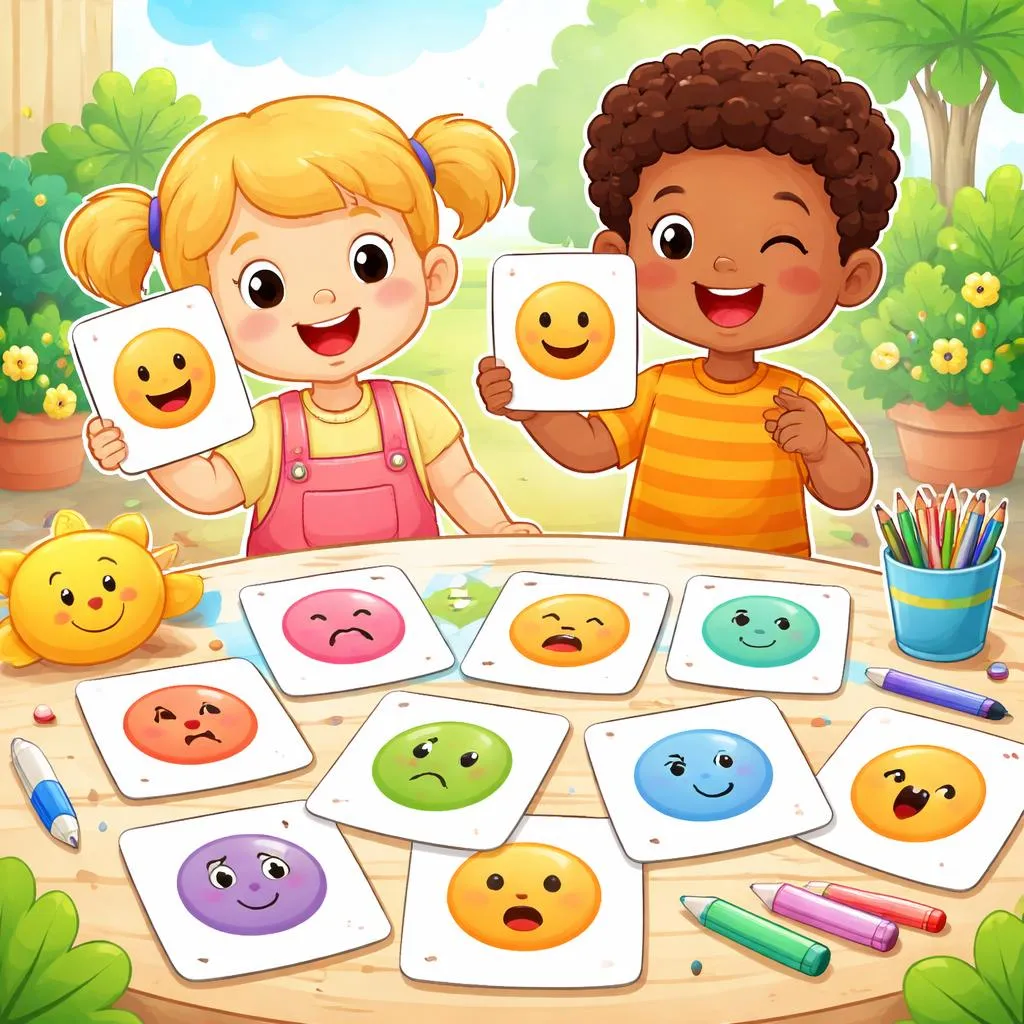
Draw two faces. One happy, one sad. “The difference is the mouth.”
Do not correct every mistake. If your child says “diff” for “differ,” gently say “Differ is the verb; difference is the noun.”
Celebrate when your child uses “indifferent.” That word shows emotional vocabulary.
Explain that “indifferent” does not mean same. It means “I don’t care either way.”
Tomorrow you will see two flowers that differ in color. You will notice the difference in temperature. You will eat something different for lunch. You might feel indifferent about a TV show.
Your child might say “I am not indifferent. I care a lot!” You will listen.
Keep noticing differences. Keep naming differences. Keep celebrating different perspectives. Keep accepting indifferent moments.
Your child will grow in language and in open-mindedness. Differences make the world rich. Words help us see them.