
Children make messes. Toys on the floor. Crumbs on the table. Paint on hands. Two common phrases describe untidiness. “Make a mess” and “Create disorder.” Both mean “make a space untidy or chaotic.” But one is everyday speech. One sounds more formal and serious. Parents and kids can learn together. Cleaning up is a life skill. The right words describe what happened. Let us explore these two messiness expressions.
What Do These Expressions Mean? “Make a mess” means “to cause a space to become untidy, dirty, or disorganized.” It is the common phrase for everyday spills, scattered toys, or clutter. It is casual and direct.
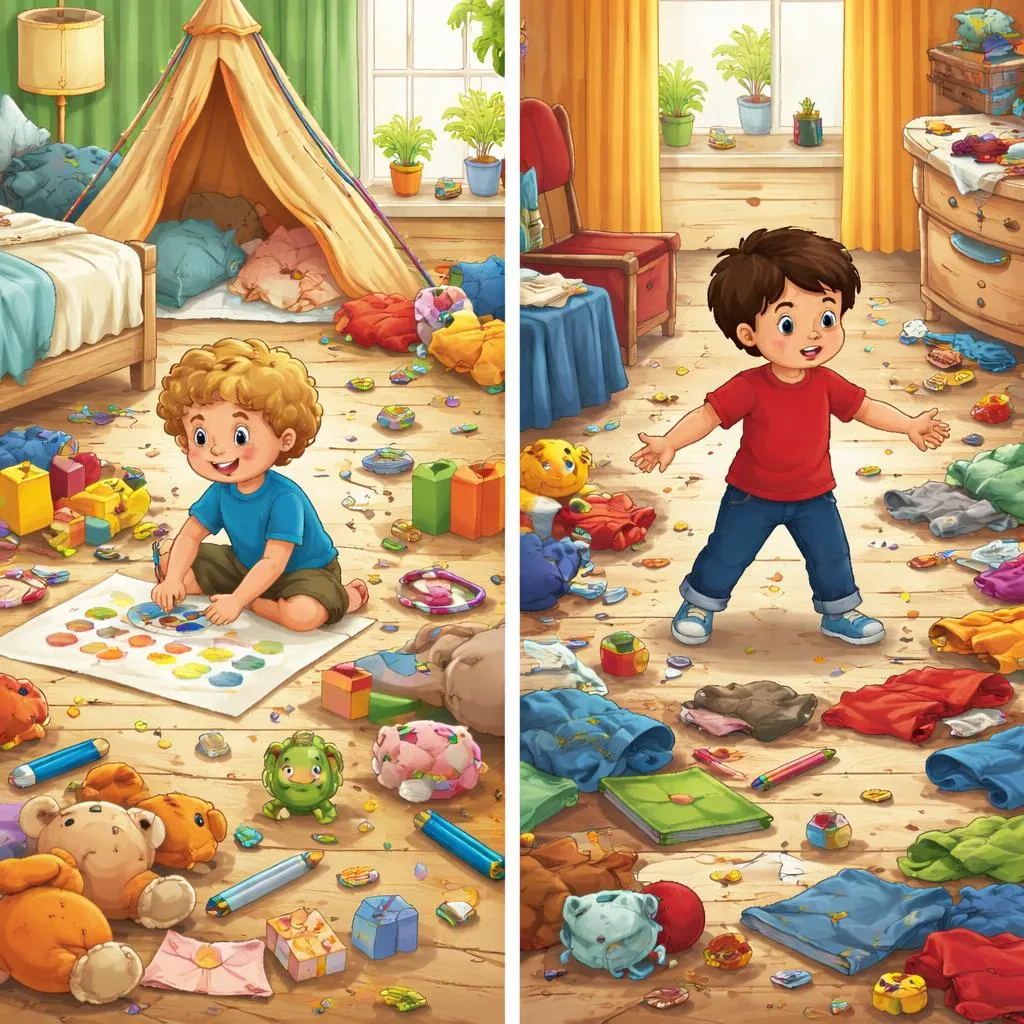
For a child, think of knocking over a box of LEGOs. “Make a mess” says “Now the floor is covered. It is not neat anymore.”
“Create disorder” also means “to cause a lack of order.” But it sounds much more formal. “Disorder” means chaos or confusion. This phrase is rarely used for a child’s play. It is for serious situations.
For a child, think of a riot or a big argument. “Create disorder” says “There is chaos. Things are out of control.” Both phrases mean to cause untidiness. Both say “not neat.” They seem similar because both describe a lack of order. Yet one is for everyday messes. One is for serious chaos.
What’s the Difference? The main difference is seriousness. “Make a mess” is for everyday, normal child behavior. Spilled milk. Scattered toys. It is not a big problem. “Create disorder” sounds serious. It suggests chaos, confusion, or even breaking rules. It is not for spilled juice.
Another difference is formality. “Make a mess” is casual and common. Parents say it all the time. “Create disorder” is formal. You might hear it in a courtroom or a school policy. Not at home.
One more difference is blame. “Make a mess” is gentle. “You made a mess. Clean it up.” “Create disorder” sounds accusing. “He created disorder in the classroom” sounds like a serious offense.
Also, “create disorder” can mean social or political chaos. “Make a mess” cannot.
Teach children that both mean untidy. One is for everyday. One is for serious situations.
When Do We Use Each One? Use “Make a mess” for everyday child messes. “Do not make a mess with your art supplies.” “You made a mess on the floor.” “Who made this mess?”
Use “Make a mess” for spills and clutter. “The baby made a mess with his food.” “The dog made a mess with the trash.”
Use “Make a mess” for gentle reminders. “Please do not make a mess. Clean up after yourself.”
Use “Create disorder” for formal or serious contexts. “The protesters created disorder in the streets.” “His behavior created disorder in the classroom.”
Use “Create disorder” in writing or official reports. “The storm created disorder across the city.”
Use “Create disorder” when you mean chaos that disrupts people. Not for toys on the floor.
Parents should almost never say “create disorder” to a child. It is too formal and harsh.
Example Sentences for Kids Here are simple sentences children can say.
Make a mess:
Do not make a mess with your crayons.
I made a mess when I spilled my milk.
The puppy made a mess with the toilet paper.
Please clean up the mess you made.
Who made this mess in the living room?
Create disorder:
The loud noise created disorder in the classroom.
The sudden storm created disorder outside.
His late arrival created disorder in the plan.
The prank created disorder in the hallway.
The missing teacher created disorder among the students.
Read these aloud. Notice how “make a mess” is for everyday child situations. Notice how “create disorder” sounds serious and is for bigger problems.
Common Mistakes to Avoid Children make mistakes with these phrases. Here are common errors.
Mistake 1: Using “create disorder” for a small mess. “You created disorder with your LEGOs” sounds ridiculous. LEGOs are not chaos. Correct: Say “You made a mess with your LEGOs.”
Mistake 2: Using “make a mess” for serious chaos. “The riot made a mess of the city” is not strong enough. Correct: Say “The riot created disorder.”
Mistake 3: Forgetting that “create disorder” is too formal for home. Parents should not say this to children. It will confuse them. Correct: Say “You made a mess.”
Mistake 4: Using “disorder” to mean medical condition. “He has a disorder” means illness. “He created disorder” means chaos. Very different. Correct: Know the difference.
Mistake 5: Not cleaning up the mess. The most important part is cleaning up, not the words. Correct: After any mess, clean it up.
Easy Memory Tips Here are simple memory tricks.
Memory tip 1: Think of crackers and a riot. “Make a mess” is crackers on the floor. “Create disorder” is a riot in the street.
Memory tip 2: Use your hands. Drop your hands to show a mess for “make a mess.” Wiggle your hands chaotically for “create disorder.”
Memory tip 3: Ask “is this normal child play?” If yes, say “make a mess.” If it is a big problem, say “create disorder.”
Memory tip 4: Draw two pictures. A messy playroom = “make a mess.” A chaotic street with police = “create disorder.”
Memory tip 5: Use the “home test.” If you are at home, say “make a mess.” If you are writing a news report, say “create disorder.”
Practice these tips during cleanup. Talk about messes. Never call a child’s play “disorder.”
Quick Practice Time Try these exercises. Parents read aloud. Children answer.
Exercise 1: Choose the best phrase.
A child spills juice on the floor. Do you say: a) You made a mess b) You created disorder
A group of people start fighting in a stadium. Do you say: a) They made a mess b) They created disorder
A toddler throws blocks everywhere. Do you say: a) He made a mess b) He created disorder
Answers: 1(a), 2(b), 3(a)
Exercise 2: Fill in the blank.
“Please do not __________ with your art project.” (everyday)
“The argument __________ in the meeting.” (formal, serious)
Answers: 1. make a mess, 2. created disorder
Bonus: Play the “Mess or Chaos” game. Name a situation. “Spilled cereal.” “A food fight in the cafeteria.” “Toys on the bedroom floor.” “A broken window.” “A peaceful room.” The child says “make a mess” or “create disorder.” Discuss why.
Wrap-up Use “make a mess” for everyday spills, scattered toys, and normal child untidiness. Use “create disorder” for formal, serious situations involving chaos, riots, or major disruptions. Both mean lack of order. One is for home. One is for serious events. Teach children that making a mess is normal. Cleaning up is important. Creating disorder is not the same. Keep messes small and clean them quick. That is the way to a happy home. Now go tidy up. A little effort makes a big difference.