
Children talk about where things are. In a room. In a box. In a building. Two common words describe being not outside. “Inside” and “Indoors.” Both mean “within something” or “not outdoors.” But one is for small spaces. One is for buildings. Parents and kids can learn together. Describing location helps others find things. The right words make your meaning clear. Let us explore these two enclosed expressions.
What Do These Expressions Mean? “Inside” means “within the boundaries of something.” It could be a box, a room, a car, or a building. The container has walls or limits.
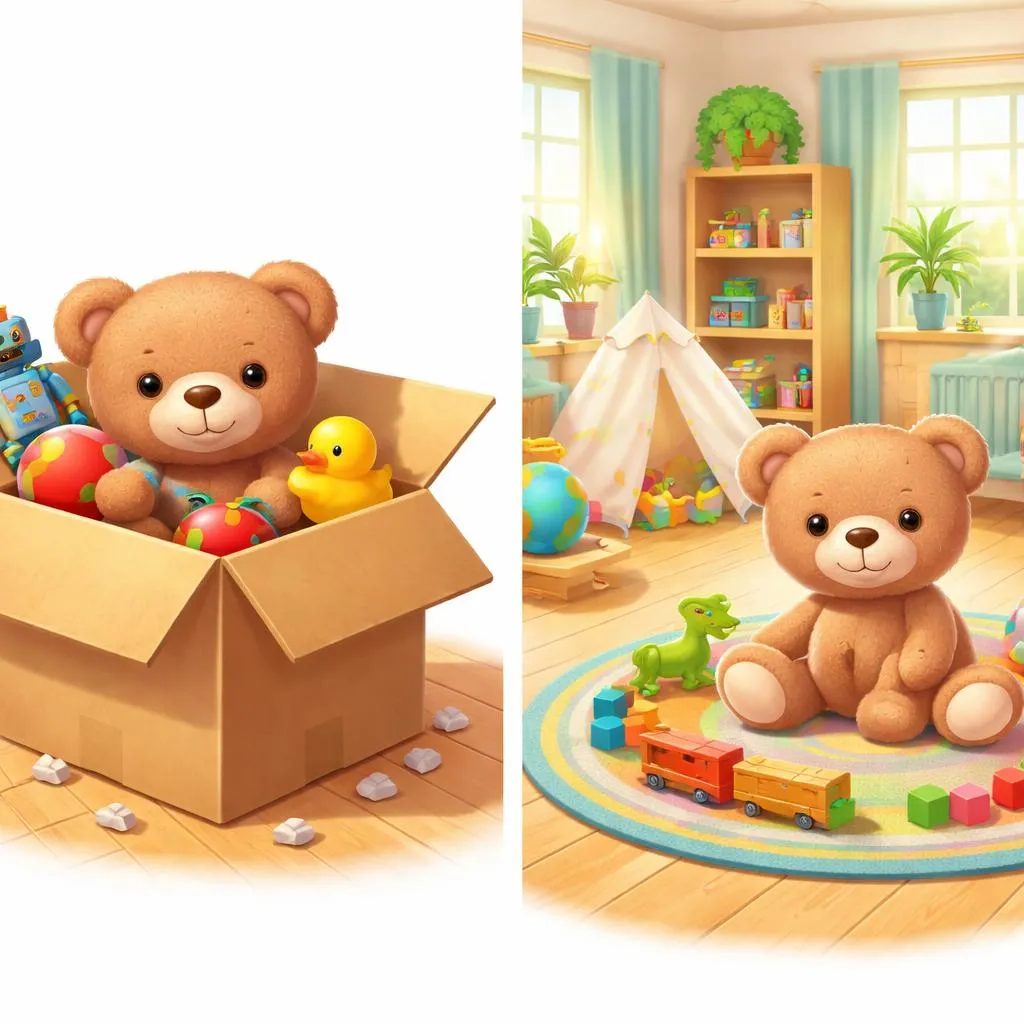
For a child, think of a toy in a toy box. “Inside” says “The toy is within the box. You cannot see it from outside.”
“Indoors” means “within a building.” It always refers to a house, school, store, or other structure with a roof and walls. It is the opposite of outdoors.
For a child, think of playing in the living room. “Indoors” says “We are in the house. Not outside in the yard.” Both mean not outside. Both say “within something.” They seem similar because people use both for being in a building. Yet one is for any container. One is specifically for buildings.
What’s the Difference? The main difference is the type of space. “Inside” can refer to any enclosed space. A drawer. A closet. A car. A cave. A box. A building.
“Indoors” refers only to buildings. Houses, schools, stores, offices, museums. Not cars. Not boxes. Not caves.
Another difference is size. “Inside” works for tiny spaces (a pocket) and huge spaces (a stadium). “Indoors” is for human-made buildings.
One more difference is usage. “Inside” is a preposition and an adverb. “The toy is inside the box.” (preposition) “Come inside.” (adverb) “Indoors” is only an adverb. “Stay indoors.” You cannot say “indoors the house.”
Also, “inside” can mean the inner part of something. “The inside of the apple.” “Indoors” never means the inner part.
Teach children that both mean not outside. One is for any container. One is for buildings only.
When Do We Use Each One? Use “Inside” for small containers. “The candy is inside the jar.” “Put your socks inside the drawer.” “My phone is inside my bag.”
Use “Inside” for vehicles. “We sat inside the car.” “The dog is inside the crate.” “It is raining. Get inside the bus.”
Use “Inside” for buildings too. “It is cold inside the store.” “Come inside the house.” But “indoors” works as well.
Use “Indoors” to talk about being in a building versus outside. “Let us play indoors today. It is too hot outside.” “Please keep your voice down indoors.”
Use “Indoors” for rules or habits. “We eat meals indoors.” “Shoes are not allowed indoors in some homes.” “Stay indoors during the storm.”
Use “Indoors” as an adverb. It never takes an object. “Go indoors.” “Stay indoors.” “They played indoors all afternoon.”
Parents can model both. Say “inside the box” for small spaces. Say “indoors” for building versus outside.
Example Sentences for Kids Here are simple sentences children can say.
Inside:
The rabbit is inside its cage.
I found a quarter inside my pocket.
It is cozy inside the tent.
Please put the milk inside the refrigerator.
There is a surprise inside the birthday card.
Indoors:
Let us stay indoors until the rain stops.
We eat breakfast indoors every morning.
It is too noisy to play indoors right now.
The library is indoors at the end of the hall.
During the winter, we spend more time indoors.
Read these aloud. Notice how “inside” fits many small spaces. Notice how “indoors” is only about buildings.
Common Mistakes to Avoid Children make mistakes with these words. Here are common errors.
Mistake 1: Using “indoors” for a car or box. Example: “The toy is indoors the box.” This is wrong. A box is not a building. A car is not a building. Correct: Say “The toy is inside the box” or “inside the car.”
Mistake 2: Using “inside” as an adverb when “indoors” is better. Example: “It is raining. Let us go inside.” This is fine. Both work. But “go indoors” is also fine. Not a big mistake. Correct: Both are okay. But “inside” is more common.
Mistake 3: Forgetting that “indoors” has no object. “Indoors the house” is wrong. “Indoors” does not take a noun after it. Correct: Say “inside the house” or “indoors” alone.
Mistake 4: Using “inside” when “in” is enough. “The toy is in the box” is shorter and just as clear. “Inside” adds emphasis. Correct: For everyday speech, “in” works fine. Save “inside” for emphasis.
Mistake 5: Saying “indoors” for being inside a specific room. “We are indoors the kitchen” is wrong. “Indoors” means in a building generally. Correct: Say “We are inside the kitchen” or “in the kitchen.”
Easy Memory Tips Here are simple memory tricks.
Memory tip 1: Think of a box and a house. “Inside” is anything inside a box. Small or large container. “Indoors” is inside a house. Only buildings.
Memory tip 2: Use your hands. Cup your hands together like a box for “inside.” Make a roof shape with your hands for “indoors.”
Memory tip 3: Ask “is it a building?” If yes, you can say “indoors” or “inside.” If no (car, box, pocket, cave), say “inside” only.
Memory tip 4: Draw two pictures. A toy inside a box labeled “inside.” A family inside a house labeled “indoors.”
Memory tip 5: Use the “outside test.” The opposite of “indoors” is “outdoors.” The opposite of “inside” is “outside.” Both opposites work.
Practice these tips during the day. Name whether things are inside a container or indoors in a building.
Quick Practice Time Try these exercises. Parents read aloud. Children answer.
Exercise 1: Choose the best phrase.
Your child puts a pencil in a pencil case. Do you say: a) The pencil is inside the case b) The pencil is indoors the case
It is snowing outside. You want your child to stay in the house. Do you say: a) Stay inside b) Stay indoors
A book is in a backpack. Do you say: a) The book is inside the backpack b) The book is indoors the backpack
Answers: 1(a), 2(a or b — both work for buildings), 3(a)
Exercise 2: Fill in the blank.
“The spare key is __________ the flower pot.” (container, small space)
“Please come __________. Dinner is ready.” (building, can also use “inside”)
Answers: 1. inside, 2. indoors
Bonus: Play the “Inside or Indoors” game. One person names a place. “A car.” “A school.” “A shoebox.” “A tent.” The other person says “inside” or “indoors.” If it is a building, both work. Learn which spaces are buildings.
Wrap-up Use “inside” for any enclosed space, big or small, building or box. Use “indoors” only for buildings, as an adverb without an object. Both mean not outside. One is for all containers. One is just for buildings. Teach children that words for location help everyone understand. A toy inside a box is very different from being indoors in a house. Both are good places to be.