
Music fills our world. In the car, at home, in stores. Two common words describe experiencing music. “Listen to music” and “Hear songs.” Both mean “experience sound with your ears.” But one means paying attention. One means just noticing. Parents and kids can learn together. Music can calm, excite, or teach. The right word describes the level of focus. Let us explore these two auditory expressions.
What Do These Expressions Mean? “Listen to music” means “pay attention to the music on purpose.” You focus. You might tap your foot or sing along. You intend to hear it.
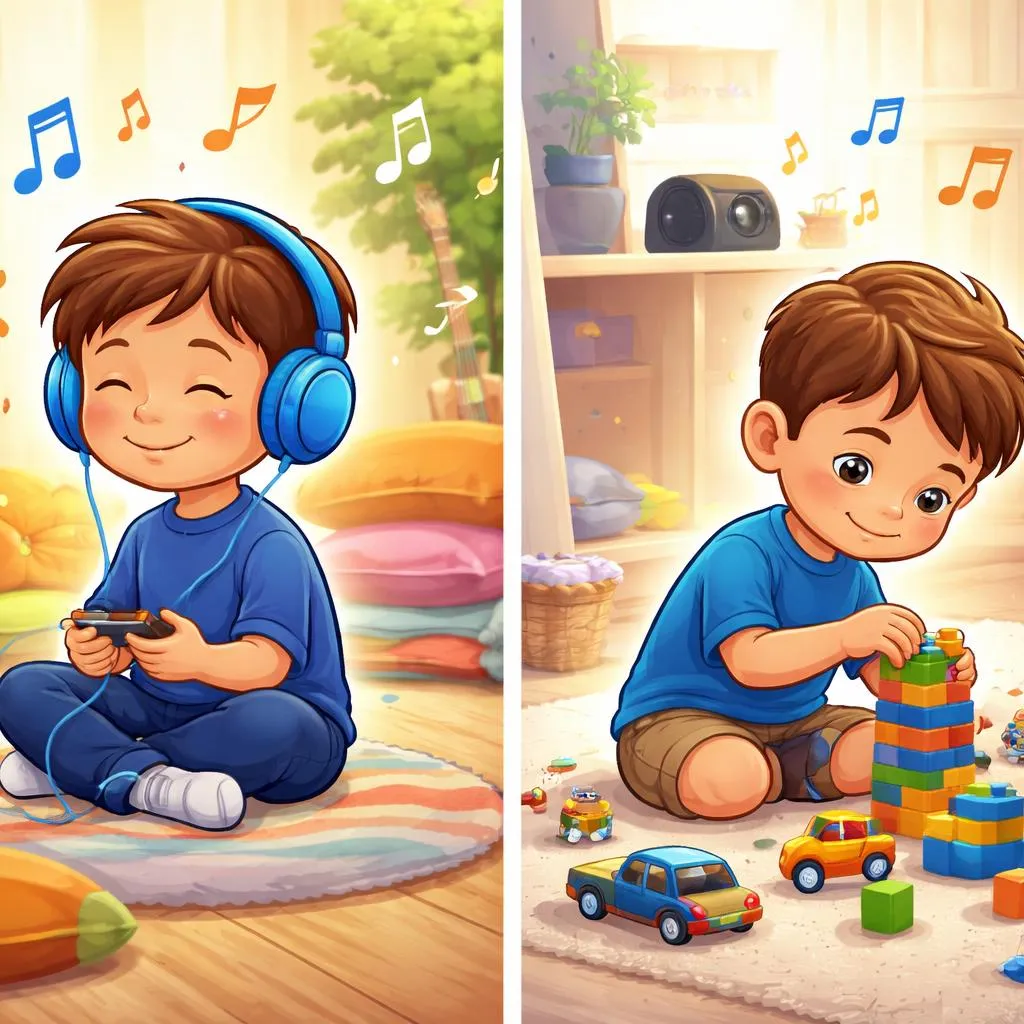
For a child, think of putting on headphones. “Listen to music” says “Focus on the sounds. Notice the beat, the words, the melody.”
“Hear songs” means “perceive music with your ears without necessarily paying attention.” You might hear music in a store while shopping. You are not focusing on it.
For a child, think of music playing while you play with toys. “Hear songs” says “The music is there. You notice it. But you are not really listening.” Both phrases involve sound. Both say “music enters your ears.” They seem similar because people use both for music and ears. Yet one is intentional focus. One is accidental or background.
What’s the Difference? The main difference is intention. “Listen to music” is active. You choose to focus. “Hear songs” is passive. The sound just comes to you.
Another difference is attention. Listening requires attention. Hearing just happens. You can hear a song without listening to it.
One more difference is purpose. People listen to music for enjoyment, learning, or relaxation. People hear songs as background noise.
Also, “listen” can be used as a command. “Listen to this!” “Hear” is rarely a command.
Teach children that both are about sound. One is active. One is passive.
When Do We Use Each One? Use “Listen to music” when you want focus. “Let us listen to music together.” “I listen to music while I study.” “Listen to the words of this song.”
Use “Listen to music” for intentional enjoyment. “Put on headphones and listen to your favorite band.”
Use “Listen to music” as an activity. “Our family listens to music every evening.”
Use “Hear songs” for background sound. “I heard a song on the radio while driving.” “She heard songs coming from the neighbor’s house.”
Use “Hear songs” when you are not focusing. “At the mall, I heard Christmas songs.”
Use “Hear songs” for accidental perception. “Did you hear that song? It was playing in the elevator.”
Parents can model both. Say “listen” for focused activities. Say “hear” for background sounds.
Example Sentences for Kids Here are simple sentences children can say.
Listen to music:
I like to listen to music before bed.
Let us listen to music and dance.
Please listen to the music quietly.
She listens to music on her tablet.
Listen to the guitar in this song.
Hear songs:
I heard a song on the way to school.
Can you hear the song playing in the store?
The baby hears songs and falls asleep.
He heard a song he liked at the restaurant.
I often hear songs from my brother’s room.
Read these aloud. Notice how “listen to music” is intentional. Notice how “hear songs” is passive or background.
Common Mistakes to Avoid Children make mistakes with these words. Here are common errors.
Mistake 1: Saying “hear” when you mean “listen.” “I want to hear to music” is wrong. “Hear” does not take “to.” Correct: Say “I want to listen to music.”
Mistake 2: Saying “listen” when you mean “hear.” “I listened a song in the car” is wrong. Correct: Say “I heard a song in the car.”
Mistake 3: Forgetting “to” after “listen.” “I listen music” is wrong. “Listen” needs “to.” Correct: Say “I listen TO music.”
Mistake 4: Thinking hearing is the same as listening. Hearing is automatic. Listening is a choice. Correct: Explain the difference.
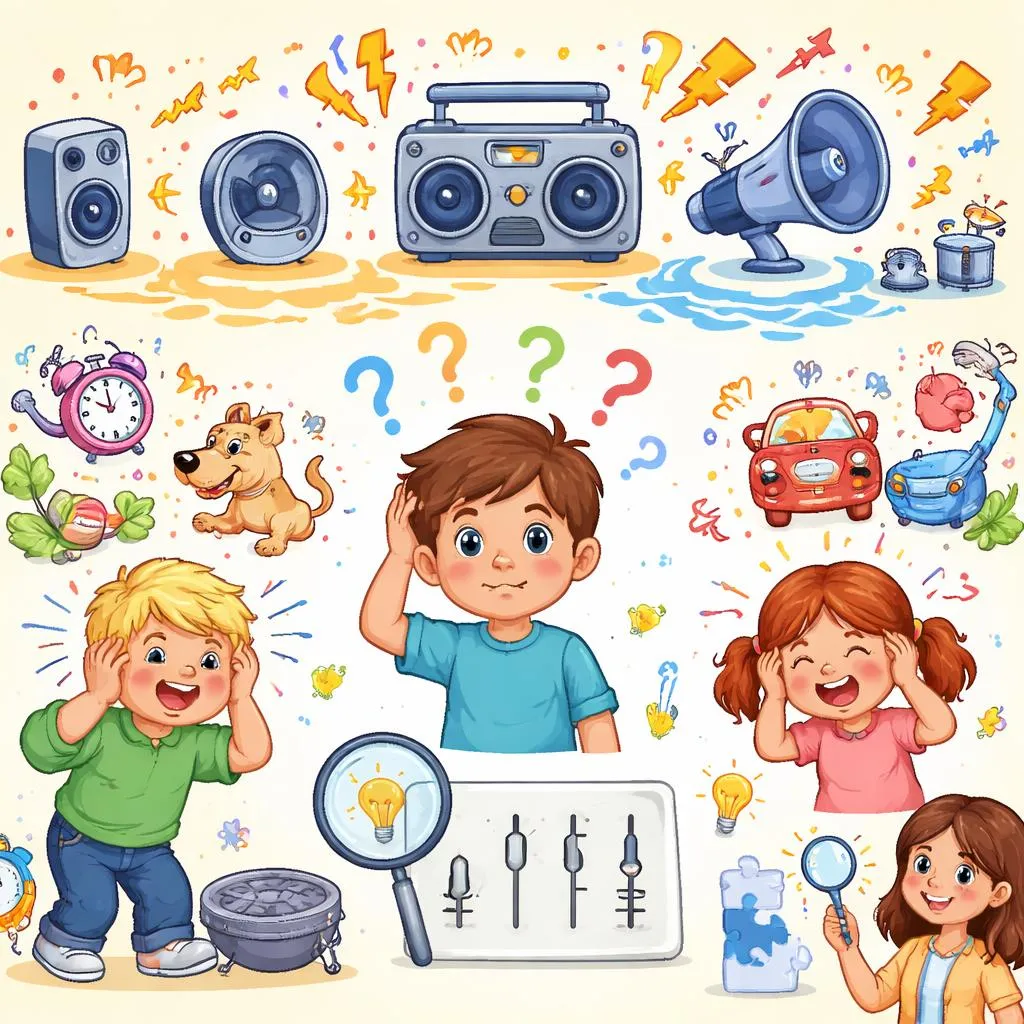
Mistake 5: Playing music too loudly. Loud music can damage hearing. Correct: Keep volume at a safe level.
Easy Memory Tips Here are simple memory tricks.
Memory tip 1: Think of a spotlight and a window. “Listen to music” is a spotlight. You shine it on the music. “Hear songs” is a window. Sound comes in whether you want it or not.
Memory tip 2: Use your hands. Cup your ear for “listen to music” (active). Put your hands at your sides for “hear songs” (passive).
Memory tip 3: Ask “am I trying to hear it?” Yes = “listen to music.” No, it just happens = “hear songs.”
Memory tip 4: Draw two pictures. A child with headphones and closed eyes = “listen to music.” A child playing while music plays in the background = “hear songs.”
Memory tip 5: Use the “focus” test. If you are focusing, say “listen.” If you are not focusing, say “hear.”
Practice these tips during music time. Notice when you are listening and when you are just hearing.
Quick Practice Time Try these exercises. Parents read aloud. Children answer.
Exercise 1: Choose the best phrase.
Your child puts on headphones to enjoy a new album. Do you say: a) Listen to music b) Hear songs
A song is playing in the grocery store while you shop. Do you say: a) We listened to music b) We heard songs
You want your child to focus on the lyrics of a song. Do you say: a) Hear the words b) Listen to the words
Answers: 1(a), 2(b), 3(b)
Exercise 2: Fill in the blank.
“I like to __________ while I draw.” (active, intentional)
“We __________ a familiar song on the radio in the car.” (passive, background)
Answers: 1. listen to music, 2. heard
Bonus: Play the “Active or Passive” game. Play a short piece of music. First, say “Just hear the music” (no focus). Then say “Now listen to the music” (focus). Ask your child to describe the difference. Did they notice more when listening? Discuss.
Wrap-up Use “listen to music” when you intentionally pay attention to the sounds, words, and rhythm. Use “hear songs” when music comes to your ears without active focus, like background music in a store. Both are about sound. One is active and purposeful. One is passive and automatic. Teach children that listening is a gift you give to music. Hearing just happens. To truly enjoy music, listen. Close your eyes. Focus. Feel the beat. That is listening. Hearing is just noise. Listening is love. So put on your favorite song. Listen. Really listen. Then you will know the difference. Enjoy every note. Music is magic. Hear it. Listen to it. Love it. That is the way. Now press play. Listen close. Feel something wonderful. That is music’s power. Use it well.