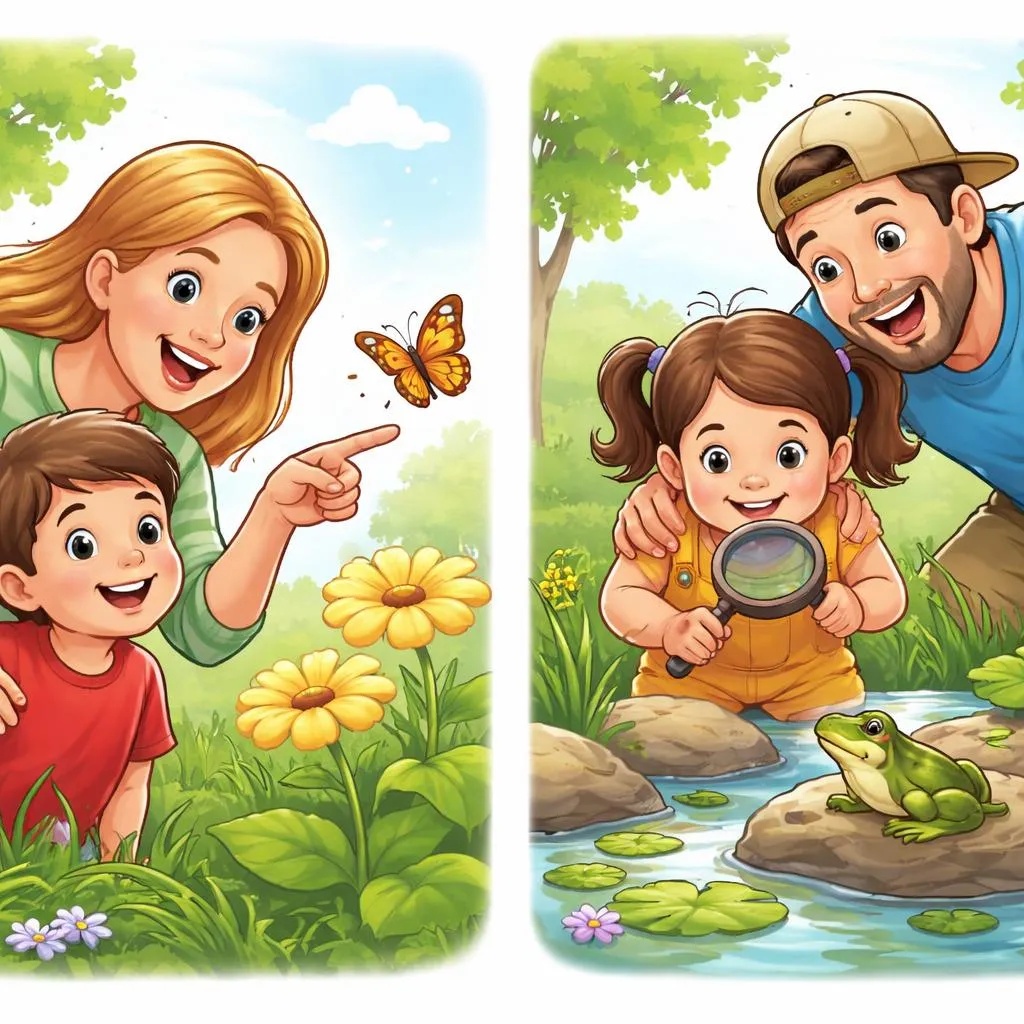

Children notice amazing things every day. A butterfly. A big truck. A rainbow. Two common phrases share discoveries. “Look at that” and “Check that out.” Both mean “direct your eyes here.” Both show excitement. But one sounds older. One sounds more playful. Parents and kids can learn together. Sharing wonder builds connection. The right words make discoveries even more fun. Let us explore these two attention-getting phrases.
What Do These Expressions Mean? “Look at that” means “turn your eyes toward that thing.” It is a direct instruction. It focuses on seeing.
For a child, think of pointing a finger. “Look at that” says “Put your eyes where my finger points.”
“Check that out” also means “look at that thing.” But it adds a feeling of discovery. “Check out” comes from exploring. It means “investigate this interesting thing.”
For a child, think of a detective finding a clue. “Check that out” says “Come explore this with me. It is worth your time.” Both phrases direct attention. Both say “this is interesting.” They seem similar because people use both to share discoveries. Yet one is simple seeing. The other is curious exploring.
What’s the Difference? The main difference is formality. “Look at that” works in all settings. School. Home. A store. It is standard English.
“Check that out” feels very casual. Friends say it. Kids say it to each other. But it sounds out of place in a classroom or a church.
Another difference is age. “Look at that” works for all ages. A grandparent says it. A toddler says it. “Check that out” sounds younger. Teenagers and young adults use it more.
One more difference is curiosity level. “Look at that” just asks someone to see. No extra feeling. “Check that out” asks someone to explore. To look closer. To wonder.
Also, “check that out” can mean investigate more deeply. Not just see. Learn about. Touch. Ask questions.
Teach children that both share discoveries. One points. One invites exploration.
When Do We Use Each One? Use “Look at that” for everyday sightings. A bird on a fence. A cloud shaped like a rabbit. A funny hat. Say “Look at that!”
Use “Look at that” with adults and teachers. It is always polite. It always works.
Use “Look at that” when you want someone to see something quickly. A car coming. Say “Look at that car!” A falling leaf. Say “Look at that leaf go.”
Use “Check that out” for cool discoveries. A huge spider web. A strange bug. A hidden fort. Say “Check that out. Come see.”
Use “Check that out” with friends. At the playground. In the backyard. During playdates. It sounds fun and friendly.
Use “Check that out” when you want someone to explore. A new toy with buttons. Say “Check that out. Press the red one.” A book with pop-ups. Say “Check that out. Open the flap.”
Parents can model both. Say “look at that” for quick looks. Say “check that out” for shared discoveries with your child.
Example Sentences for Kids Here are simple sentences children can say.
Look at that:
Look at that big yellow bus.
Look at that dog running fast.
Look at that tower you built.
Look at that smile on your face.
Look at that rainbow in the sky.
Check that out:
Check that out. A worm on the sidewalk.
Check that out. Your drawing has a dragon.
Check that out. The ice cream truck is here.
Check that out. A hidden door in the fort.
Check that out. My new shoes light up.
Read these aloud. Notice how “look at that” sounds clear and direct. Notice how “check that out” sounds more excited and curious.
Common Mistakes to Avoid Children make mistakes with these phrases. Here are common errors.
Mistake 1: Using “check that out” in school. Example: A teacher shows a map. A child says “Check that out.” The teacher may think it is too casual. Correct: Say “Look at that, please” or “That is interesting.”
Mistake 2: Saying “look at that” without pointing. The listener does not know what “that” means. They look everywhere. Correct: Always point or nod toward the thing. “Look at that bird” while pointing.
Mistake 3: Overusing “check that out” for boring things. “Check that out. A pencil.” No one gets excited. The phrase loses power. Correct: Save “check that out” for truly cool or surprising things.
Mistake 4: Forgetting to wait for the other person to look. You say “look at that” and then keep talking. The other person misses it. Correct: Say the phrase. Pause. Let them look. Then share more.
Mistake 5: Using a flat, bored voice. “Look at that” in a boring voice sounds like you do not care. People will not look. Correct: Add excitement to your voice. Make “that” sound interesting.
Easy Memory Tips Here are simple memory tricks.
Memory tip 1: Think of a telescope and a magnifying glass. “Look at that” is a telescope. It brings far things into view. “Check that out” is a magnifying glass. It helps you explore close things.
Memory tip 2: Use your hand. Point with one finger = “look at that.” Cup your hand around your eye like a spyglass = “check that out.”
Memory tip 3: Think about who you are talking to. Adult you respect = “look at that.” Friend your age = “check that out.”
Memory tip 4: Draw two eyes. One eye with a simple arrow pointing = “look at that.” One eye with a question mark inside = “check that out” (curious, exploring).
Memory tip 5: Use the “classroom test.” If you are in a classroom, say “look at that.” If you are on a playground, say “check that out.”
Practice these tips during walks. Discover things together. Use both phrases.
Quick Practice Time Try these exercises. Parents read aloud. Children answer.
Exercise 1: Choose the best phrase.
You see a fire truck with its lights on. You want your little brother to see it quickly. Do you say: a) Look at that b) Check that out
You find a hidden door behind a bookshelf. You want your friend to explore with you. Do you say: a) Look at that b) Check that out
You are in a library. You see a book with a gold cover. You whisper to your mom. Do you say: a) Look at that b) Check that out
Answers: 1(a), 2(b), 3(a — “check that out” is too casual for a library)
Exercise 2: Fill in the blank.
“__________ squirrel burying an acorn.” (quick, direct, any setting)
“__________ weird slime on this rock. Come touch it.” (casual, exploratory)
Answers: 1. Look at that, 2. Check that out
Bonus: Play the “Discovery Walk.” Go for a five-minute walk inside or outside. Take turns finding interesting things. One person says “look at that” for something simple. The next person says “check that out” for something cool. Talk about which discoveries fit which phrase.
Wrap-up Say “look at that” for quick, direct attention in any setting. Say “check that out” for casual, curious discoveries with friends. Both share wonder. One points. One invites exploration. Choose based on who you are talking to and how cool the discovery really is. Then enjoy the moment together.